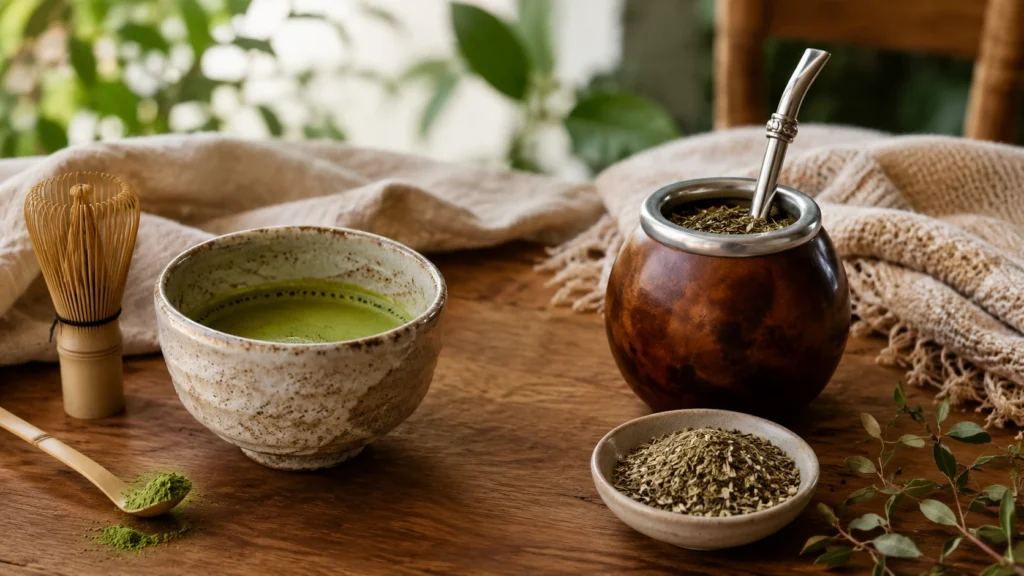
Matcha and yerba mate are both plant-based caffeinated drinks with strong traditions, but they create very different rituals.
Matcha is a powdered Japanese green tea, whisked into water. Yerba mate is a South American infusion, traditionally sipped from a gourd through a filtered straw.
Both can belong in a thoughtful daily routine. The better choice depends on the flavour you enjoy, how much caffeine suits you, how you like to prepare tea, and whether you want a quiet solo ritual or a more social drinking tradition.
This guide compares matcha and yerba mate through flavour, caffeine, preparation, ritual, and daily use, without turning either one into a health product or a productivity hack.
What to know first
- Matcha is a fine Japanese green tea powder made from Camellia sinensis.
- Yerba mate is made from the dried leaves and stems of Ilex paraguariensis.
- Matcha is whisked into water, so the powdered leaf becomes part of the drink.
- Yerba mate is usually steeped, with the leaves remaining in the gourd or cup while the liquid is sipped through a filter.
- Matcha tastes green, smooth, umami-rich, and sometimes grassy.
- Yerba mate tastes earthy, herbal, smoky, and sometimes bitter.
- Both contain caffeine, and the exact amount depends on serving size and preparation.
- Matcha suits a quiet bowl-and-whisk ritual. Yerba mate suits a more social, portable tea tradition.
What is matcha?
Matcha is a fine green tea powder from Japan.
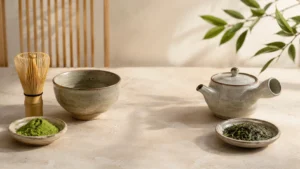
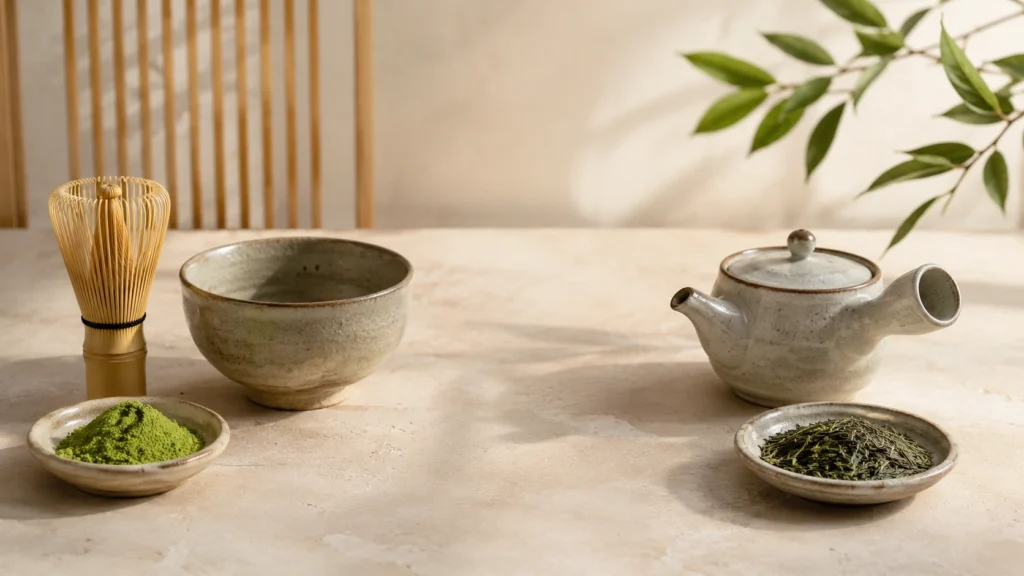
High-quality matcha is usually made from shade-grown tea leaves that are steamed, dried, and slowly ground into a fine powder. Unlike ordinary green tea, the leaves are not steeped and removed. The powdered tea is whisked into water and consumed as part of the drink.
That gives matcha its vivid green colour, fuller body, and concentrated green tea flavour.
A good ceremonial matcha should taste smooth, green, balanced, and umami-rich. It can have a gentle bitterness, but it should not taste harsh, stale, muddy, or dull when prepared well.
At Matcha Byron Bay, our ceremonial matcha is sourced from Uji, Japan, and chosen for daily ritual. If you want to understand the grade more clearly, read What Is Ceremonial Matcha?
For an everyday matcha, start with Nami ceremonial matcha. For a deeper, more refined bowl, explore Goku premium ceremonial matcha.
What is yerba mate?
Yerba mate is a South American tea-like infusion made from the dried leaves and stems of Ilex paraguariensis.
It is especially associated with Argentina, Paraguay, Uruguay, and Brazil, where it is often prepared in a gourd and sipped through a filtered straw called a bombilla.
Yerba mate is not powdered like matcha. The leaves are usually dried, cut, and steeped. The drink can be prepared hot or cold, depending on the tradition and preference.
The flavour is very different from matcha. Yerba mate is usually earthy, herbal, smoky, grassy, or bitter. Some people love that strength. Others find it more of an acquired taste.
Where matcha often feels minimal and precise, yerba mate often feels stronger, more rustic, and more social.
Matcha vs yerba mate: the main differences
Matcha and yerba mate are often compared because both are caffeinated plant drinks with strong ritual traditions. But they come from different plants, regions, preparation styles, and flavour worlds.
| Aspect | Matcha | Yerba mate |
|---|---|---|
| Plant | Camellia sinensis | Ilex paraguariensis |
| Origin tradition | Japan, especially regions such as Uji | South America, especially Argentina, Paraguay, Uruguay, and Brazil |
| Form | Fine green tea powder | Dried cut leaves and stems |
| How it is prepared | Whisked with warm water | Steeped in a gourd, cup, French press, or bottle |
| Flavour | Green, umami-rich, smooth, sometimes grassy | Earthy, herbal, smoky, sometimes bitter |
| Caffeine | Usually moderate; varies by powder amount and serving size | Usually moderate to strong; varies by leaf amount, steeping, and refills |
| Ritual feel | Quiet, minimal, bowl-and-whisk ritual | Social, portable, often shared from a gourd |
How do they taste?
Matcha tastes green, smooth, and umami-rich when the quality is high and the preparation is gentle.
Fresh ceremonial matcha can have notes of young greens, cream, soft sweetness, and savoury depth. It should not taste harshly bitter. If matcha tastes flat, muddy, brown, or aggressively bitter, the issue may be the grade, freshness, storage, water temperature, or preparation method.
Yerba mate tastes earthier and stronger. It can be herbal, smoky, grassy, woody, or bitter. That bitterness is often part of its character rather than a flaw.
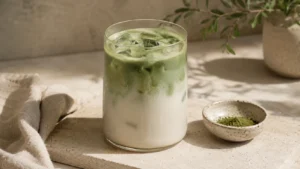
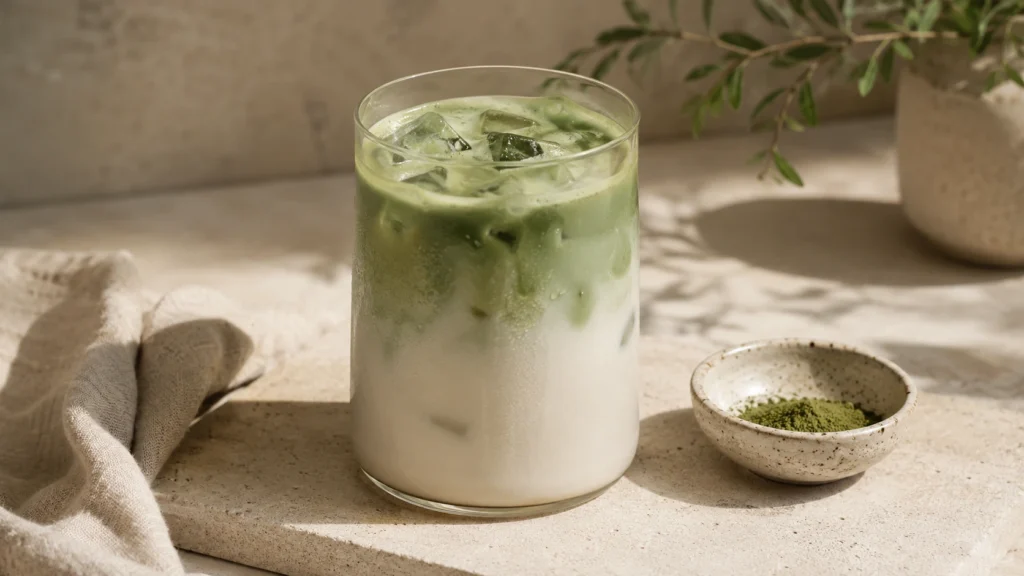
Milk changes the experience for both drinks. Matcha becomes softer and creamier in a latte. Yerba mate can also be blended into milk-based drinks, but it is more commonly associated with hot water, cold water, or traditional gourd preparation.
If you want to make smoother matcha at home, read How to Prepare Ceremonial Matcha. If you prefer matcha with milk, see How to Make a Matcha Latte That Tastes Like Real Matcha.
How much caffeine do matcha and yerba mate have?
Both matcha and yerba mate contain caffeine.
Matcha is usually moderate in caffeine because the powdered green tea leaf is consumed as part of the drink. The amount depends on how much powder you use, your serving size, and how you prepare it.
Yerba mate can also be moderate to strong in caffeine. The amount depends on how much leaf is used, how long it steeps, the water temperature, and how many times the gourd or cup is refilled.
Matcha also naturally contains L-theanine, an amino acid found in tea. Many people experience matcha’s caffeine as smoother than coffee, but caffeine sensitivity varies from person to person.
Yerba mate is often chosen by people who want a stronger, earthier caffeinated drink. But like matcha, the experience depends on preparation and individual sensitivity.
For a deeper matcha-specific guide, read Matcha Caffeine: Why It Feels Different and When to Drink It.
How are they prepared?
Matcha and yerba mate differ most clearly in preparation.
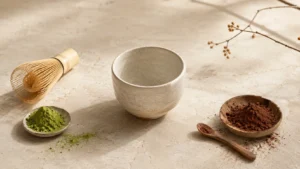
Matcha is prepared by sifting the powder, adding warm water, and whisking until the tea becomes smooth and lightly frothy. It is not truly dissolved; it is suspended in water. That is why proper mixing matters.
A bamboo whisk gives matcha its traditional texture and foam. If you are starting from scratch, the Complete Nami Ritual Set includes Nami matcha, a bowl, bamboo whisk, chashaku scoop, and glass whisk stand.
Yerba mate is usually prepared by placing the dried leaves in a gourd or cup, adding water, and drinking through a filtered straw. The leaves stay in the vessel and can be refilled with water multiple times.
So the preparation style feels very different:
- Matcha is a powder-and-whisk ritual.
- Yerba mate is a steep-and-sip infusion.
- Matcha is often prepared as a quiet personal bowl.
- Yerba mate is often shared socially.
If you do not have matcha tools yet, read How to Make Matcha Without a Whisk.
Which ritual feels more like you?
The best choice is not only about caffeine or flavour. It is about the kind of moment you want to create.
Matcha suits people who want a minimal, quiet, Japanese tea ritual. The process is simple: measure, sift, add water, whisk, drink. It can become a small morning anchor before the day becomes noisy.
Yerba mate suits people who enjoy a stronger, earthier drink and a more social tradition. The gourd can be refilled and shared, making it less of a single cup and more of an ongoing rhythm.
| If you want... | Choose matcha | Choose yerba mate |
|---|---|---|
| A quiet solo ritual | Yes | Less traditionally |
| A shared tea tradition | Possible, but less common | Yes |
| A green, umami flavour | Yes | No |
| An earthy, smoky flavour | No | Yes |
| A bowl-and-whisk preparation | Yes | No |
| A portable infusion | Less so | Yes |
For a deeper look at matcha as ritual, read The Matcha Ritual.
Can you drink both?
Yes. You do not need to choose one forever.
You might prefer matcha on quiet mornings when you want something green, smooth, and minimal. You might prefer yerba mate when you want a stronger, earthier drink that can be sipped over time.
The main thing to watch is total caffeine intake. Both drinks contain caffeine, and the amount can change depending on how you prepare them.
If you are caffeine-sensitive, pay attention to timing and serving size.
If you want a Japanese tea that feels warmer and lower in bitterness than matcha, you might also enjoy hojicha. Our Organic Hojicha Fine Grind works well for warm cups, lattes, and simple recipes.
Which Matcha Byron Bay tea should you choose?
Choose Nami ceremonial matcha if you want a smooth everyday matcha for daily bowls, iced matcha, and premium home lattes.
Choose Goku premium ceremonial matcha if you want a more refined matcha experience where the tea itself is the focus.
Choose the Complete Nami Ritual Set if you want the full preparation setup in one place.
If you are comparing non-coffee caffeine options but want something roasted and mellow, explore Organic Hojicha Fine Grind.
If you are still deciding what to buy, read Buy Matcha in Australia: A Few Things to Look For, or browse the full Matcha Byron Bay shop.
Frequently asked questions
Does yerba mate taste like matcha?
No. Matcha usually tastes green, smooth, umami-rich, and sometimes grassy. Yerba mate is earthier, more herbal, more smoky, and often more bitter.
Does matcha or yerba mate have more caffeine?
Both contain caffeine. Matcha is usually moderate in caffeine, while yerba mate can be moderate to strong depending on how much leaf is used, how long it steeps, and how many refills are taken. Exact amounts vary by preparation.
Can I make yerba mate like matcha?
Not really. Matcha is a fine powder that is whisked into water. Yerba mate is usually dried cut leaves and stems that are steeped and sipped through a filtered straw or strained after brewing.
Can I mix matcha and yerba mate?
You can experiment with mixing them, but the flavours are quite different. Matcha is green and umami-rich, while yerba mate is earthy and herbal. Most people will taste each drink more clearly when they are prepared separately.
Which is easier to prepare?
Matcha is quick once you know the method, but it benefits from sifting and whisking. Yerba mate can be simple too, especially in a cup or French press, but traditional gourd preparation has its own technique.
Which one is better for a morning ritual?
Matcha may suit people who want a quieter preparation ritual. Yerba mate may suit people who prefer a stronger, earthier infusion and a more social drinking tradition.
Is matcha healthier than yerba mate?
Neither drink should be treated as a health product. Matcha is powdered green tea consumed whole, while yerba mate is an infused South American tea. The better choice depends on how you prepare it, how much caffeine suits you, and which ritual you enjoy more.
Can I make a matcha latte instead?
Yes. If you like the idea of matcha but want a creamier drink, a matcha latte is a good place to start. Read our guide to how to make a matcha latte.
Choose the ritual you want to return to
Matcha is a quiet Japanese powder tea ritual. Yerba mate is an earthy South American infusion traditionally shared from a gourd. Both are caffeinated and both have strong traditions.
Choose matcha if you want a minimal bowl-and-whisk ritual. Choose yerba mate if you want a stronger, earthier, more social tea experience.