
Making matcha is meditation. Coffee is just fuel.

You’re already on your phone. You haven’t even sat up yet.
By the time you get to the kitchen you need the coffee just to catch up to yourself.
That’s not a morning routine. That’s triage.
But what if you didn’t start that far behind?
Imagine the morning goes the other way.
You wake up and the phone stays face down.
You boil water. You measure. You whisk.
Five minutes that are entirely yours before the world knows you’re awake.
You’re not more productive. You’re not optimised. You just started the day as yourself instead of as a response to it.
Ujitawara, tucked into the mountains of Kyoto Prefecture, is the birthplace of Japanese green tea — a place of sharp morning mists, cool evening temperatures, and calcic soils farmed patiently without pesticides or synthetic fertiliser for over 50 years.
If you stood at the edge of one of these fields on a still morning, you would understand why nothing grown anywhere else tastes quite the same.
The Harima family, now in their seventh generation, has farmed this land since 1858, around the time of the last samurai.
For over a century, the rhythm of the farm followed the rhythm of the seasons.
Spring harvests. Summer heat. Autumn mists. Winter rest.
The same fields, the same family, generation after generation.
Then in the summer of 1972, Yoshiyuki Harima, the sixth Harima to tend these fields, fell ill from chemical poisoning while spraying his crops on a sweltering day.
At the time, chemical spraying was standard practice on tea farms across Japan — part of a global agricultural shift that had swept from America through Mexico, India, the Philippines, Vietnam and across Asia since the war.
Nobody questioned it.
Yet after that single episode, Yoshiyuki’s doctor told him if he kept going it would end up destroying his liver.
Yoshiyuki sat with that for a long time.
The chemicals promised progress. They were cheaper. Easier. And for a generation of farmers, that had been enough.
But the chemicals that were making him ill were ending up in the tea.
And the tea was ending up in the people.
And the land that his family had tended for generations was being quietly poisoned.
In Japan, the relationship between a farmer and his land runs deeper than ownership. It is a kind of stewardship. A responsibility passed from one generation to the next.
Taking all this into account, Yoshiyuki stopped that day. And he never looked back.
He returned to the way tea had always been grown before the chemicals arrived.
By hand. With patience. Without shortcuts.
The weeding was done slowly, season by season. The soil was given time to recover. The farm became harder to run and more expensive to maintain.
But what grew from it began to taste the way tea had tasted before anyone thought to interfere with it.
Fifty years of patient, unhurried farming later, the killifish, the bottom-dwelling dark sleeper and the silver-bellied goby started returning to the river that runs alongside his farm.
Today they thrive there.
The river remembers. So does the land. And so, in its quiet way, does the tea that grows from it.
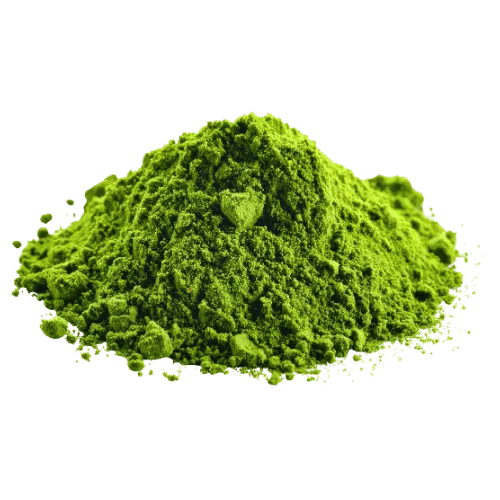
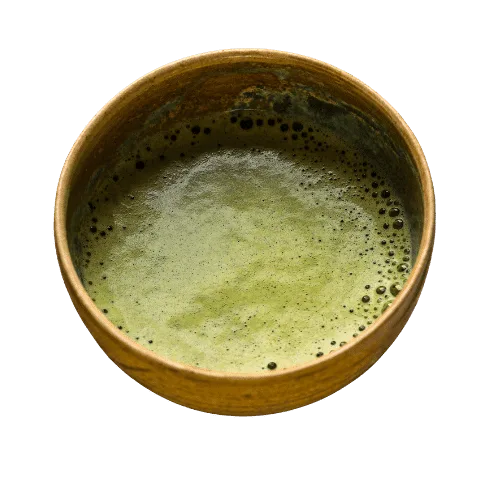
That is the matcha in your bowl.
Not a wellness product. Not a trend.
Something older and quieter than either of those things.
A practice that has been keeping people steady in their mornings for centuries.
This is where your morning begins.

Making matcha is meditation. Coffee is just fuel.
You haven’t even sat up yet.
By the time you get to the kitchen you need the coffee just to catch up to yourself.
That’s not a morning routine.
That’s triage.
But what if you didn’t start that far behind?
Imagine the morning goes the other way.
You wake up and the phone stays face down.
You boil water.
You measure.
You whisk.
Five minutes that are entirely yours before the world knows you’re awake.
You’re not more productive.
You’re not optimised.
You just started the day as yourself instead of as a response to it.
Ujitawara, tucked into the mountains of Kyoto Prefecture, is the birthplace of Japanese green tea — a place of sharp morning mists, cool evening temperatures, and calcic soils farmed patiently without pesticides or synthetic fertiliser for over 50 years.
If you stood at the edge of one of these fields on a still morning, you would understand why nothing grown anywhere else tastes quite the same.
The Harima family, now in their seventh generation, has farmed this land since 1858, around the time of the last samurai.
For over a century, the rhythm of the farm followed the rhythm of the seasons.
Spring harvests.
Summer heat.
Autumn mists.
Winter rest.
The same fields, the same family, generation after generation.
Then in the summer of 1972, Yoshiyuki Harima, the sixth Harima to tend these fields, fell ill from chemical poisoning while spraying his crops on a sweltering day.
At the time, chemical spraying was standard practice on tea farms across Japan — part of a global agricultural shift that had swept from America through Mexico, India, the Philippines, Vietnam and across Asia since the war.
Nobody questioned it.
Yet after that single episode, Yoshiyuki’s doctor told him if he kept going it would end up destroying his liver.
Yoshiyuki sat with that for a long time.
The chemicals promised progress.
They were cheaper.
Easier.
And for a generation of farmers, that had been enough.
But the chemicals that were making him ill were ending up in the tea.
And the tea was ending up in the people.
And the land that his family had tended for generations was being quietly poisoned.
In Japan, the relationship between a farmer and his land runs deeper than ownership.
It is a kind of stewardship.
A responsibility passed from one generation to the next.
Taking all this into account, Yoshiyuki stopped that day.
And he never looked back.
He returned to the way tea had always been grown before the chemicals arrived.
By hand.
With patience.
Without shortcuts.
The weeding was done slowly, season by season.
The soil was given time to recover.
The farm became harder to run and more expensive to maintain.
But what grew from it began to taste the way tea had tasted before anyone thought to interfere with it.
Fifty years of patient, unhurried farming later, the killifish, the bottom-dwelling dark sleeper and the silver-bellied goby started returning to the river that runs alongside his farm.
Today they thrive there.
The river remembers.
So does the land.
And so, in its quiet way, does the tea that grows from it.
That is the matcha in your bowl.
Not a wellness product.
Not a trend.
Something older and quieter than either of those things.
A practice that has been keeping people steady in their mornings for centuries.
This is where your morning begins.
You warm the bowl. You measure the leaf. You whisk slowly, with attention — and something in the act of doing it carefully begins to settle the morning around you.
Not because the matcha is doing something to you.
Because you are doing something — deliberately, quietly, for yourself — before the day takes you.
This is the practice. And it changes things.
It always has.
Long before matcha became a drink of convenience, it was prepared exactly this way — as a discipline of attention. Not to energise. Not to optimise. Not to perform.
To arrive.
Powdered tea was measured, whisked, received slowly — not because the ritual demanded it, but because the slowness was the point. The care given to the beginning of the day was the whole reason.
What mattered was not the outcome. It was the quality of attention given along the way.
People have been discovering this for a long time.
Not in formal settings. Not with instruction or audience. Just ordinary people, in ordinary mornings, repeating the same quiet gestures until something shifted.
In the beginning, the practice asks something of you. You’re aware of your hands, the water, the measuring. It feels considered. Intentional.
But somewhere in the second week, something changes.
Your hands know what to do before your mind catches up. The gestures become quieter. The morning stops starting with a decision.
You stop doing the ritual. The ritual starts doing something to you.
Those ten minutes become the steadiest ten minutes of your day. A fixed point. Before the noise. Before the day takes you.
Japanese tea practitioners had a name for this — the point where technique disappears and only presence remains.
They considered it the whole point.
As matcha travelled it accumulated layers — objects, rules, performances, the anxiety of getting it right.
Some people leaned into that.
Others stripped it back until only what mattered remained.
A bowl. Water. Attention.
Not tradition preserved for its own sake. Restraint as a way of seeing clearly.
There is a story told not in names but in spaces. A small room. Dim light. An uneven bowl chosen deliberately. Nothing impressive happened there — and yet every person who entered noticed something change. Not in the tea. In themselves.
The room did not teach. It did not explain.
It simply made space.
If that’s the kind of morning you’re looking for –
Not optimised. Not performed. Just yours, before the day takes you –
we built something for it.
Introducing
Nami
Ceremonial-grade organic matcha, sourced and packed in Uji, Japan.
Stone-milled for balance and softness.
No additives. No flavouring.
Prepared to be received slowly.
Introducing
Nami
Ceremonial-grade organic matcha, sourced and packed in Uji, Japan.
Stone-milled for balance and softness.
No additives. No flavouring.
Prepared to be received slowly.
Nami was designed to remove the fragile parts.
Nothing to assemble.
Nothing to research.
Nothing to perfect.
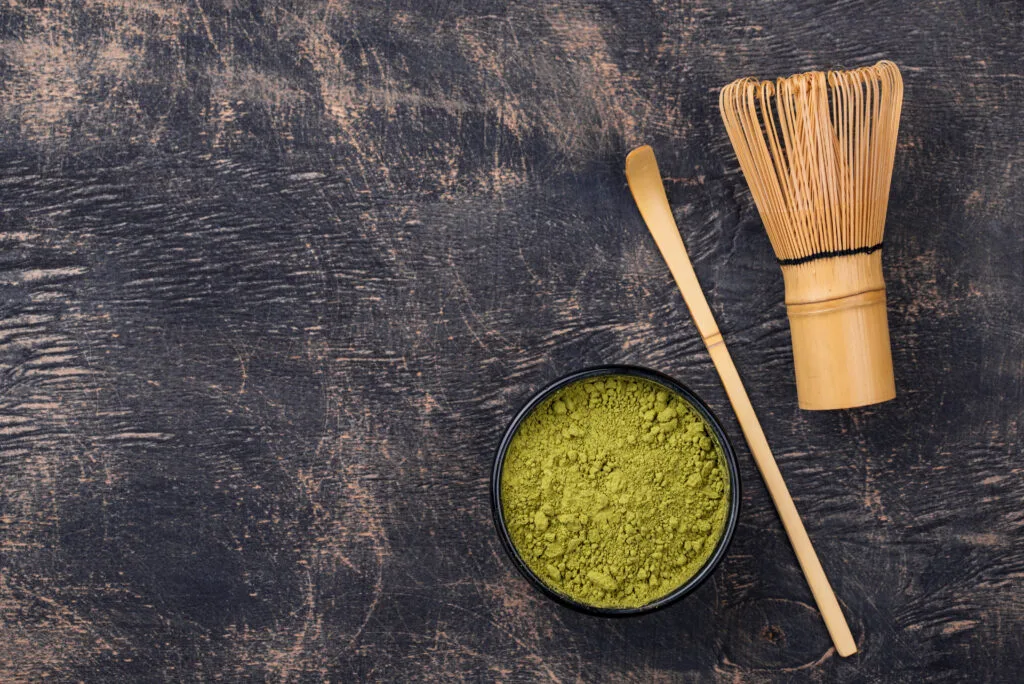
One bowl.
One whisk.
One morning.
Not because discipline is required.
Because mornings work better with fewer decisions.
Clean energy, without urgency.
Focus that doesn’t spike or crash.
A calmer way to meet the day.
Coffee pushes.
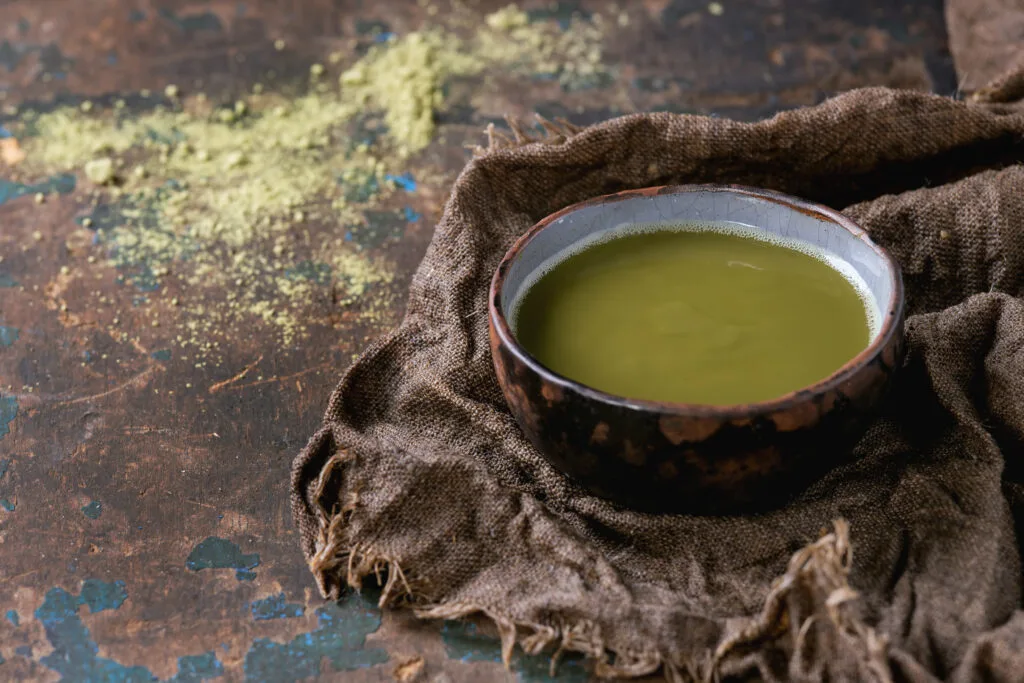
Matcha steadies.
Nami is stone-ground in Japan using traditional methods that preserve flavour and texture.
The result is a balanced cup – umami-forward, low in bitterness, and gentle on the body.
This is matcha intended for daily return, not performance.
Coffee sharpens.
Some mornings ask for that.
Others don’t.
Nami isn’t here to replace anything.
It’s here for mornings that need something steadier.
The Practice
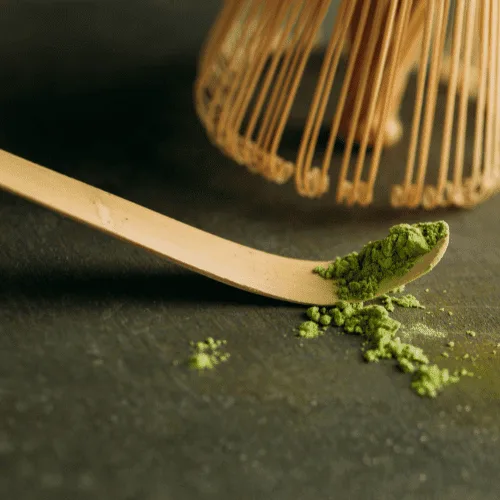
The warming of the bowl
Measuring of the leaf.
A dialogue between water and leaf.
Whisk
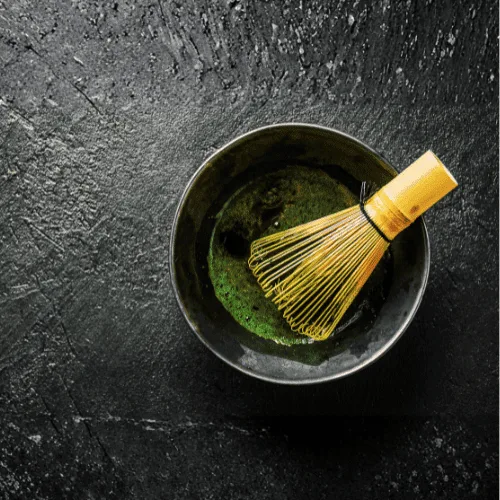
With movement, sound, texture.
A gesture repeated until it becomes instinct.
Receive
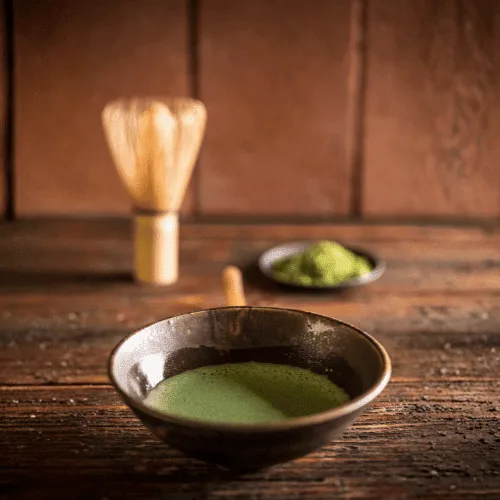
With pause before the first sip.
Attention settles.
The body listens.
Nami isn’t for optimizing your mornings.
It isn’t for tracking.
Or stacking.
Or improving yourself.
It’s for people who want something they can return to.
Even when everything else feels loud.
Where to begin
If you are new to matcha, begin simply.
One bowl. One whisk. One morning.
Matcha Ritual Set

Everything you need to prepare Nami at home.
Matcha Ritual Set
Everything you need to prepare Nami at home.
Ships Australia-wide.
Packed with care.
Small batches, restocked quietly.
Try it slowly
If it doesn’t feel as steady as you hoped, we’ll take it back.
No explanations needed.
* We will refund only the first order so please don’t order more than one!
If you order today, use code MBB for an additional 10% off your first order and free shipping.
* We will refund only the first order so please don’t order more than one!
This is not a promise of transformation.
It’s matcha, prepared with care.
Designed to make one part of your day simpler.
A Simple Assurance
We prepare this matcha with care, and we trust it will be received the same way.
If it doesn’t feel right for you, let us know.
We’ll refund your order – no questions, no pressure.