If your matcha tastes bitter, you are not alone.
Most people who try matcha for the first time assume the bitterness is normal. Some assume it is just how matcha tastes. Others assume they are doing something wrong but cannot figure out what.
The truth is simpler than most guides make it sound.
Bitterness in matcha is almost always caused by one of five things. All of them are fixable. And once you fix them, the cup you have been looking for — smooth, naturally sweet, umami-forward — is usually right there waiting.
The most common reason matcha tastes bitter
Water that is too hot.
This is the single most common cause of bitter matcha, and the easiest to fix. Ceremonial-grade matcha is made from the youngest, most delicate leaves. Boiling water burns those leaves and releases bitter compounds called catechins and tannins that would otherwise stay largely dormant.
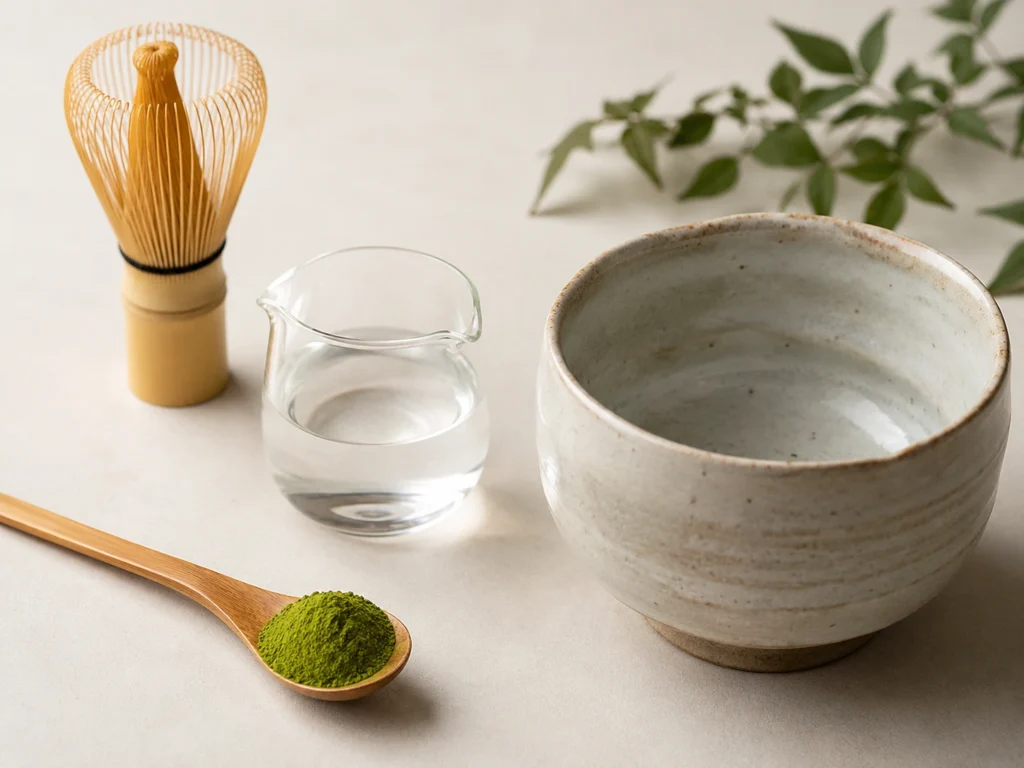
The right temperature is between 70 and 80 degrees Celsius. If you do not have a thermometer, bring your water to a boil and let it sit for two to three minutes. That is usually enough.
A 2021 study published in PMC confirmed that water temperature significantly affects the release of bitter compounds in green tea. The cooler the water, the smoother the cup.
You skipped the sifting step
Matcha clumps easily. When you whisk unsifted matcha into water, those clumps do not fully dissolve. What you end up with is uneven — some parts of the cup are over-concentrated and taste bitter, while others taste watery.
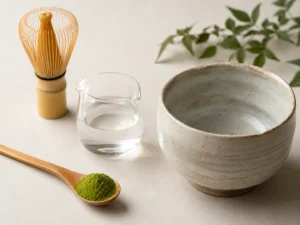
Sifting takes thirty seconds. Pass the matcha through a fine mesh strainer directly into your bowl before adding any water. It makes a noticeable difference to both texture and taste.
You are using the wrong grade
Not all matcha is the same. Culinary-grade matcha is designed to hold its flavour in lattes, smoothies and baking. Drunk with water alone, it tastes flat or bitter. It is processed differently, from older leaves, specifically because it does not need to taste good on its own.
Ceremonial-grade matcha is grown and processed for drinking. It comes from the youngest leaves, shade-grown to concentrate L-theanine — the amino acid responsible for natural sweetness and the calm, focused feeling matcha is known for.
If your matcha is bitter regardless of what you do, the grade is likely the problem.
Your ratio is off
Too much matcha powder in too little water produces a concentrated, bitter cup. The standard ratio for a traditional thin matcha (usucha) is one to two grams of matcha in 70 to 80 millilitres of water.
If you are used to making strong coffee, your instinct will be to use more powder. With ceremonial matcha, less is more. Start with one level teaspoon and adjust from there.
You rushed the whisk
Whisking matcha too quickly, or in a circular motion, creates uneven froth and leaves pockets of undissolved powder in the cup. Those pockets taste bitter.
The correct motion is a rapid W or M shape — not a circle. Whisk for at least 30 seconds. When a fine, even foam forms across the surface, the matcha is ready.
If you are new to whisking, our step by step guide to preparing ceremonial matcha walks through the technique in detail.
Why some matcha is naturally less bitter than others
Even with perfect technique, the matcha itself matters.
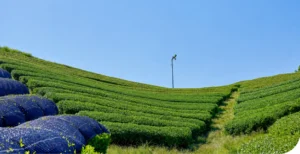
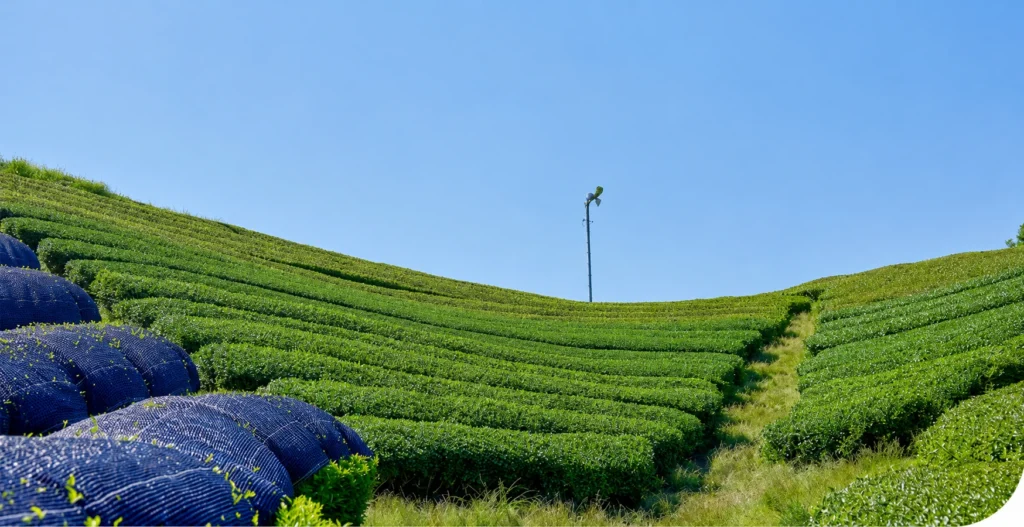
The soil, the altitude, the climate, and the farming method all affect the flavour of what ends up in your bowl. Matcha grown in the right conditions – significant temperature variation between morning and evening, misty weather, calcic soils – produces leaves with naturally higher concentrations of L-theanine. More L-theanine means more natural sweetness and less bitterness.
This is why matcha grown in Ujitawara, in the mountains of Kyoto Prefecture, has been considered among the finest in the world for centuries. The conditions there are exceptional. And farming those conditions without pesticides or synthetic fertiliser, as the Harima family has done for over 50 years, preserves the integrity of the leaf in a way that industrial farming cannot replicate.
You can taste the difference. It is not subtle.
Nami and Goku – which is right for you
Our two ceremonial matchas come from the same farm, the same family, the same unhurried approach to growing tea. The difference is in the grade.
Nami is our everyday ceremonial matcha. Lighter in body, with a gentle natural sweetness and a slight bitterness that gives it character. It works beautifully with water and is equally good in lattes.
Goku is our finest grade. Smoother, richer, more umami-forward, with a natural sweetness that needs nothing added to it. If you want to taste what ceremonial matcha is capable of – prepared slowly, with water only – Goku is where that answer lives.
Both will taste significantly different from most matcha you have tried before. If bitterness has put you off matcha in the past, either of these will change your mind.
If you are starting out, begin with Nami. If you already know you love matcha and want the finest expression of it, begin with Goku.
One last thing
Bitterness in matcha is not a fixed quality. It is a signal. It is telling you something about the water, the technique, the grade, or the farming behind it.
Fix those things and the cup changes entirely.
That is what ceremonial matcha was always about – not a bitter, acquired taste, but something smooth and steady that you return to willingly. Every morning.