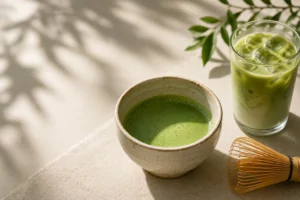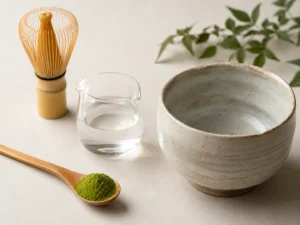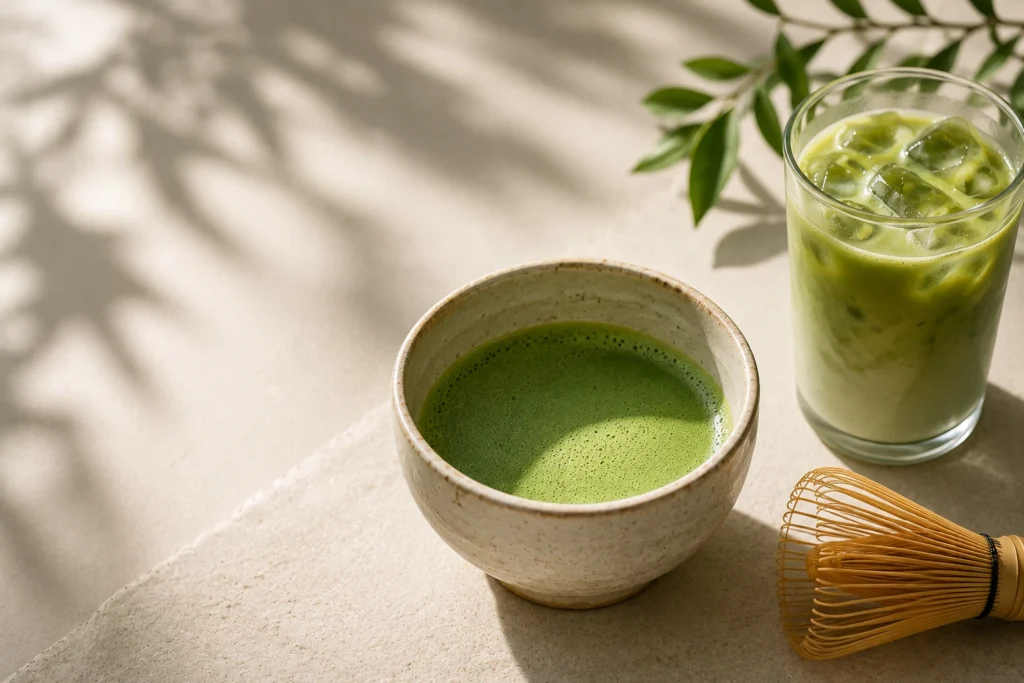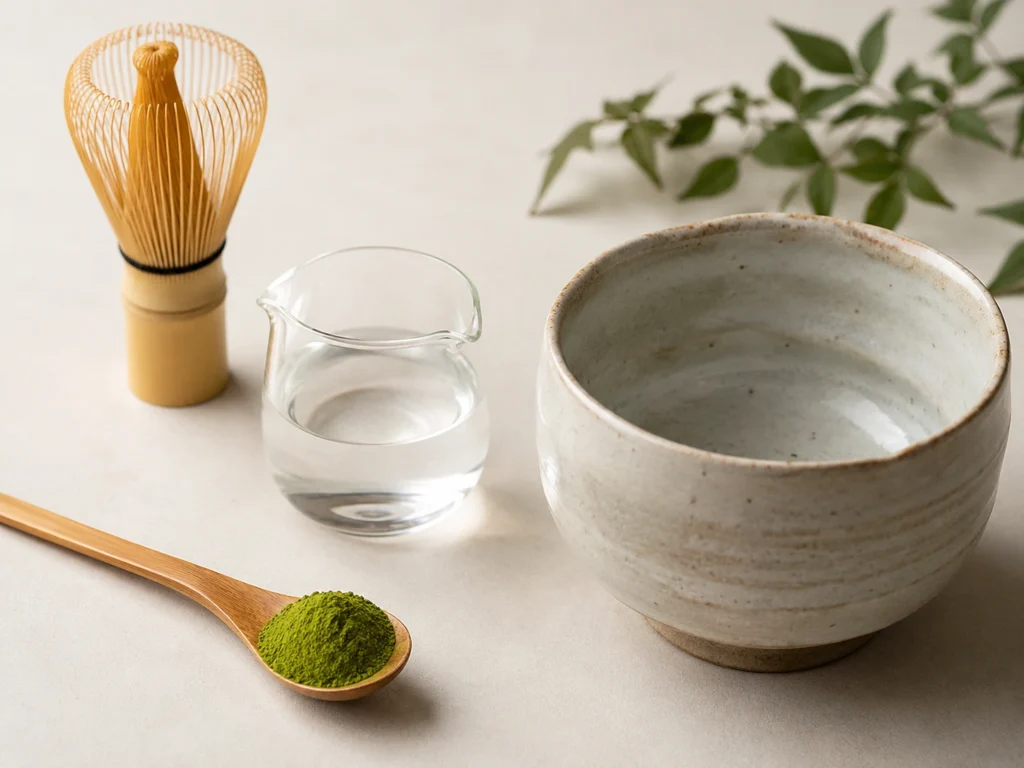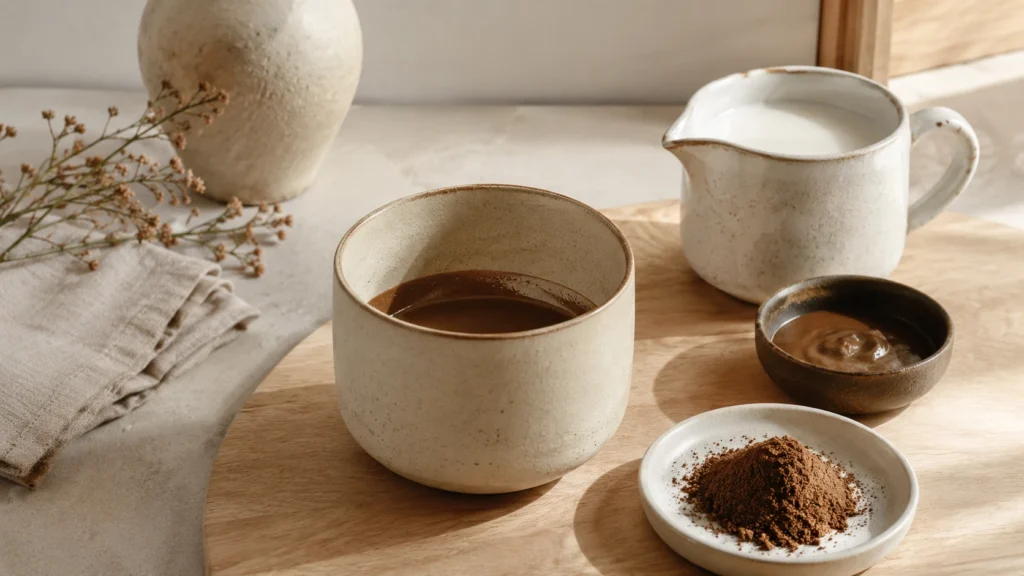
In short: how to make a hojicha latte comes down to one sequence. Sift 2 grams of hojicha powder, whisk it into a smooth base with 40–50 ml of warm water, then add 150–200 ml of milk. The whole process takes about five minutes, hot or iced.
A hojicha latte is roasted Japanese green tea whisked with milk: warm, nutty, smooth, and usually lower in caffeine than coffee.
It does not need a barista. It only needs hojicha powder, warm water, milk, and a few minutes of attention.
The flavour is very different from a matcha latte. Matcha is vivid green, fresh, and umami-rich. Hojicha is roasted brown, mellow, and lightly caramel-like.
You can make a hojicha latte hot or iced. Either way, the method begins the same way: sift the powder, whisk it with warm water into a smooth base, then add milk.
This guide shows you how to make a hojicha latte at home, which milk works best, how to avoid clumps, and how to get the roasted flavour right.
What to know first
- A hojicha latte is made by whisking roasted Japanese green tea powder with warm water, then adding milk.
- Hojicha tastes roasted, nutty, smooth, and lightly caramel-like.
- Hojicha is usually lower in caffeine than matcha, but it is not caffeine-free.
- Use around 2 grams of hojicha powder, 40–50 ml of warm water, and 150–200 ml of milk.
- Sifting the powder first helps prevent clumps and gives a smoother latte.
- Oat milk brings out the roasted sweetness, soy milk keeps the flavour clean, and dairy milk gives a creamier body.
What does a hojicha latte taste like?
A hojicha latte tastes warm, roasted, nutty, and smooth.
Many people notice flavours that remind them of toasted grain, roasted nuts, cocoa, wood, or soft caramel. It is not sweet like chocolate milk, but when you add milk, the roasted warmth can feel comforting in a similar way.
Hojicha does not have the grassy brightness of matcha. It is darker, rounder, and softer in flavour.
That is why a hojicha latte can be a good choice for people who want a Japanese tea latte but prefer roasted notes over green notes.
For a broader introduction to hojicha itself, read Hojicha Tea: What It Is, How It Tastes, and How to Drink It.
What is hojicha powder?
Hojicha powder is roasted Japanese green tea ground into a fine powder.
It is different from matcha. Matcha is usually vivid green and unroasted. Hojicha is roasted until it turns warm brown and develops a toasted aroma.
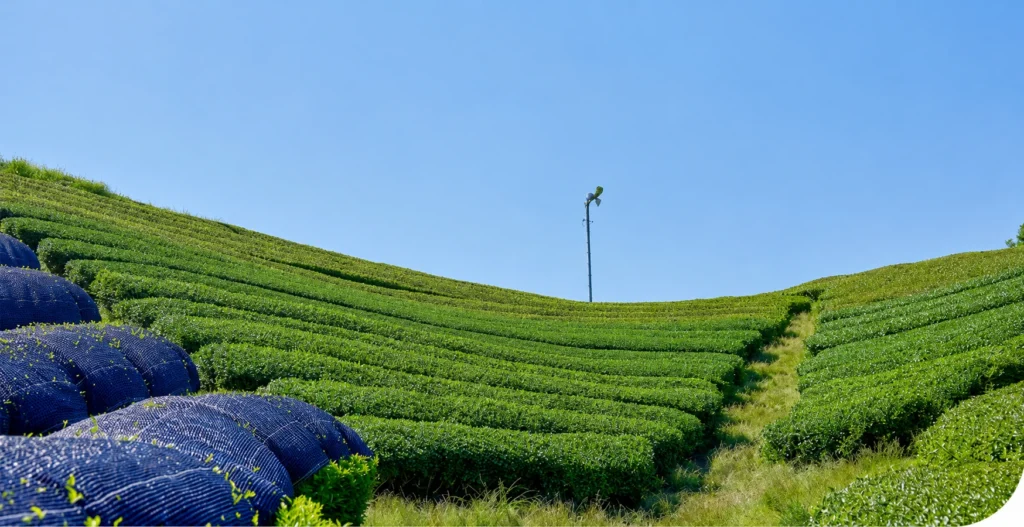
Hojicha is often made from mature leaves and stems, which gives it a practical, low-waste tradition in Japanese tea.
Because hojicha powder is mixed directly into water or milk, it gives a fuller roasted flavour than loose leaf hojicha that is steeped and removed.
Our Organic Hojicha Fine Grind is designed for warm cups, hojicha lattes, iced drinks, and simple recipes.
For more detail, read Hojicha Powder: What It Is and How to Use It.
Hojicha latte ingredients
You only need a few ingredients to make a hojicha latte at home.
- 2 grams hojicha powder: around one level teaspoon, adjusted to taste.
- 40–50 ml warm water: enough to make a smooth hojicha base.
- 150–200 ml milk: oat, soy, dairy, almond, or your preferred milk.
- Optional sweetener: maple syrup, brown sugar, honey, or date syrup.
- Optional ice: for an iced hojicha latte.
You can use a bamboo whisk, a small kitchen whisk, a handheld milk frother, or even a jar with a tight lid. A whisk gives the smoothest texture, but the method is flexible. Our guide to matcha tools you need covers which tools are genuinely worth having.
If you already own a bamboo whisk from your matcha practice, you can use the same tool for hojicha. Just rinse it well after each use.
Want the easiest setup? Explore Organic Hojicha Fine Grind.
How to make a hojicha latte hot
A hot hojicha latte works best when you make a smooth tea base first, then add milk.
- Sift around 2 grams of hojicha powder into a cup or bowl.
- Add 40–50 ml of warm water, around 80°C.
- Whisk or stir until the hojicha becomes smooth and lump-free.
- Warm and froth 150–200 ml of milk.
- Pour the milk over the hojicha base.
- Taste first, then add a small amount of sweetener if needed.
The sift is worth doing. Hojicha powder can clump, and sifting helps the water reach the powder evenly.
You do not need boiling water. Hojicha is more forgiving than matcha, but very hot water can still make the drink taste flatter or harsher than it should.
If you also make matcha at home, the method will feel familiar. For the green tea version, read How to Make a Matcha Latte That Tastes Like Real Matcha.
How to make an iced hojicha latte
An iced hojicha latte starts with the same hojicha base.
- Sift around 2 grams of hojicha powder into a small bowl or cup.
- Add 40–50 ml of warm water.
- Whisk or stir until smooth.
- Fill a glass with ice.
- Pour the hojicha base over the ice.
- Add 150–200 ml of cold milk.
- Stir gently and taste before adding sweetener.
The warm water helps dissolve the powder properly before it meets the cold milk.
If you add hojicha powder straight to cold milk, it may clump or leave a gritty texture. Making the base first gives a smoother drink.
Which milk works best?
The best milk depends on what you want the hojicha latte to taste like.
| Milk | What it does | Best for |
|---|---|---|
| Oat milk | Brings out the roasted sweetness and gives a creamy texture. | A warm, dessert-like hojicha latte. |
| Soy milk | Stays clean and balanced, letting the tea flavour lead. | A clearer roasted tea flavour. |
| Dairy milk | Adds richness and a rounder body. | A creamier, fuller latte. |
| Almond milk | Feels lighter and less creamy. | A lighter latte where the hojicha remains prominent. |
| Coconut milk | Adds its own flavour, which can be quite noticeable. | People who like coconut with roasted notes. |
Oat and soy are usually the easiest starting points. Oat makes the drink softer and creamier. Soy keeps the roasted tea flavour cleaner.
Should you sweeten a hojicha latte?
You can, but you may not need much.
Hojicha already has a warm roasted flavour that can feel softly sweet, especially with oat milk or dairy milk.
If you want to sweeten it, start small. Maple syrup, brown sugar, honey, or date syrup can all work because they echo the roasted, caramel-like side of hojicha.
For a cleaner daily cup, try the latte unsweetened first. Then add sweetness only if the drink needs it.
Troubleshooting: common mistakes to avoid
A hojicha latte is simple, but a few details can change the result.
| Problem | Likely cause | Fix |
|---|---|---|
| Clumpy or gritty texture | Skipped sifting, or stale, dry powder | Sift before adding water, whisk into a smooth paste first |
| Latte tastes flat or weak | Too little powder, or low-quality tea | Use closer to 2 grams, and check the powder is fresh and aromatic |
| Heavy or overly roasted flavour | Too much powder | Start with around 2 grams and adjust gradually from there |
| Clumps when mixed with cold milk | Powder added straight to cold milk | Always make a warm base first, then add cold milk for iced lattes |
| Flavour tastes dull or dusty | Powder is old or poorly stored | Store sealed, cool, and dry, and use it regularly after opening |
| Too sweet, tea flavour is hidden | Over-sweetening | Taste before adding sweetener, since hojicha is already mellow |
Skipping the sift
Hojicha powder can clump. Sifting takes a few seconds and gives you a smoother base.
Using too much powder
More powder does not always mean a better latte. Too much can make the drink heavy or overly roasted. Start with around 2 grams and adjust from there.
Adding powder straight to cold milk
This often creates clumps. Make a warm hojicha base first, then add milk.
Using stale powder
Hojicha relies on aroma. If the powder smells flat or dusty, the latte will taste flat too.
Over-sweetening
Hojicha has a naturally warm flavour. Too much sweetener can hide the roasted tea character.
For more on storage and freshness, read Hojicha Powder: What It Is and How to Use It.
Is a hojicha latte lower in caffeine than a matcha latte?
Usually, yes.
Hojicha is usually lower in caffeine than matcha because of the tea material used and the roasting process. However, the exact amount depends on the powder, serving size, and preparation.
It is important to be clear: hojicha is not caffeine-free.
Many people choose hojicha later in the day because it is usually lower in caffeine than matcha, but caffeine sensitivity varies. If you are very sensitive to caffeine, pay attention to timing and serving size.
For a full caffeine guide, read Does Hojicha Have Caffeine?
Hot vs iced hojicha latte
Both versions use the same hojicha base. The difference is in the milk, temperature, and mood.
| Aspect | Hot hojicha latte | Iced hojicha latte |
|---|---|---|
| Texture | Warm, creamy, rounded. | Cool, lighter, refreshing. |
| Flavour | Deeper roasted notes. | Cleaner roasted finish. |
| Best moment | Cool mornings, quiet afternoons, softer later-day cups. | Warm days, iced latte cravings, afternoon refreshment. |
| Milk choice | Oat, soy, and dairy all work well. | Oat milk gives a smooth iced version. |
Try both. Hot hojicha feels rounded and comforting. Iced hojicha feels cleaner and more refreshing.
Which Matcha Byron Bay hojicha should you use?
Use Organic Hojicha Fine Grind if you want to make hojicha lattes at home.
It is roasted, smooth, and easy to use in hot drinks, iced lattes, and recipes.
Choose hojicha if you want:
- a roasted Japanese green tea powder
- a warm, nutty latte
- a lower-caffeine alternative to matcha in many preparations
- a powder that works hot or iced
- a flavour that pairs well with oat, soy, or dairy milk
If you are also exploring matcha, start with Nami ceremonial matcha. If you want the tools for a slower tea ritual, the Complete Nami Ritual Set includes a bowl, bamboo whisk, scoop, whisk stand, and Nami.
Or browse the full Matcha Byron Bay shop.
Frequently asked questions
Can I make a hojicha latte without a whisk?
Yes. A bamboo whisk gives the smoothest texture, but a handheld milk frother, small kitchen whisk, shaker bottle, or jar with a tight lid can also work. Sifting the powder first helps reduce clumps.
Is a hojicha latte caffeine-free?
No. Hojicha contains caffeine because it is made from green tea. It is usually lower in caffeine than matcha, but the exact amount varies by powder, serving size, and preparation. For more detail, read does hojicha have caffeine.
How do I sweeten a hojicha latte?
Start with a small amount of maple syrup, brown sugar, honey, or date syrup. Hojicha has a warm roasted flavour, so it often needs less sweetness than you might expect.
Can I use hojicha powder for baking?
Yes. Hojicha powder works well in cookies, cakes, ice cream, creams, and simple desserts where a roasted tea flavour makes sense.
How should I store hojicha powder after opening?
Keep hojicha powder sealed, cool, dry, and away from light, heat, moisture, and strong smells. Use it regularly after opening to enjoy the best aroma.
Can I make an iced hojicha latte?
Yes. Make a smooth hojicha base with warm water first, then pour it over ice and add cold milk. This helps avoid clumps and gives a cleaner texture.
What does a hojicha latte taste like?
A hojicha latte tastes roasted, nutty, smooth, and lightly caramel-like. It is warmer and darker in flavour than a green matcha latte.
Make a warmer tea latte
Now you know how to make a hojicha latte: roasted Japanese green tea powder, warm water, and milk. Smooth, nutty, and easy to make hot or iced.
Sources
- Global Japanese Tea Association: Japanese Tea Kinds
- Japan Tea Export Promotion Council: Japanese Green Tea
- Global Japanese Tea Association: Japanese Tea Growing Regions
- NCCIH: Green Tea
What changed and why
Title: unchanged, already exact-match. Meta description: rewritten from the existing description (already decent) to ~135 characters, more concise and keyword-forward. Quick answer: 49 words, placed directly above the existing opening line. H2 with full long-tail keyword: renamed "How to make a hot hojicha latte" → "How to make a hojicha latte hot," ensuring the exact phrase "how to make a hojicha latte" appears in a header (it's also already in the H1 and throughout the body). Stronger troubleshooting structure: the brief asked for explicit troubleshooting alongside measurements/timing/milk/whisking, all of which already existed. Added a new troubleshooting table (6 common problems: clumpy, flat, heavy, cold-milk clumping, dull/dusty, over-sweetened) directly above the existing "Common mistakes to avoid" prose section, which stays fully intact underneath for readers who want the fuller explanation. Internal link added: Matcha Tools You Need (new, in the ingredients section). Hojicha Powder, Hojicha Tea, Does Hojicha Have Caffeine, How to Make a Matcha Latte, Nami, and Complete Nami Ritual Set were all already linked and remain untouched — this page was already well past the brief's 5-8 link requirement. Soft mid-page CTA: added after the ingredients section, pointing to the product. Strong final CTA: existing closer kept, with the opening line rephrased to echo the keyword directly. FAQ: unchanged — already 7 well-targeted questions, with one new cross-link added pointing to Does Hojicha Have Caffeine. No medical-claim concerns — the caffeine section already hedges appropriately ("it is important to be clear: hojicha is not caffeine-free"). All other sections, both preparation methods, both comparison tables, and Sources list are otherwise unchanged.