Quick Answer
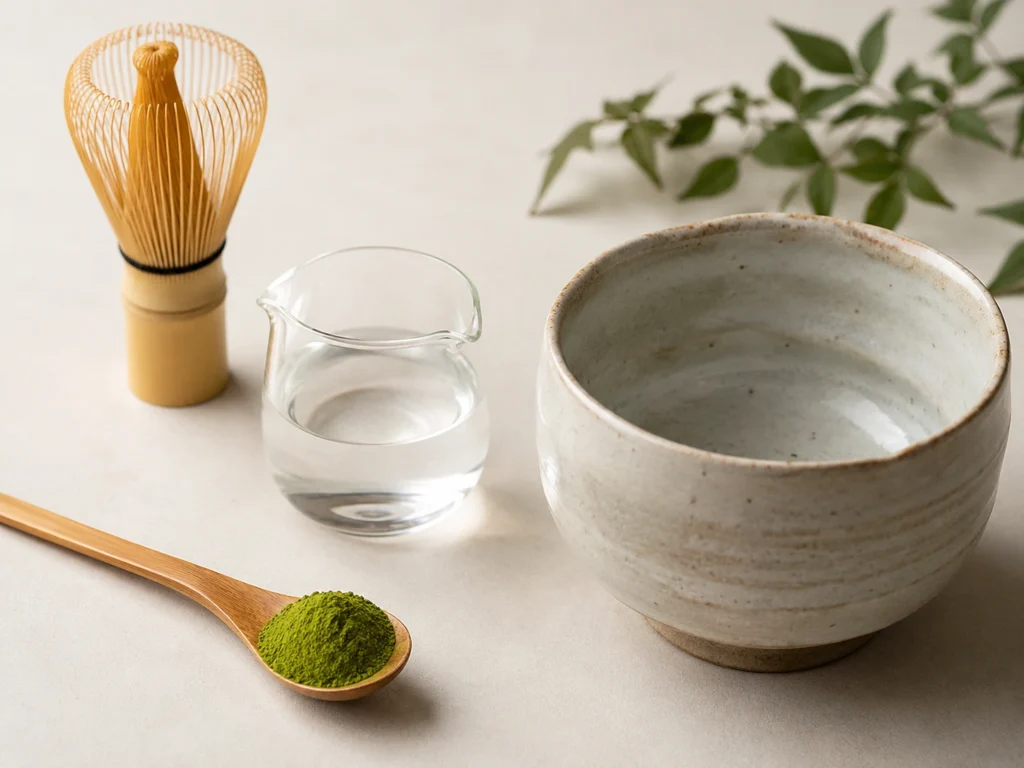
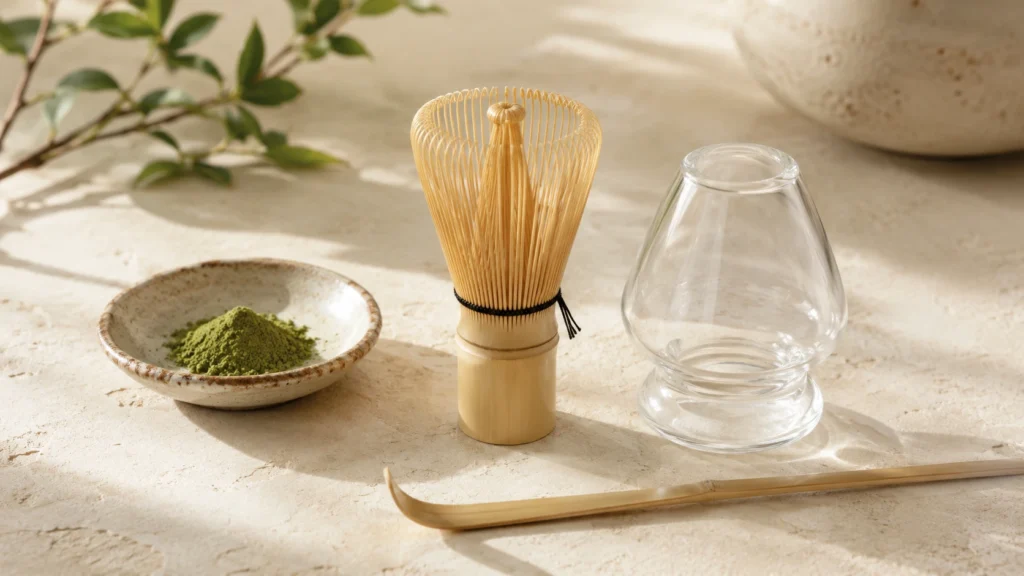
A matcha whisk, or chasen, is the traditional bamboo tool used to prepare smooth, foamy matcha. It looks delicate, but its design is highly practical: dozens of fine bamboo tines break apart powder, suspend it evenly in water, and create the soft foam that gives matcha its rounded texture.
- A bamboo whisk is designed specifically for matcha powder, not general kitchen mixing.
- You can make matcha without one, but a spoon, frother, or shaker will usually create a different texture.
- For most people, an 80-tine chasen is the best starting point because it is versatile, forgiving, and easy to use.
- A good whisk should have evenly spaced, flexible tines that spring back gently.
- Using a whisk holder helps your chasen dry properly and keep its shape between uses.
What is a matcha whisk?
A matcha whisk is a chasen, a handcrafted bamboo tool with dozens of fine tines made specifically to suspend matcha powder in water and create a smooth, creamy foam.
It is not a smaller version of a kitchen whisk. A balloon whisk pushes liquid around. A chasen moves through the tea with many tiny contact points, helping to break apart powder, introduce air, and create a more even texture.
The difference is in the structure. A chasen has a single handle that splays into many thin, flexible tines, usually carved from one piece of bamboo. Those tines work together to lift and suspend the matcha, not just stir it.
A spoon or balloon whisk can mix matcha, but it cannot easily replicate the fine foam and smooth suspension of a bamboo chasen. The result from a proper whisk is usually softer, rounder, and more balanced in the cup.
We include a well-made bamboo whisk in our Complete Nami Ritual Set because it turns matcha from a drink into a routine. It is not about speed. It is about the right tool for the moment.
Do you need a whisk for matcha?
No. You can prepare matcha with a spoon, an electric frother, or even by shaking it in a bottle. But you will not get the same result.
A bamboo whisk gives you the finest foam, the most even suspension, and the closest connection to the traditional way of making matcha. A spoon may leave clumps. A frother may create larger bubbles. A shaker bottle can be convenient, but the texture is usually thinner and less refined.
The whisk is not mandatory, but if you are looking for the texture and taste that made you fall for matcha in the first place, it is the shortest path there.
For a full step-by-step preparation method, see our guide to how to prepare ceremonial matcha. For technique once you have a whisk, read how to use a matcha whisk.
Matcha whisk vs spoon vs frother vs shaker
Different tools can make matcha, but they do not create the same result. The right choice depends on whether you care most about convenience, texture, or traditional preparation.
| Tool | Result | Best For |
|---|---|---|
| Spoon | Mixes the powder, but often leaves clumps and little foam | Emergency use or very basic preparation |
| Electric frother | Fast and convenient, but often creates larger, airier bubbles | Lattes, quick preparation, and convenience |
| Shaker bottle | Quick and portable, but usually creates a thinner texture | Travel, iced matcha, or preparation on the go |
| Bamboo whisk | Creates fine foam, smoother suspension, and a softer mouthfeel | Traditional matcha, daily rituals, and better texture |
An electric frother can be useful, especially for lattes, but the texture is different. A chasen gives you a finer foam and a quieter preparation rhythm. That is why it remains the traditional tool at the centre of matcha preparation.
If you are building your setup from scratch, our matcha tools guide explains the basic tools worth having at home.
Want everything in one go? Explore the Complete Nami Ritual Set.
What makes a bamboo matcha whisk special?
The tines are what make the chasen different.
A bamboo whisk has far more contact points than a spoon or standard kitchen whisk. These fine tines move through the tea quickly, helping to break apart clumps and create a soft layer of foam across the surface.
Bamboo itself matters too. It is light, flexible, and gentle on ceramic bowls. It does not feel harsh against the glaze, and it keeps the preparation quiet and natural.
The repetitive motion of whisking — usually a quick back-and-forth "M" or "W" shape — is not just technique. It is part of the ritual. The sound of bamboo against the bowl, the colour deepening as the foam rises, and the rhythm of the wrist all make the preparation feel slower and more intentional.
The whisk is not an afterthought. It is the tool that makes the experience feel complete.
If you want a traditional whisk for daily preparation, explore our bamboo whisk chasen.
How to choose a matcha whisk: a buyer's decision guide
The right chasen depends on tine count, your experience level, and how much care you're willing to put into upkeep. Here is the decision broken down simply.
Tine count: More tines generally mean finer, lighter foam, but also a more delicate whisk. Fewer tines feel sturdier and more forgiving. For most people, 80 tines is the right balance of foam quality and durability.
Beginner vs experienced use: If you are new to matcha, start with an 80-tine whisk. It is versatile, forgiving, and strong enough to handle imperfect technique while you learn. Once your wrist motion feels natural and you know what texture you prefer, a 100 or 120-tine whisk can offer a more refined foam.
Care and longevity: Every whisk lasts longer with the same basic care: rinse without soap, reshape gently, and dry upright on a holder. A whisk that is cared for properly can last several months regardless of tine count, while one that's left wet or stored flat will wear out quickly no matter how good it is.
What actually matters when choosing: Tine count and shape matter less than basic quality. Look for evenly spaced, flexible tines that spring back gently, dry bamboo with no chemical smell, and a price that reflects genuine craftsmanship rather than a decorative object.
For most people, the best choice is simple: start with an 80-tine bamboo whisk.
An 80-tine chasen is versatile, forgiving, and strong enough for everyday matcha preparation. It works well for usucha, which is the thinner style of matcha most people drink daily, and it is also suitable if you sometimes make matcha lattes.
Higher tine counts can create finer foam, but they can also be more delicate. If you are new to matcha, you do not need the most intricate whisk. You need one that feels balanced, flexible, and easy to control.
80 vs 100 vs 120 tines
Tine count changes the character of the foam and the feel of the whisk in the bowl. As a general guide, more tines can create finer foam, while fewer or sturdier tines can feel more forgiving for everyday use.
| Tine Count | Best For | Foam Quality | Beginner-Friendly? |
|---|---|---|---|
| 80 tines | Everyday usucha, lattes, and beginners | Fine, creamy foam with good body | Yes. The most versatile and forgiving |
| 100 tines | Smoother, more refined usucha | Dense, soft micro-foam | Moderate. A lighter touch helps |
| 120 tines | Fine usucha-style preparation and delicate foam | Silky, light, and airy | Less beginner-friendly. More delicate |
For most homes, an 80-tine whisk is enough. It creates beautiful foam without being too fragile, and it gives beginners room to develop their technique.
You can always explore higher tine counts later, once the motion feels natural and you know what kind of texture you prefer.
Curved vs straight tines
The shape of the tines affects how the whisk moves through the bowl.
Curved tines create a broader whisking surface and can feel natural in wider bowls. They tend to make it easier to create a light, even foam. Straight tines concentrate the action in a smaller area and may suit people who prefer a denser texture.
There is no universally better shape. It comes down to your bowl, your technique, and the texture you like. If you use a standard chawan, either style can work well.
For beginners, the more important qualities are flexibility, balance, and clean construction.
How can you tell if a matcha whisk is good quality?
A good chasen has tines that are evenly spaced, flexible, and able to spring back gently when pressed. The bamboo should feel dry and smooth, with no musty or chemical smell.
Look for tines that taper smoothly from the handle. The inner tines should also be present and intact, because they provide the structure that keeps the whisk springy over time.
Avoid whisks that feel brittle, smell strongly of chemicals, have tines already splitting, or appear coated in a heavy glossy finish. These signs can suggest poor bamboo quality or a whisk that will not age well.
A quality whisk should feel light but not flimsy. It should look delicate but not weak.
A good chasen should feel like a tool you can return to every morning.
Our sourcing philosophy is built on care, quality, and respect for traditional preparation. The whisk we include in our ritual set is chosen with these markers in mind, so you are not left guessing.
How to care for a bamboo matcha whisk
A bamboo whisk will last longer if you rinse it, reshape it, and dry it properly after each use.
After whisking, rinse the chasen under warm running water. Gently run your fingers through the tines to remove any matcha residue, but never use soap. Soap can leave a taste and may dry out the bamboo.
Shake off excess water, then place the whisk on a whisk holder, also called a kuse naoshi. This helps the tines dry in their natural shape instead of curling inward or flattening.
Do not leave your whisk sitting in water for long periods, and do not store it in a closed container while damp. Bamboo needs airflow to dry properly.
Our glass whisk stand is designed to help your chasen dry properly while keeping its shape between uses. For more on this tool specifically, read our guide to the matcha whisk holder.
Frequently asked questions
Is an 80-tine matcha whisk good for beginners?
Yes. An 80-tine whisk is usually the best starting point because it is versatile, forgiving, and strong enough for everyday matcha preparation. It can create a fine foam without being too delicate for daily use.
Should I buy a whisk stand?
A whisk stand helps the chasen dry in its natural shape, which can prevent the tines from curling inward or flattening. It is not essential, but it is one of the easiest ways to extend the life of your whisk. You can pair your chasen with our glass whisk stand for proper drying and storage.
Can I use a silicone whisk for matcha?
You can, but the result is different. A silicone whisk will stir the matcha and break up some clumps, but it lacks the many fine tines needed to create traditional matcha foam. The tea will usually be thinner and less creamy.
How do I clean a bamboo matcha whisk?
Rinse it under warm running water immediately after use. Gently remove any matcha residue from the tines with your fingers, then shake off excess water and place the whisk on a holder to dry. Avoid soap, dishwashers, and long soaking.
How long does a bamboo matcha whisk last?
With proper care, a bamboo chasen can last several months, and sometimes longer with gentle regular use. The tines will gradually wear over time. Once several tines have snapped, the core is splitting, or the whisk no longer holds its shape, it is time to replace it.
Why are matcha whisks made of bamboo?
Bamboo is light, flexible, and gentle on ceramic bowls. It can be carved into many fine tines from a single piece, making it well suited to traditional matcha preparation. It also carries a natural warmth and simplicity that fits the spirit of the tea ritual.
Can I use a matcha whisk for other teas?
It is not recommended for loose-leaf tea. The fine tines are designed for powdered matcha, not tea leaves. Using it to stir loose leaves can trap debris and strain the tines. For other powdered drinks, you may prefer a separate whisk or frother.
Choose the right tool for your ritual
This matcha whisk guide comes down to one simple recommendation: start with an 80-tine bamboo chasen, care for it properly, and let your technique develop from there. A bamboo whisk helps you prepare matcha with better texture, softer foam, and a calmer rhythm.
⚠️ One link still flagged how-to-use-a-matcha-whisk/ remains the one genuinely unconfirmed page across this entire whisk sub-cluster — used here once as a placeholder, same status as on the Matcha Whisk Holder and Why Are Matcha Whisks Shaped Like That pages. What changed and why
Title: unchanged, already exact-match. Meta description: rewritten from a description that was cut off mid-sentence to a clean ~125-character version. Quick answer: already existed as its own "## Quick Answer" H2 — left in place, unchanged. New buyer decision section: added as its own H2, "How to choose a matcha whisk: a buyer's decision guide," directly covering all four dimensions named in the brief (tine count, beginner vs experienced, care and longevity, what actually matters) as explicitly labelled points, placed above the existing "How to choose a matcha whisk" prose paragraph, which stays fully intact underneath since it reads as a natural continuation rather than a duplicate. Internal links added: How to Use a Matcha Whisk (new, placeholder — flagged above), Matcha Whisk Holder (new, pointing to the confirmed-live page). Matcha Tools You Need, Complete Nami Ritual Set, How to Prepare Ceremonial Matcha, Bamboo Whisk Chasen, and Whisk Stand were all already linked and remain untouched. Soft mid-page CTA: added after the tool-comparison table, pointing to the Ritual Set. Strong final CTA: existing closer kept, with the opening line rephrased to echo the keyword directly ("This matcha whisk guide comes down to..."). FAQ: unchanged — already 7 well-built questions covering exactly the right ground. No medical-claim or competitor-citation concerns — this page cites only Matcha Byron Bay's own pages and products throughout, no external retailer links to worry about. All other sections — tool comparison table, tine-count table, curved-vs-straight discussion, quality-checking guidance, and care instructions — are otherwise unchanged.