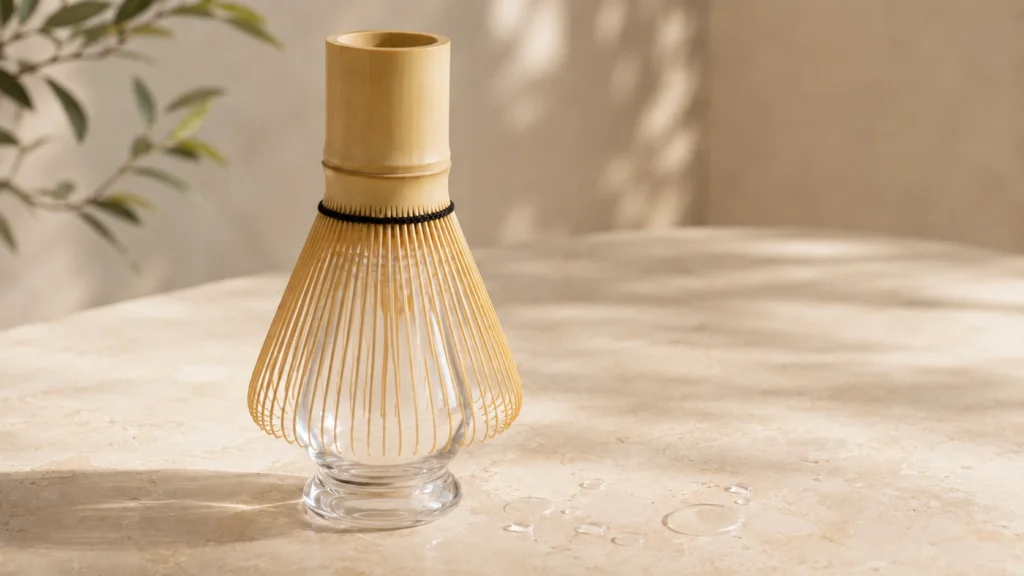
In short: a matcha whisk holder is a small stand that supports a bamboo whisk while it dries, keeping the tines open so the whisk holds its shape. You don't need one to make matcha, but if you whisk regularly, a holder helps your chasen last longer.
A matcha whisk holder is a small tool with a quiet job.
It does not stir, froth, or brew. It simply holds your bamboo whisk when you are not using it.
That may sound minor, but the shape of a bamboo whisk matters. The fine tines need to dry open so the whisk keeps its form and continues to move smoothly through matcha.
You can make matcha without a whisk holder. But if you use a bamboo chasen regularly, a holder is worth having. It helps the whisk dry more evenly, keeps the tines lifted, and makes the ritual feel more complete.
What to know first
- A matcha whisk holder, also called a kusenaoshi, is designed to hold a bamboo whisk while it dries.
- You do not need one to make matcha, but it is helpful if you use a bamboo whisk often.
- A shaped holder helps the tines dry open and keep their curved form.
- Good airflow still matters. A holder helps with drying, but it does not replace proper rinsing and care.
- Ceramic is a strong everyday choice because it is stable, easy to rinse, and suits a traditional matcha setup.
- If you want a complete setup, the Matcha Byron Bay Ritual Set includes a bowl, whisk, scoop, whisk stand, and Nami matcha.
What is a matcha whisk holder?
A matcha whisk holder is a shaped stand used to hold a bamboo matcha whisk after rinsing.
In Japanese tea tools, it is often called a kusenaoshi. The word refers to correcting or preserving the whisk's shape. That is exactly what the tool is for.
A bamboo whisk, or chasen, has many fine tines that open outward as the whisk is used. Those tines are what help mix matcha powder into water and create a smooth surface.
After use, the whisk is wet and flexible. If it is left flat on a bench, pressed into a drawer, or dried with the tines crushed inward, it can gradually lose its open shape.
A whisk holder supports the tines from underneath, allowing the whisk to sit upright while it dries. It is a simple care tool, but it helps the whisk keep the shape it needs for proper matcha preparation.
You can buy the Matcha Byron Bay Whisk Stand on its own, or choose the Complete Nami Ritual Set if you want the full preparation setup.
Want everything in one set? Explore the Complete Nami Ritual Set.
Do you need a matcha whisk holder? A simple buyer's guide
Here is the decision broken down simply.
What a matcha whisk holder does: - Supports the bamboo tines from underneath so they dry in an open, curved shape. - Improves airflow around the whisk after rinsing. - Gives the whisk a dedicated, clean place to rest between uses.
When you need one: - You use a bamboo whisk regularly, not just once or twice. - You want your chasen to keep its shape and last longer. - You are building a proper matcha setup at home and want the ritual to feel complete.
When you can skip it: - You are only trying matcha once or occasionally and don't yet own a bamboo whisk. - You use a milk frother, shaker, or kitchen whisk instead of a chasen. - You already have a well-ventilated spot where the whisk can dry without being crushed.
If you are still deciding what you actually need to begin, our guide to matcha tools you need covers the genuine essentials.
Do you really need a matcha whisk holder?
You can make matcha without a whisk holder.
But if you use a bamboo whisk regularly, a holder is one of the most useful care tools you can own.
A bamboo whisk works because of its shape. The outer tines curve outward, the inner tines create movement, and the open structure helps the whisk glide quickly through the tea. When the whisk dries properly, it keeps that shape more easily.
Without proper drying, a bamboo whisk can lose its form or stay damp for too long. A holder helps reduce that risk by keeping the tines open and allowing better airflow.
Think of it like storing a good brush. You do not need a special stand to use the brush once. But if you want the tool to last and stay pleasant to use, how you store it matters.
If you are only trying matcha once, a holder may not feel essential. If matcha is becoming part of your morning ritual, a whisk holder makes much more sense.
What does a whisk holder actually do?
A whisk holder does three simple things.
It helps the whisk dry open
After rinsing, the holder keeps the bamboo tines lifted and open. This helps the whisk dry in the shape it is meant to keep.
It supports the tines
The curved form of the holder supports the underside of the whisk. This helps reduce curling, flattening, or drooping over time.
It keeps the whisk off the bench
Instead of leaving the wet whisk flat on a surface, the holder gives it a dedicated place to dry. That feels cleaner, calmer, and more intentional.
A holder does not magically preserve a whisk forever. You still need to rinse the whisk well, shake off excess water, and let it dry somewhere ventilated. But it gives the whisk a better place to rest between uses.
How to use a matcha whisk holder
Using a whisk holder is simple.
- After making matcha, rinse the bamboo whisk under warm water.
- Do not use soap, as it can linger in the bamboo and affect the taste of future bowls.
- Gently shake off excess water.
- Place the whisk upside down over the holder so the tines rest around the shaped curve.
- Let it dry in a well-ventilated place.
The whisk should sit naturally on the holder. You should not need to force the tines into position.
If the whisk is new, the tines may feel tight at first. After soaking and using the whisk a few times, they will usually open and soften into a more natural shape.
For the full tea-making method, read our guide on how to prepare ceremonial matcha. For the whisking technique itself, read our guide on how to use a matcha whisk.
Ceramic vs wood vs plastic whisk holders
Whisk holders can be made from different materials. The best choice is usually the one that is stable, easy to clean, and allows your whisk to dry properly.
| Material | What to know | Best for |
|---|---|---|
| Ceramic | Stable, easy to rinse, visually suited to a traditional matcha setup, and pleasant for daily use. | Most home matcha rituals. |
| Wood | Natural and lightweight, but it should be dried carefully because wood can absorb moisture. | People who like a natural tool set and are careful with drying. |
| Plastic | Lightweight and easy to clean, but it may not feel as natural or premium as ceramic or wood. | Temporary, travel, or very casual use. |
Ceramic is a strong everyday choice because it is stable, easy to rinse, and looks natural beside a chawan and bamboo whisk.
The Matcha Byron Bay Whisk Stand is designed for that simple purpose: to give your chasen a clean, stable place to dry between bowls.
How to dry and store your bamboo whisk
A bamboo whisk is a natural tool, so care matters.
After each use, rinse it with warm water. Avoid soap. Avoid dishwashers. Avoid leaving it soaking for long periods.
Once rinsed, shake off excess water and place the whisk on its holder. Keep it somewhere with airflow rather than sealing it away while damp.
Do not store a damp whisk inside a closed container, drawer, or pouch. Bamboo needs to dry properly before being put away.
Once fully dry, you can leave it on the holder if your space is clean and dry. If you prefer to store it elsewhere, choose a breathable place and avoid crushing the tines.
If you are building your matcha setup from scratch, the Bamboo Whisk Chasen and Whisk Stand are the two tools that make the biggest difference to texture and care.
How to know if your whisk is ready to use
A bamboo whisk is ready when the tines have softened slightly and opened enough to move easily through the water.
Before using a new whisk for the first time, soak the tines briefly in warm water. This helps them relax and open. The outer tines may bloom outward, and the inner tines should form a neat centre.
You do not need to force the shape. Bamboo softens with water and use.
Before each regular use, a quick rinse or short soak in warm water is usually enough. This removes dust and helps prevent dry, brittle tines from scraping the bowl.
After use, rinse again, shake off excess water, and place the whisk back on the holder to dry.
This small rhythm — rinse, whisk, rinse, dry — is part of the ritual. For the full technique on whisking itself, see our matcha whisk guide.
When should you replace a bamboo whisk?
A bamboo whisk will not last forever.
Over time, the tines can fray, bend, break, or lose their spring. This is normal. A chasen is a working tool, not a permanent object.
You may want to replace your whisk when:
- many tines are broken or missing
- the tips are frayed and scratchy
- the whisk no longer moves smoothly through the tea
- it becomes difficult to create a smooth bowl
- it has an unpleasant smell even after rinsing and drying
A holder can help your whisk keep its shape for longer, but care, frequency of use, humidity, and handling all matter.
If your whisk is worn out, replacing it with a fresh Bamboo Whisk Chasen will usually make your matcha preparation feel smoother again.
Which Matcha Byron Bay set includes a whisk holder?
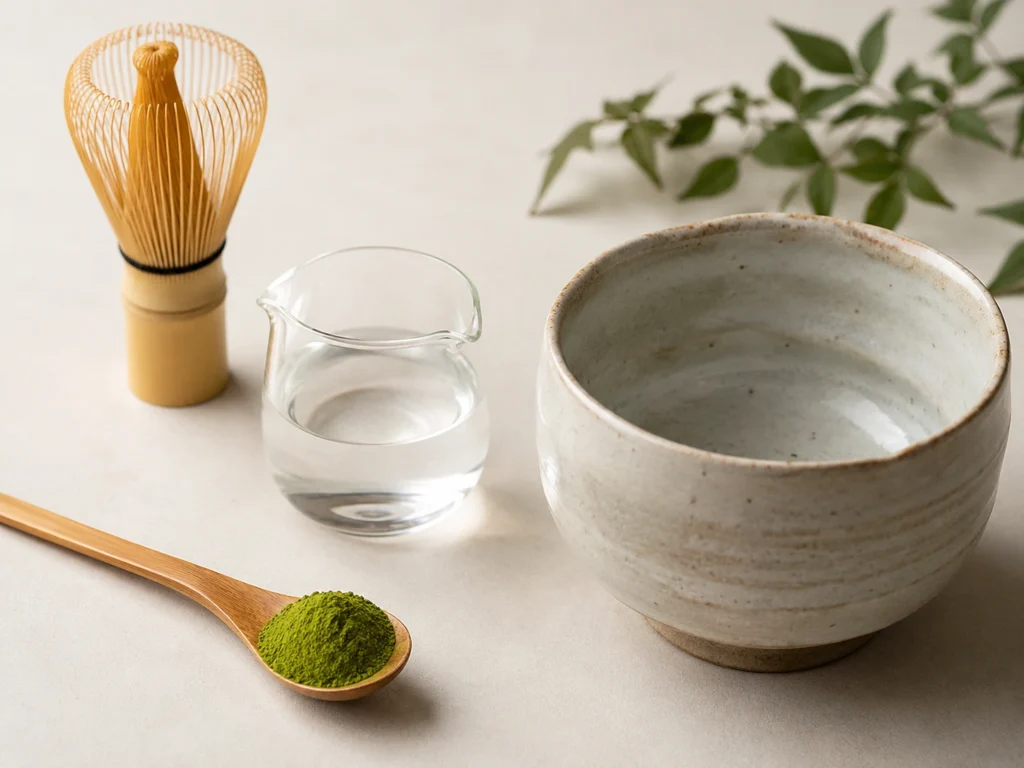
The Complete Nami Ritual Set includes the tools you need to begin preparing matcha at home:
- Nami organic ceremonial matcha
- a matcha bowl
- a bamboo whisk
- a chashaku scoop
- a ceramic whisk stand
It is designed for people who want the full ritual in one place, rather than buying each tool separately.
If you already have a bowl and whisk, you can also buy the Whisk Stand separately.
If you still need the whisk itself, start with the Bamboo Whisk Chasen.
For the tea, begin with Nami ceremonial matcha, our smooth everyday ceremonial matcha for daily bowls and premium home lattes.
Or browse the full Matcha Byron Bay shop.
Frequently asked questions
Do I really need a matcha whisk holder?
Not strictly. You can rinse a bamboo whisk and let it air dry without one. But if you use a chasen regularly, a holder helps the tines dry open and keeps the whisk's shape for longer, so most regular matcha drinkers find it worthwhile.
Can I dry my matcha whisk without a holder?
Yes. You can rinse the whisk, shake off excess water, and let it dry in a well-ventilated place. However, a shaped holder helps the tines keep their open form more easily.
Can a matcha whisk holder prevent mould?
A holder can help the whisk dry more evenly, but it does not guarantee mould prevention. Always rinse the whisk properly, shake off excess water, and let it dry somewhere ventilated before storing it away.
Should I store my whisk on the holder permanently?
You can leave the whisk on the holder if the area is clean, dry, and ventilated. If your kitchen is humid or dusty, let the whisk dry fully first, then store it in a breathable place where the tines will not be crushed.
How long does a bamboo whisk last with proper care?
It depends on how often you use it, how gently you whisk, and how well it dries between uses. A holder can help the whisk keep its shape for longer, but all bamboo whisks eventually wear out.
What is the difference between a whisk stand and a whisk holder?
The terms are often used in the same way. A shaped whisk holder, or kusenaoshi, supports the tines from underneath so the bamboo whisk can dry in an open form. A flatter stand may hold the whisk upright but may not support the tine shape as carefully.
Do I need a whisk holder if I use a milk frother?
No. A whisk holder is for bamboo matcha whisks. If you use only a milk frother, you do not need a chasen holder. If you want the texture and ritual of a bamboo whisk, then a holder becomes useful for care.
A small tool for a better-kept whisk
A matcha whisk holder is not required to make matcha, but it is one of the most useful tools for caring for a bamboo whisk. It helps the tines dry open, keeps the whisk's shape, and gives your ritual a proper place to rest.
⚠️ Action required before publishing I used these placeholder URLs for the two unconfirmed pages:
https://matchabyronbay.com/how-to-use-a-matcha-whisk/ https://matchabyronbay.com/matcha-whisk-guide/
Neither exists yet. As I flagged, these may well be the same planned page referenced under two working titles in your spreadsheet briefs — worth deciding whether to build one combined page (e.g. "How to Use a Matcha Whisk: A Complete Guide") rather than two near-duplicate pages, since the content overlap would otherwise be significant. Either way, swap these two links to anchor links pointing at the relevant sections already in this article (#how-to-know-if-your-whisk-is-ready-to-use) until a decision is made and the page (or pages) is live. What changed and why
Title: unchanged, already exact-match. Meta description: rewritten from the 11-word hook to ~155 characters with the keyword. Quick answer: 49 words, placed directly above the existing opening line. New buyer/decision section: added as its own H2 directly after "What is a matcha whisk holder?" — a clean three-part breakdown (what it does / when you need one / when you can skip it) exactly matching the brief's structure, presented as a scannable summary before the existing deeper "Do you really need one?" prose section, which is preserved fully intact underneath. Internal links added: Matcha Tools You Need (new), How to Use a Matcha Whisk and Matcha Whisk Guide (both new, as placeholders — flagged above). Complete Nami Ritual Set and How to Prepare Ceremonial Matcha were already linked and remain untouched. Soft mid-page CTA: added after the "what is a matcha whisk holder" section, pointing to the Ritual Set. Strong final CTA: existing closer kept exactly as-is, already had a clear CTA button. FAQ: kept all 7 existing questions, added the bare keyword itself as a new first question ("Do I really need a matcha whisk holder?"), landing at 8 total. No medical-claim concerns — this page is purely practical/care-focused. All other sections — materials table, drying instructions, replacement guidance, and the Ritual Set recommendation — are otherwise unchanged.