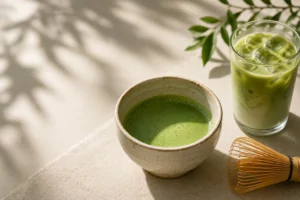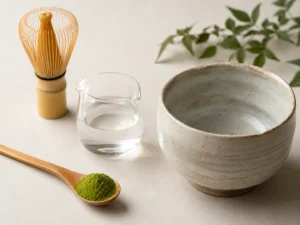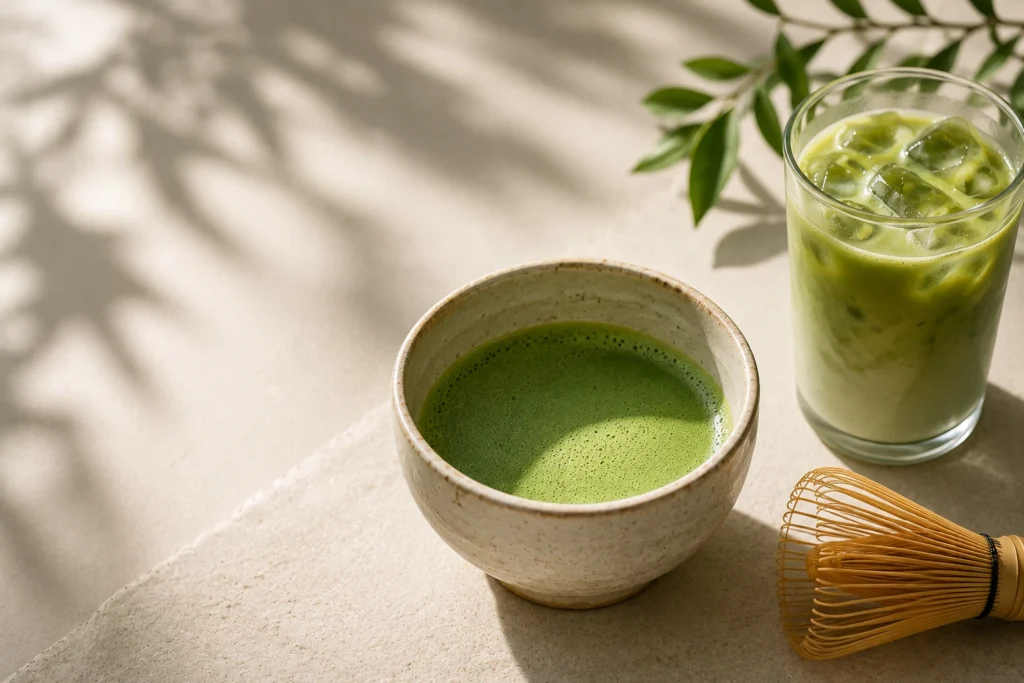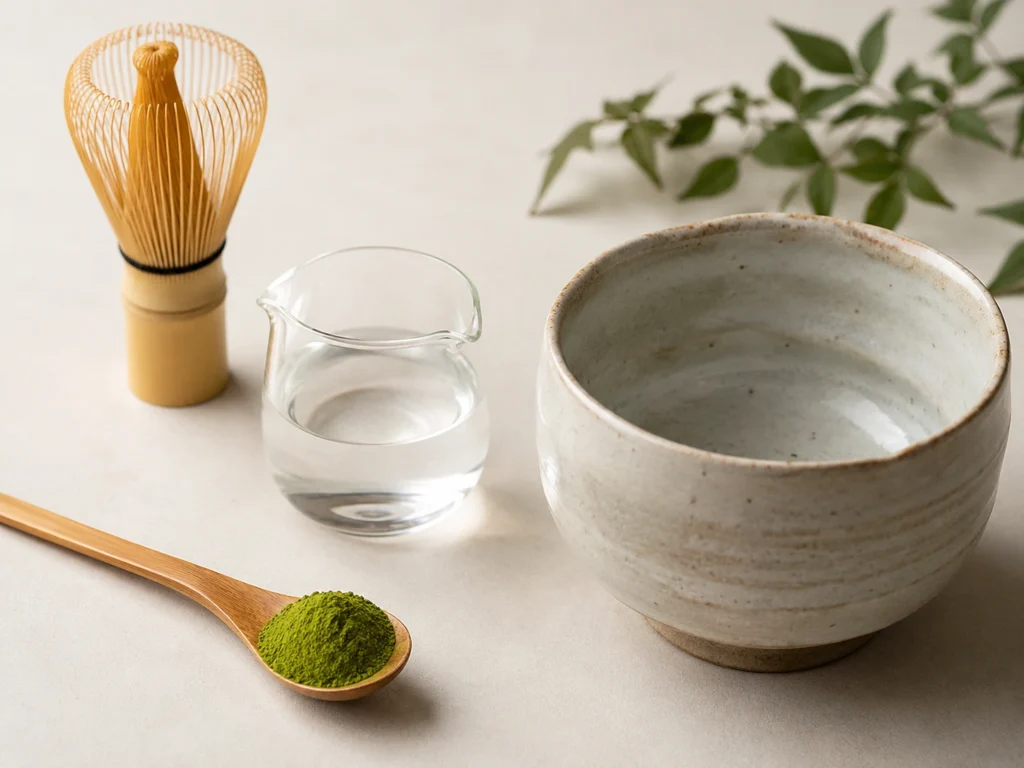
In short: the best matcha for lattes is not the highest ceremonial grade. It’s the one with enough body and depth to stay present once milk is added. Look for balance over delicacy, fine texture, and freshness, then choose based on your milk and how you actually drink it.
For centuries in Japan, matcha was prepared simply – whisked with water, consumed in stillness, and valued for clarity rather than indulgence. The practice was formalised through chanoyu, the Japanese tea ceremony, where matcha was appreciated in its purest form.
To understand how matcha developed historically in regions such as Uji, you can explore the historical development of matcha in Japan.
The matcha latte is a far more recent creation.
In the early 2000s, cafés in Australia and the United States began blending matcha with steamed milk as interest in Japanese ingredients expanded beyond traditional settings. By the mid-2010s, its popularity accelerated – appearing on specialty café menus and spreading rapidly through social media.
Today, matcha lattes are prepared at home as often as they are ordered in cafés. Whisked quickly. Poured over milk. Taken to a desk or carried out the door.
When matcha meets milk, its character shifts.
Finding the best matcha for lattes has less to do with prestige or grading systems than it might seem. It has more to do with structure, balance, and how flavour behaves once softened by milk.
Here’s what actually matters.
What makes matcha suitable for lattes?
Before grade or origin, five things determine whether a matcha works well in milk.
- Taste profile: matcha with enough umami and body to stay noticeable once diluted, rather than fading into the milk.
- Smoothness: a fine, well-milled powder integrates cleanly rather than sitting in layers or feeling gritty once whisked.
- Bitterness balance: a gentle structural bitterness gives the latte presence, while harsh or sharp bitterness becomes more obvious under milk, not less.
- Milk compatibility: different milks emphasise different qualities, so the right matcha depends partly on what you pour.
- Value for daily use: the best matcha for lattes is the one with enough quality and value that you’ll actually prepare it again tomorrow.
These five qualities matter more for a latte than chasing the highest grade on the shelf.
Want to skip straight to a recommendation? Browse the range or jump to which matcha to choose below.
1. Matcha for Lattes Is About Balance, Not Purity

Milk softens bitterness, rounds sharper edges, and emphasises texture. A matcha that feels intense on its own can become calm and grounded once milk is added.
When pairing matcha for lattes, what matters most is:
- Body rather than delicacy
- Depth rather than brightness
- Bitterness that provides structure without overwhelming
The most delicate ceremonial grades are not “wrong” in milk – they simply become quieter. Their floral sweetness and fine aromatics can soften beneath milk, sometimes leaving less presence than expected.
Balance and depth are shaped long before the matcha reaches your cup – through shading duration, harvest timing, leaf selection, and the precision of processing.
2. The Type of Milk Changes Everything

Different milks reshape flavour in different ways.
Oat milk
Soft, naturally sweet, and creamy. It enhances roundness and softens edges, making it one of the most forgiving choices for matcha lattes. The natural sweetness can emphasise smoothness and reduce perceived bitterness.
Cow’s milk
Balanced and neutral. Whole milk highlights depth and body, while lighter milk keeps the profile cleaner. Its protein and fat content support structure without overpowering flavour.
Soy milk
Higher protein gives structure but can amplify bitterness if the matcha lacks balance. Best paired with something smooth and steady.
Almond milk
Light and slightly nutty. It works well with matcha that carries natural sweetness but may thin out more delicate profiles.
Coconut milk
Richer and more aromatic. Its sweetness requires a matcha with enough depth to remain noticeable.
Because every milk alters texture and sweetness, the ideal matcha for lattes depends partly on what you prefer to pour.
Temperature matters just as much as milk.
In a hot latte, warmth enhances bitterness and opens up aromatics. The matcha feels lighter in texture and more expressive. Structured matcha tends to perform well here, as its depth remains perceptible through the milk.
In an iced latte, cold suppresses bitterness and slightly mutes aroma. Sweetness feels softer, while texture becomes more noticeable. A matcha that feels balanced when hot may taste rounder and more restrained over ice.
Even the temperature of the water used before adding milk makes a difference. Whisking with water around 70–80°C preserves sweetness and umami, while boiling water can increase sharpness. Often, perceived bitterness is a matter of preparation rather than quality.
For the full method, read our guide on how to make a matcha latte.

Milk changes flavour. Temperature changes perception. Together, they shape the final expression in the cup.
3. Colour Matters – But Not in the Way You Think
Colour is often the first thing people look for in matcha. A vivid green has become shorthand for quality.
While colour reflects chlorophyll levels from shading and freshness, it does not alone determine how matcha behaves in milk. Extremely bright matcha can be delicate and refined, shining when prepared traditionally.
For matcha lattes, a slightly deeper green – one that leans earthy rather than electric – often performs better. It suggests flavour weight and structure that can remain perceptible once diluted.
The goal isn’t brightness for its own sake. It’s presence in the cup.
4. Texture Is the Quiet Hero
A good matcha for lattes should feel smooth before milk is added.
Graininess becomes more noticeable once diluted, especially in iced drinks. Finely milled leaf, stored well and used fresh, creates a texture that feels integrated rather than layered.

If preparing traditionally before adding milk, using a proper whisk helps establish that smooth base. We explore this further in our guide to essential matcha tools.
Don’t have the tools yet? The Complete Nami Ritual Set includes everything you need to whisk a proper base before adding milk.
5. Origin Matters – But Expression Matters More

Our matcha is sourced from Uji, Kyoto – a region long associated with refined cultivation and careful shading practices. Uji’s climate and soil have shaped matcha production for centuries, contributing to the balanced sweetness and umami the region is known for.
But region alone does not determine how a matcha behaves in milk.
Cultivar choice, harvest timing, shading, and processing decisions ultimately shape structure and flavour. A well-selected Uji matcha can be beautifully suited to lattes – not because of its name, but because of how it was grown and prepared.
For matcha for lattes, expression matters more than prestige. If you’re deciding where to buy, our guide to buying matcha in Australia covers what to check first.
6. Everyday Structure vs Refined Nuance
When people hear “ceremonial grade,” they often assume it automatically means best for every use. In reality, suitability depends on intention.
For daily matcha lattes, something steady and structured often performs beautifully.
Our Nami matcha offers smooth body, gentle sweetness, and enough presence to remain balanced in milk. It’s the natural choice if you’re new to matcha lattes and want one matcha that works for both everyday lattes and a water-only bowl.
There is, however, also another approach.
A finer, more refined matcha – such as our Goku matcha – produces a softer, silkier integration in milk, offering layered depth for those who prefer nuance. It’s a natural upgrade once you already know you enjoy matcha and want something more refined.
Its extra-fine milling and layered depth translate into silkier texture and quieter complexity in milk.
It isn’t necessary for everyday preparation. But for those who appreciate nuance – even in a latte – it offers a subtle upgrade.
Both approaches are valid. They simply create different experiences.
7. Freshness Shapes the Experience

Freshness is often discussed casually, but in matcha for lattes it plays a defining role.
Matcha is finely milled and highly exposed to air. Once opened, its delicate balance of amino acids and catechins begins to shift. Over time, sweetness softens, aromatics flatten, and bitterness can become sharper or slightly dry.
In water, these changes are noticeable.
In milk, they become amplified.
Milk can soften edges, but it cannot restore lost sweetness or depth. A matcha that has faded will feel thinner in body and less integrated once diluted. The result is often mistaken for “low quality,” when it may simply be diminished freshness.
Fresh matcha behaves differently:
- It integrates more smoothly into milk
- It retains natural sweetness
- It carries depth without harshness
- It leaves a cleaner finish
But beyond chemistry, there is something else at play.
The best matcha for lattes is the one you return to.
A matcha that feels too precious may sit unopened. A matcha that feels too sharp may require sweetener to compensate. A matcha that feels balanced and steady becomes habitual.
Repetition reveals subtlety.
Over time, you begin to notice how your preferred milk interacts with the leaf. How oat milk emphasises sweetness. How whole milk highlights depth. How a slightly cooler whisking temperature preserves softness.
Freshness supports that learning. Consistency deepens it.
Grade, region, and narrative matter — but only insofar as they support the experience in your cup.
In the end, the best matcha for lattes is not about chasing the highest specification.
It’s about choosing something fresh, structured, and balanced enough that you’ll reach for it again tomorrow.
Because the matcha you drink regularly is the one you truly understand.
Frequently asked questions
What is the best matcha for lattes?
The best matcha for lattes is one with enough body and depth to stay present once milk is added, not necessarily the highest ceremonial grade. Nami is a steady, structured everyday choice, while Goku offers a more refined, silkier integration for those who want extra nuance.
Should I use ceremonial or culinary matcha for a latte?
Either can work. A well-balanced ceremonial matcha like Nami can make a smoother, more refined latte, while culinary matcha is stronger and more cost-effective for cafe-style or large-batch lattes. The right choice depends on your taste and how often you’re making it.
Why does my matcha latte taste bitter?
Bitterness usually comes from water that’s too hot, too much powder, or matcha that’s lost freshness. Whisking with water around 70–80°C and using a matcha with enough natural structure can help the latte taste balanced rather than sharp.
What milk works best with matcha?
Oat milk is one of the most forgiving choices because its natural sweetness softens bitterness. Soy and cow’s milk both work well too. Coconut and almond milk bring their own strong flavours, so they suit matcha with enough depth to stay noticeable.
Does a more expensive matcha make a better latte?
Not necessarily. The most delicate, expensive ceremonial grades can actually become quieter once milk is added. A matcha with enough body and structure to stay present in milk often makes a better latte than the highest-graded powder.
Can I use the same matcha for lattes and a traditional bowl?
Yes. Nami is designed to work both ways: smooth enough for a traditional water-only bowl, but structured enough to hold its own in milk. That versatility is part of why it’s a good everyday choice.
Choose What You’ll Reach For Again
It’s easy to become distracted by grading systems, origin stories, or technical tasting notes. While these have their place, they are not essential for everyday preparation.
The best matcha for lattes is the one you’ll prepare again tomorrow.
For some, that’s Nami – steady and structured.
For others, it’s Goku – refined and silkier.
Ultimately, it depends on your milk, your palate, and the kind of moment you’re creating.
The type of matcha chosen for your latte is not about purity.
It’s about harmony.
What changed and why
Title: “Best” added at the front, working with the article’s actual argument rather than against it — the quick answer immediately clarifies “best” doesn’t mean “highest grade,” so the keyword and the article’s anti-superlative stance are reconciled rather than in tension. Meta description: rewritten from a two-paragraph hook (split across description fields) into a single ~145-character description with the keyword and the article’s actual thesis. Quick answer: 50 words, placed directly above the existing opening paragraph. New section: “What makes matcha suitable for lattes?” added as a new H2 directly after the intro, covering all five buyer-facing dimensions the brief named (taste profile, smoothness, bitterness balance, milk compatibility, value for daily use) as a scannable list before the numbered essentials begin — this didn’t exist in any form before. Substack citation removed: per your call, the sentence referencing “everyday iced matcha latte variations prepared at home” and its link were deleted; the surrounding paragraph was tightened so the removal doesn’t leave a gap. Internal links added: How to Make a Matcha Latte (new), Buy Matcha Australia (new), Complete Nami Ritual Set (new, via Matcha Tools You Need section). Matcha Tools You Need, Nami, and Goku were already linked and remain untouched. Soft mid-page CTA: added after the new “what makes matcha suitable” section, pointing to shop + anchor link. Strong final CTA: existing closing section kept fully intact (it’s well-written and on-brand), with one button added at the very end pointing to Nami — previously there was no CTA button at all, just text. Nami/Goku positioned by use case: both product mentions in section 6 now explicitly say “natural choice if you’re new” (Nami) and “natural upgrade once you already know you enjoy matcha” (Goku), matching the beginner/upgrade framing used elsewhere in the cluster. FAQ: entirely new, 6 questions, all directly addressing the brief’s required topics (taste profile, milk compatibility, bitterness, value vs price, ceremonial vs culinary). No medical-claim concerns on this page — it never veers into health framing at all, so nothing needed checking there. All seven numbered sections and the closing reflection are otherwise word-for-word unchanged, preserving the page’s distinct editorial voice rather than flattening it to match the rest of the cluster.