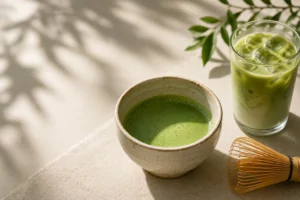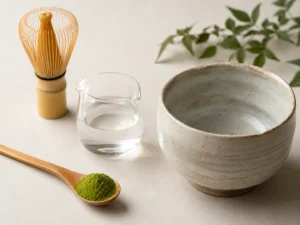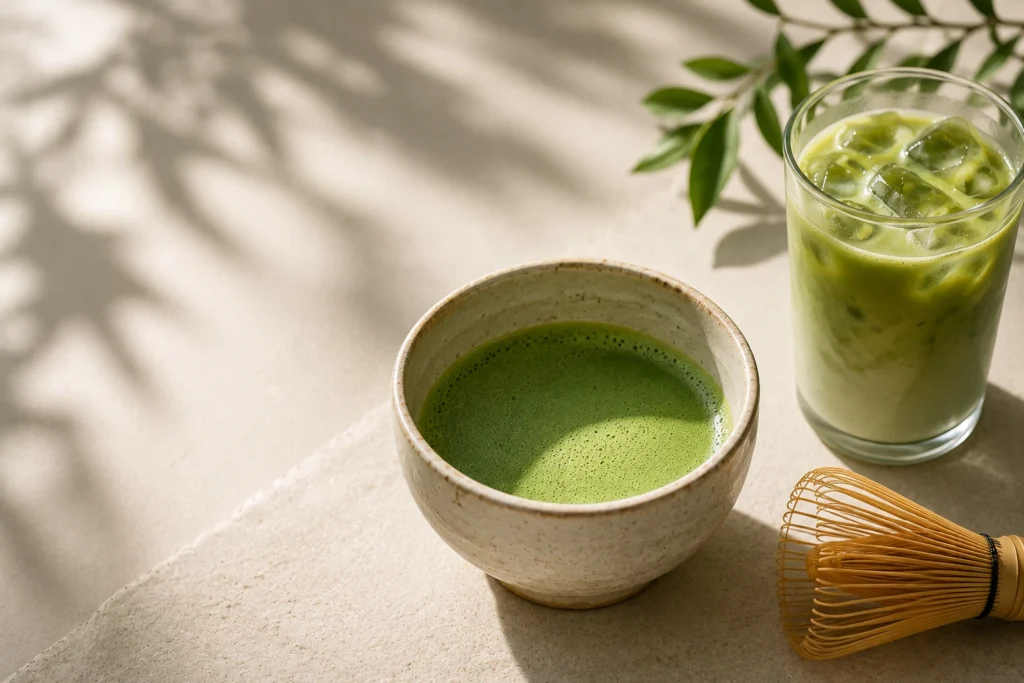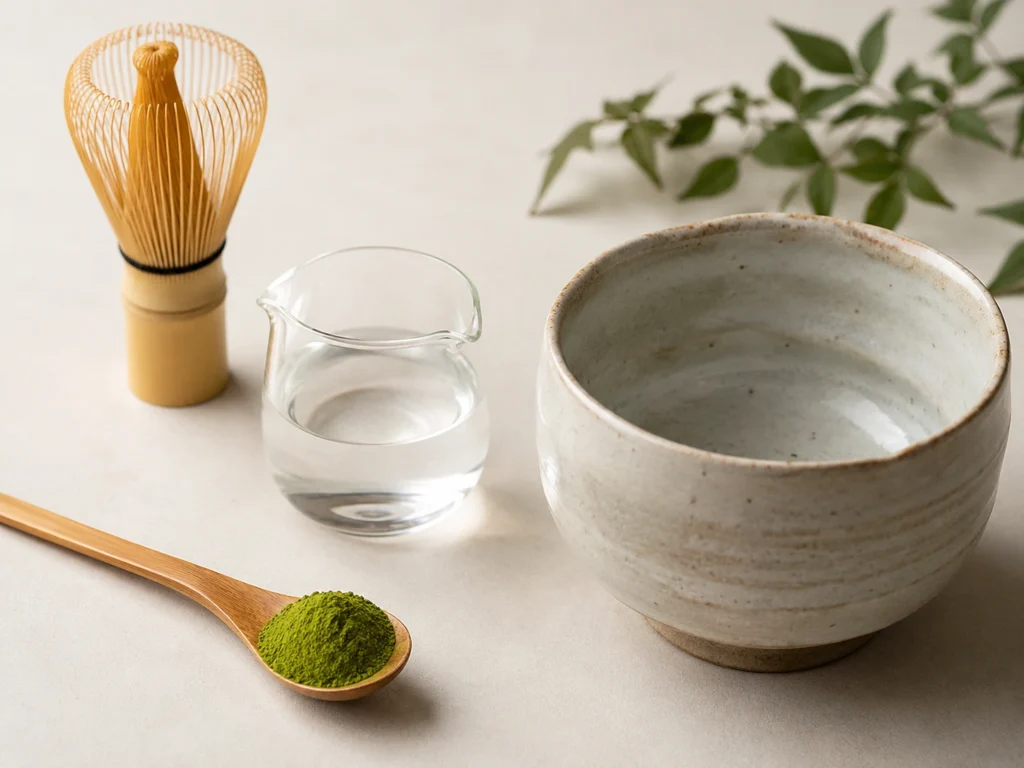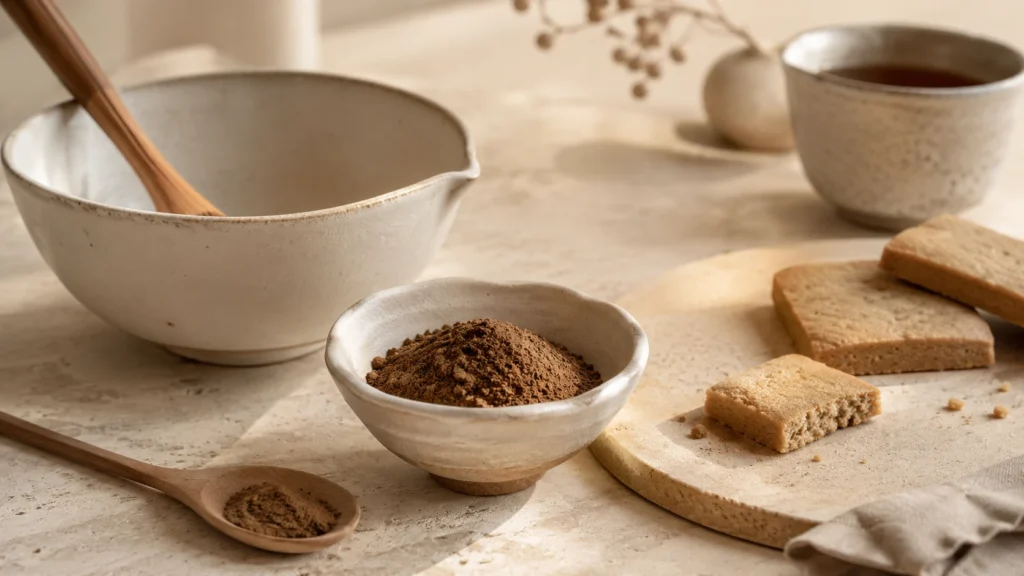
In short: hojicha powder is roasted Japanese green tea ground fine enough to whisk into water, milk, or recipes. It tastes warm, toasty, and nutty, usually with lower bitterness and less caffeine than matcha, making it an easy powder for lattes and everyday use.
Hojicha powder is roasted Japanese green tea in fine powder form.
It is warm, toasty, smooth, and very different from matcha. Where matcha is vivid green and fresh, hojicha is roasted brown and mellow, with notes that can feel nutty, woody, and lightly caramel-like.
Because it is a powder, hojicha is easy to use at home. You can whisk it with warm water, turn it into a latte, pour it over ice, or add it to simple recipes.
It is usually lower in caffeine than matcha, but it is not caffeine-free. The best way to think of hojicha powder is simple: a roasted Japanese tea for warmer, softer moments.
What to know first
- Hojicha powder is roasted Japanese green tea ground into a fine powder.
- It is not matcha. Matcha is green and unroasted, while hojicha is roasted and brown.
- Hojicha powder tastes toasty, nutty, smooth, and lightly caramel-like.
- It is usually lower in caffeine than matcha, but it still contains caffeine.
- You can use hojicha powder for warm tea, hojicha lattes, iced drinks, baking, and desserts.
- Storage matters. Keep it sealed, cool, dry, and away from light, heat, moisture, and strong smells.
What is hojicha powder?
Hojicha powder is made from roasted Japanese green tea.
Hojicha itself is commonly made from green tea leaves and stems, often including bancha, sencha, or kukicha material. After the tea is roasted, it develops a warm brown colour and a deep toasted aroma.
When that roasted tea is ground into powder, it becomes easy to whisk into water, milk, or recipes. That is what makes hojicha powder so useful at home.
Unlike loose leaf hojicha, which is steeped and removed, hojicha powder becomes part of the drink. This gives it a fuller roasted flavour and makes it especially good for lattes.
Our Organic Hojicha Fine Grind is designed for warm cups, hojicha lattes, iced drinks, and simple kitchen use.
For the broader story behind hojicha, read our pillar guide: Hojicha Tea: What It Is, How It Tastes, and How to Drink It.
Want to try it yourself? Explore Organic Hojicha Fine Grind.
How is hojicha powder different from loose leaf hojicha?
Loose leaf hojicha and hojicha powder come from the same roasted tea tradition, but they are used differently.
Loose leaf hojicha is steeped in hot water, then the leaves are removed. The result is a lighter roasted tea infusion.
Hojicha powder is mixed directly into water or milk. The powder stays in the drink, giving a stronger roasted flavour and a smoother body.
| Type | How it is prepared | Best for |
|---|---|---|
| Loose leaf hojicha | Steeped in hot water, then removed | Simple brewed tea |
| Hojicha powder | Whisked or stirred directly into water or milk | Lattes, iced drinks, desserts, baking, stronger roasted flavour |
If you want a quick latte or a powder you can use in recipes, hojicha powder is usually the more practical choice.
How is hojicha powder different from matcha?
Hojicha powder and matcha are both Japanese green tea powders, but they are not the same.
Matcha is usually made from shaded green tea leaves that are steamed, dried, and ground into a fine green powder. Hojicha is roasted, which turns the tea brown and changes the flavour completely.
Matcha tastes green, fresh, umami-rich, and sometimes grassy. Hojicha tastes roasted, nutty, woody, and softly sweet.
Hojicha is also usually lower in caffeine than matcha, though the exact amount depends on the tea material, serving size, and preparation.
| Aspect | Hojicha powder | Matcha |
|---|---|---|
| Colour | Warm brown | Vivid green |
| Processing | Roasted Japanese green tea, then ground | Usually shaded, steamed, dried, and ground |
| Flavour | Toasty, nutty, roasted, lightly caramel-like | Green, umami-rich, smooth, sometimes grassy |
| Caffeine | Usually lower than matcha, but not caffeine-free | Usually higher because the powdered leaf is consumed |
| Best use | Lattes, warm cups, iced drinks, recipes, later-day tea | Traditional bowls, morning ritual, vivid green lattes |
For a deeper comparison, read Hojicha vs Matcha: Which One Should You Choose?.
If you want the classic green tea ritual, explore Nami ceremonial matcha. If you want the roasted side of Japanese tea, choose Organic Hojicha Fine Grind.
What does hojicha powder taste like?
Hojicha powder tastes warm, roasted, nutty, and smooth.
Some people notice notes of toasted grain, roasted nuts, cocoa, wood, or soft caramel. It does not have the vivid green flavour of matcha or the grassy edge of some unroasted green teas.
Because the tea is roasted, hojicha usually has lower bitterness and a softer finish. That makes it easy to enjoy with water, but it also works beautifully with milk.
Oat milk can bring out the warmer caramel-like notes. Soy milk keeps the flavour balanced and clean. Dairy milk gives it a rounder, creamier body.
Matcha is green and vivid. Hojicha is roasted and warm.
What colour should hojicha powder be?
Hojicha powder should be brown, not bright green.
The exact shade can vary. Some hojicha powders are light golden brown. Others are deeper reddish brown or cocoa brown, depending on the roast level and tea material.
A good hojicha powder should look warm and even, with a roasted aroma that is still clear and inviting.
If the powder looks grey, faded, dusty, or uneven, it may be old, poorly stored, or past its best. If the aroma has disappeared, the flavour will usually feel flat too.
Colour is not the only sign of quality, but it is a useful clue. With hojicha, you are looking for warmth and freshness, not vivid green.
How to use hojicha powder
Hojicha powder is genuinely simple to work with once you know the basics. Here are the three easiest ways to start.
Hojicha powder with water
- Add around 2 grams of hojicha powder to a cup or bowl.
- Sift the powder if you want the smoothest texture.
- Add a small amount of warm water, around 80–90°C.
- Whisk or stir until smooth.
- Add more warm water to taste.
Hojicha is more forgiving than matcha because roasting softens the sharper notes. Matcha can become bitter with boiling water, while hojicha can usually handle slightly hotter water.
Still, you do not need to boil it aggressively. Warm water is enough to bring out the roasted flavour.
If you are already familiar with matcha preparation, the method will feel familiar. You can read our full matcha method here: How to Prepare Ceremonial Matcha.
Hojicha powder for lattes
A hojicha latte is one of the easiest ways to enjoy hojicha powder.
The key is to make a smooth hojicha base first, then add milk.
- Sift around 2 grams of hojicha powder into a cup or bowl.
- Add 40–50 ml of warm water.
- Whisk or stir until smooth.
- Add warm, steamed, or cold milk.
- Taste before adding sweetener. Hojicha already has a soft roasted sweetness.
For an iced hojicha latte, make the hojicha base with warm water, pour it over ice, then add cold milk.
Hojicha pairs especially well with oat milk because the roasted tea and creamy oat flavour bring out a warm, dessert-like mood without needing to become overly sweet.
For the full step-by-step method, read our dedicated guide: how to make a hojicha latte. If you enjoy green tea lattes, you may also like our guide: How to Make a Matcha Latte That Tastes Like Real Matcha.
Hojicha powder in recipes
Hojicha powder is useful beyond drinks.
Because it has a roasted flavour, it works well in recipes where you might normally use cocoa, coffee, roasted grain, or warm dessert notes.
You can use hojicha powder in:
- hojicha lattes
- iced hojicha drinks
- smoothies
- cakes and muffins
- cookies and shortbread
- cream, custard, or panna cotta
- ice cream or yoghurt bowls
Start small. Hojicha has a strong roasted character, so it is easier to add more than to fix a recipe that has become too strong.
If you are using hojicha in baking, mix the powder with the dry ingredients first so it distributes more evenly.
Ready to start using it at home? Browse the Matcha Byron Bay range.
How to store hojicha powder
Hojicha powder should be stored carefully because aroma is a big part of its flavour.
Keep it sealed, cool, dry, and away from light, heat, moisture, and strong smells. A cupboard away from the stove is usually better than leaving it beside the kettle or near a sunny window.
Once opened, use it regularly rather than saving it for months. Over time, hojicha powder can lose its roasted aroma and taste flatter.
Signs your hojicha powder may be past its best include:
- the aroma has faded
- the powder smells dusty or stale
- the colour looks grey or dull
- the flavour tastes flat rather than warm and roasted
- the powder has been exposed to moisture or clumping
For more on freshness and tea quality, read our guide to how to tell if matcha is high quality. The details are different, but the principle is the same: freshness, storage, and preparation matter.
Does hojicha powder contain caffeine?
Yes. Hojicha powder contains caffeine because it is made from green tea.
It is usually lower in caffeine than matcha, but the exact amount depends on the tea material, serving size, roast level, and preparation.
This is why many people choose hojicha later in the day, especially compared with matcha. But it is not caffeine-free, and caffeine-sensitive people should still pay attention to timing and serving size.
For a broader discussion of caffeine and Japanese tea, read Matcha Caffeine: Why It Feels Different and When to Drink It, or our dedicated guide: does hojicha have caffeine.
Which Matcha Byron Bay hojicha should you choose?
Choose Organic Hojicha Fine Grind if you want a roasted Japanese green tea powder for warm cups, lattes, iced drinks, and simple recipes.
It is different from matcha. It is brown, roasted, warm, and low in bitterness.
Choose hojicha powder if you want:
- a roasted Japanese tea powder
- a warm, nutty flavour
- a tea that works beautifully with milk
- a powder for lattes, iced drinks, and recipes
- a later-day alternative to vivid green matcha
If you want classic green ceremonial matcha, start with Nami. If you want a more refined ceremonial bowl, choose Goku.
Or browse the full Matcha Byron Bay shop.
Frequently asked questions
What is hojicha powder?
Hojicha powder is roasted Japanese green tea ground into a fine powder. It has a warm brown colour and a toasty, nutty flavour.
Is hojicha powder the same as matcha?
No. Matcha is green and unroasted, while hojicha is roasted and brown. Matcha tastes fresh and umami-rich. Hojicha tastes toasty, nutty, and warm.
Does hojicha powder contain caffeine?
Yes. Hojicha powder contains caffeine because it is made from green tea. It is usually lower in caffeine than matcha, but it is not caffeine-free.
Can I make a hojicha latte with hojicha powder?
Yes. Hojicha powder is excellent for lattes. Whisk or stir it with a small amount of warm water first, then add warm or cold milk. For the full method, read how to make a hojicha latte.
Can I use hojicha powder in baking?
Yes. Hojicha powder works well in cakes, cookies, creams, ice cream, and other desserts where a roasted tea flavour makes sense.
How should I store hojicha powder?
Store hojicha powder sealed, cool, dry, and away from light, heat, moisture, and strong smells. Use it regularly after opening to enjoy the best aroma.
Does hojicha powder go bad?
Hojicha powder can lose freshness over time. If it smells stale, looks dull, clumps from moisture, or tastes flat, it may be past its best.
Can I prepare hojicha powder without a bamboo whisk?
Yes. A bamboo whisk can help create a smoother texture, but a small kitchen whisk, milk frother, or spoon can also work. Sifting the powder first helps reduce clumps.
Use hojicha powder for warmer tea moments
Hojicha powder is roasted, smooth, and easy to use in lattes, warm cups, iced drinks, and simple recipes.
Sources
- Global Japanese Tea Association: Japanese Tea Kinds
- Japan Tea Export Promotion Council: Japanese Green Tea
- Global Japanese Tea Association: Japanese Tea Growing Regions
- NCCIH: Green Tea
⚠️ One link still flagged how-to-make-a-hojicha-latte/ is still the one unconfirmed page out of the original four — now appears twice in this version (once in the new "how to use" section, once in the existing FAQ). If it doesn't exist yet, swap both to an anchor link (#hojicha-powder-for-lattes) pointing at the latte instructions already inside this article until the dedicated page is built. does-hojicha-have-caffeine also remains unconfirmed, same as before. What changed and why
Title: unchanged, already exact-match. Meta description: rewritten from the 11-word hook to ~145 characters with the keyword. Quick answer: 48 words, placed directly above the existing opening line. H2 restructure: combined the three previously separate H2s ("How to prepare hojicha powder with water," "How to make a hojicha latte," "How to use hojicha powder in recipes") under one new parent H2, "How to use hojicha powder," with each original section preserved underneath as an H3 — this directly satisfies the brief's request for a single consolidated "how to use" section while keeping every word of the original three sections intact. Internal link added: How to Make a Hojicha Latte (new, as a dedicated-guide reference alongside the inline instructions — placeholder, flagged above). Hojicha Tea, Hojicha vs Matcha, Does Hojicha Have Caffeine, and How to Tell If Matcha Is High Quality were already linked and remain untouched. Soft mid-page CTA: added after the "what is hojicha powder" section, pointing to the product. Strong final CTA: existing closer kept exactly as-is, already had a clear CTA button. FAQ: kept all 8 existing questions, added one cross-link into the latte question pointing to the new dedicated guide. No medical-claim concerns — this page stays in flavour/storage/caffeine-disclosure territory and makes no health claims. All other sections, both comparison tables, the storage guidance, and Sources list are otherwise unchanged.