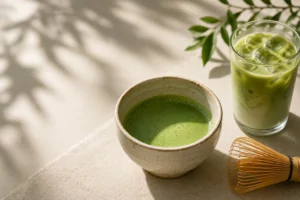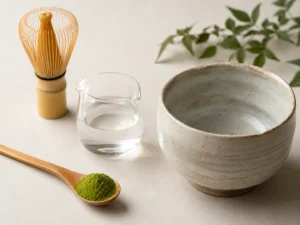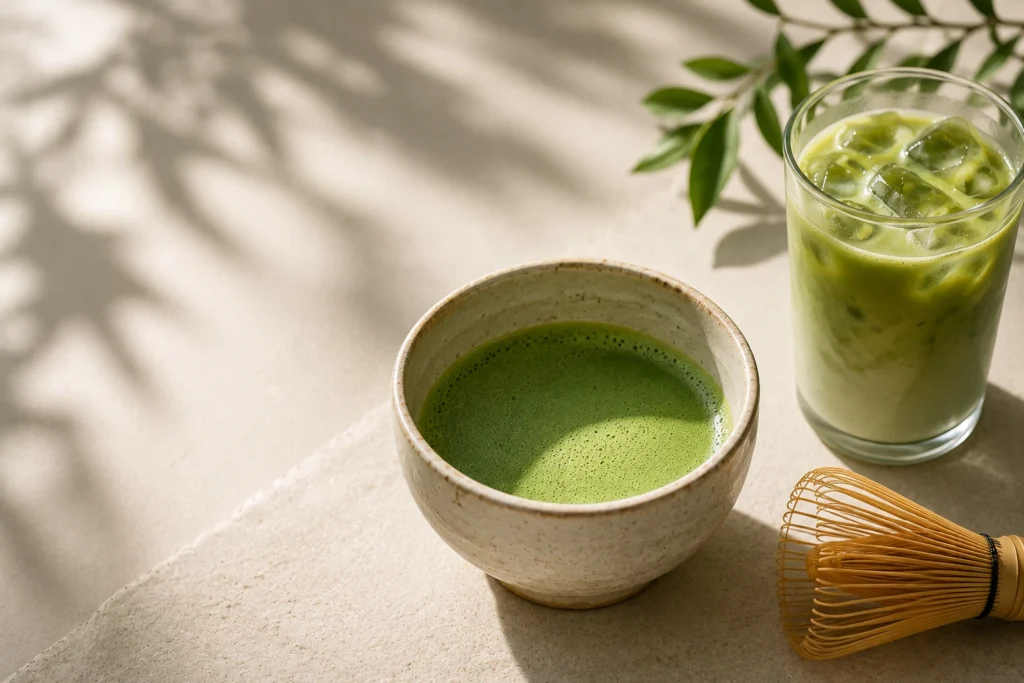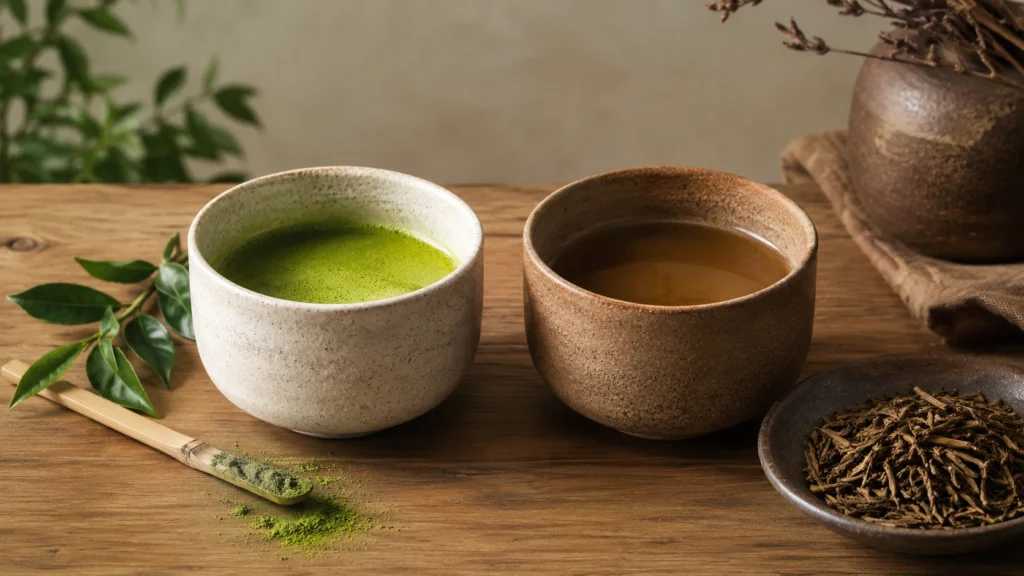
In short: hojicha vs matcha comes down to mood and caffeine. Matcha is vivid green, umami-rich, and usually higher in caffeine, suited to a bright morning ritual. Hojicha is roasted brown, warm, and usually lower in caffeine, suited to a softer afternoon or evening cup.
Hojicha and matcha both come from Japanese green tea, but they feel completely different in the cup.
Matcha is vivid green, umami-rich, and usually chosen for a bright morning ritual. Hojicha is roasted brown, warm, nutty, and often chosen later in the day when you want something softer.
Neither tea is better in every situation.
The better choice depends on what you want: a green, focused bowl of ceremonial matcha, or a roasted, mellow tea that feels comforting and low in bitterness.
This guide compares hojicha and matcha by flavour, caffeine, preparation, timing, lattes, and daily use, so you can choose the tea that fits your own ritual.
The simple choice
- Choose matcha if you want a vivid green Japanese tea with umami, freshness, and a more traditional morning ritual.
- Choose hojicha if you want a roasted Japanese green tea with warm, nutty, lightly caramel-like notes.
- Matcha is usually higher in caffeine because the powdered leaf is consumed.
- Hojicha is usually lower in caffeine than matcha, but it is not caffeine-free.
- Matcha is best for traditional bowls and bright green lattes.
- Hojicha is best for roasted tea, hojicha lattes, and softer later-day cups.
What is matcha?
Matcha is a fine Japanese green tea powder that is whisked into water.
Unlike regular steeped green tea, matcha is not removed from the cup. The powdered tea leaf becomes part of the drink, which gives matcha its fuller body, vivid colour, and more concentrated green tea character.
Good ceremonial matcha should taste smooth, green, softly savoury, and balanced when prepared well. It may have a gentle green bitterness, but it should not taste harsh, stale, or aggressively bitter.
Preparation matters. Boiling water, too much powder, or old matcha can make the cup taste sharper than it should. Fresh ceremonial matcha prepared with warm water usually gives a much cleaner experience.
For a deeper introduction, read our guide to what ceremonial matcha is. For a fuller comparison with steeped green tea generally, read matcha vs green tea.
What is hojicha?
Hojicha is roasted Japanese green tea.
Instead of staying green and grassy, the tea is roasted until it turns warm brown. This changes the aroma and flavour completely. Hojicha tastes toasty, nutty, woody, and lightly caramel-like, with much less of the grassy brightness people associate with green tea.
Hojicha is often made from bancha, sencha, kukicha, or stems, which gives it a practical, low-waste tradition. It is not simply a weaker version of matcha. It is a different style of Japanese tea.
Our Organic Hojicha Fine Grind is a roasted Japanese green tea powder that can be used for warm cups, lattes, iced drinks, and simple recipes.
For a fuller explanation, read our pillar guide: Hojicha Tea: What It Is, How It Tastes, and How to Drink It.
Curious to taste both? Browse the Matcha Byron Bay range.
Hojicha vs matcha: the main differences
Matcha and hojicha come from the same tea plant, but their processing creates very different results.
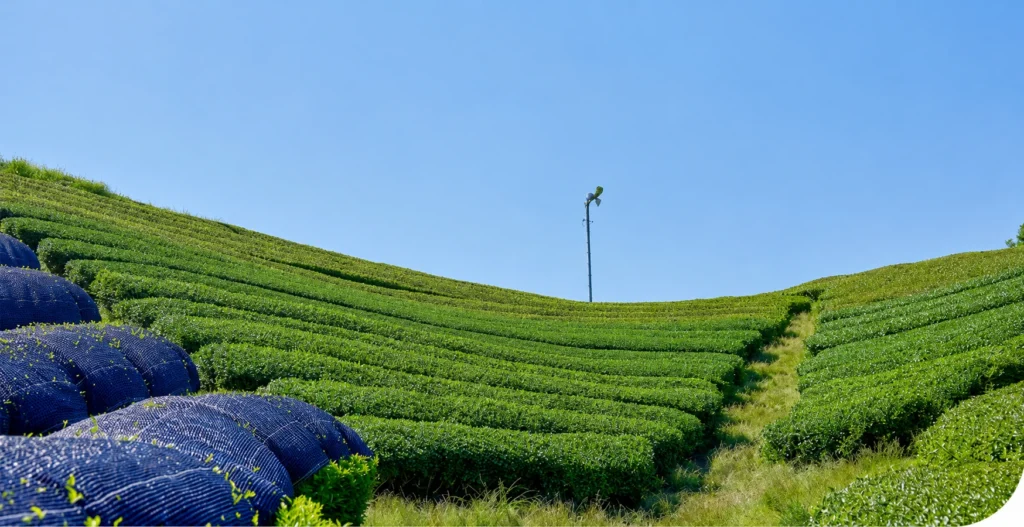
Matcha is usually shaded, steamed, dried, and ground into a fine green powder. Hojicha is roasted, which gives it a brown colour and a warm toasted flavour.
| Aspect | Matcha | Hojicha |
|---|---|---|
| Tea type | Powdered Japanese green tea | Roasted Japanese green tea |
| Colour | Vivid green | Warm brown |
| Processing | Usually shaded, steamed, dried, and ground into powder | Roasted after green tea processing |
| Flavour | Green, umami-rich, smooth, sometimes grassy | Toasty, nutty, woody, lightly caramel-like |
| Bitterness | Depends on quality, freshness, and preparation | Usually lower because roasting softens the sharper notes |
| Caffeine | Usually higher because the powdered leaf is consumed | Usually lower than matcha, but not caffeine-free |
| Best fit | Morning bowls, ceremonial ritual, vivid green lattes | Later-day tea, roasted lattes, desserts, warm mellow drinks |
Which tastes better: hojicha or matcha?
It depends on what kind of flavour you enjoy.
Matcha tastes green, smooth, fresh, and umami-rich. It has more brightness and depth. If you enjoy Japanese tea, savoury flavours, and the feeling of a traditional bowl, matcha may suit you best.
Hojicha tastes warmer, darker, and more roasted. It has notes that can remind people of toasted grain, roasted nuts, cocoa, wood, or soft caramel. If you find some green teas too grassy or bitter, hojicha may feel more approachable.
Hojicha is not a weaker matcha. It is a different tea experience.
Matcha is vivid and green. Hojicha is roasted and warm.
Which has more caffeine?
Matcha usually has more caffeine than hojicha.
This is because matcha is consumed as a powdered whole leaf. With steeped teas, the leaves are removed. With matcha, the powder remains in the cup.
Hojicha is usually lower in caffeine because it is often made from more mature leaves, stems, or roasted tea material. However, hojicha is not caffeine-free. The exact amount depends on the tea, serving size, and preparation.
Many people choose matcha earlier in the day and hojicha later in the day. That can be a useful rhythm, but caffeine sensitivity varies. Some people can drink hojicha in the evening without issue, while others prefer to keep all caffeinated tea earlier.
For a deeper guide to caffeine, read Matcha Caffeine: Why It Feels Different and When to Drink It, or our dedicated guide: does hojicha have caffeine.
Which is better for lattes?
Both matcha and hojicha make beautiful lattes, but the flavour is completely different.
A matcha latte is green, creamy, and fresh. It works best when you want the vivid colour and green tea character of matcha softened by milk.
A hojicha latte is roasted, warm, and nutty. It feels closer to toasted grain, caramel, or cocoa notes, especially with oat milk.
| Latte style | Choose matcha if... | Choose hojicha if... |
|---|---|---|
| Flavour | You want a green, umami-rich latte. | You want a roasted, nutty, mellow latte. |
| Colour | You want a vivid green drink. | You want a warm beige or brown drink. |
| Milk pairing | You want milk to soften the green tea notes. | You want milk to bring out roasted sweetness. |
| Best product | Nami | Organic Hojicha Fine Grind |
For a full matcha latte method, read How to Make a Matcha Latte That Tastes Like Real Matcha.
Still deciding? Jump to the full decision table below.
Which is better for daily drinking?
Both can work as daily teas.
Choose matcha as a daily tea if you want a brighter morning ritual, a vivid green bowl, and a naturally caffeinated drink that feels different from coffee for many people.
Choose hojicha as a daily tea if you want a roasted, low-bitterness tea that is usually lower in caffeine and easy to enjoy plain or with milk.
The best daily tea is the one you return to without forcing it.
Some people keep both: matcha in the morning and hojicha later in the day. That gives you two Japanese tea rituals with completely different moods.
For a balanced daily-use discussion, read Is Hojicha Good for You?.
Which should you choose?
Use this simple guide if you are deciding between matcha and hojicha.
| If you want... | Choose matcha | Choose hojicha |
|---|---|---|
| A classic Japanese tea ritual | Yes, especially ceremonial matcha. | Possible, but it has a different roasted mood. |
| A morning tea | Usually the better fit. | Good if you prefer a roasted flavour. |
| A later-day tea | Maybe, if caffeine suits you. | Often the better fit. |
| A vivid green latte | Yes. | No, hojicha is roasted brown. |
| A roasted, nutty latte | No. | Yes. |
| Lower bitterness | Only if high quality and prepared well. | Usually yes. |
| Lower caffeine | Usually no. | Usually yes, but not caffeine-free. |
How to prepare both at home
Matcha and hojicha powder can be prepared in a similar way: sift, add warm water, whisk or stir, then drink plain or add milk.
How to prepare matcha
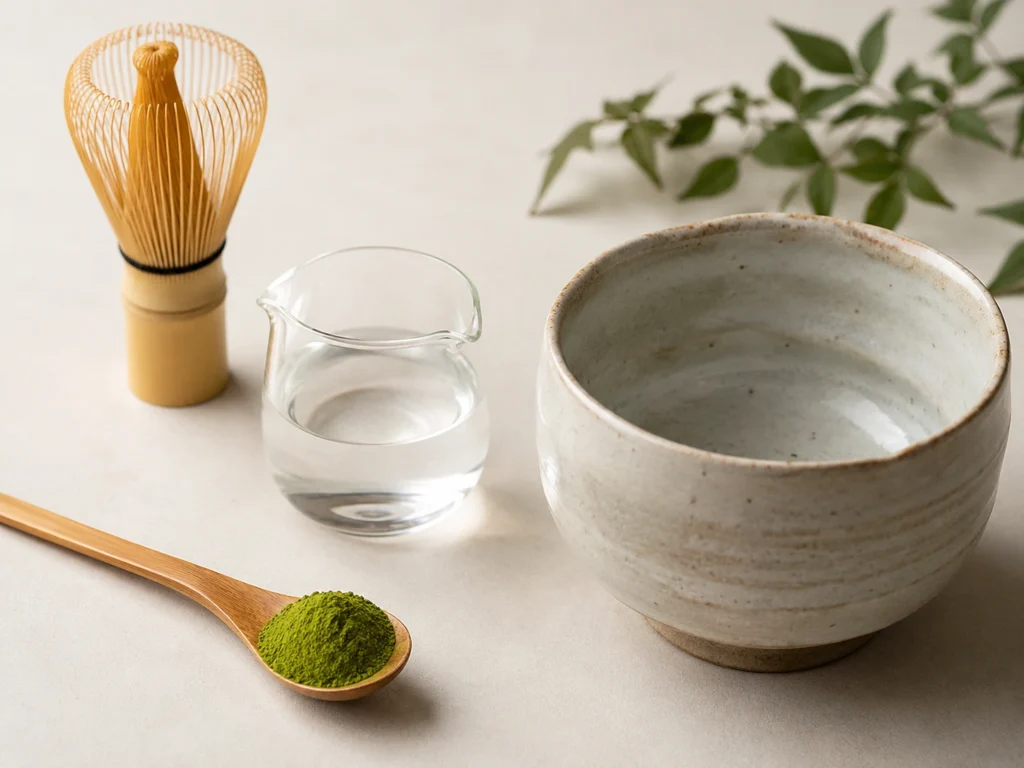
- Sift around 2 grams of ceremonial matcha into a bowl.
- Add 40–50 ml of warm water, around 60–80°C.
- Whisk with a bamboo whisk until smooth and lightly frothy.
- Drink as a traditional bowl, or add milk for a latte.
How to prepare hojicha
- Add around 2 grams of hojicha powder to a cup or bowl.
- Add a small amount of warm water, often around 80°C.
- Whisk or stir until smooth.
- Top with more warm water, or add milk for a hojicha latte.
Matcha is more sensitive to water temperature. Boiling water can make it taste bitter. Hojicha is more forgiving because roasting has already softened the flavour.
For a full method, read how to prepare ceremonial matcha. For the meaning behind the tools and ritual, read The Matcha Ritual.
Which Matcha Byron Bay tea should you choose?
Choose Nami if you want a smooth everyday ceremonial matcha for daily bowls, premium home lattes, and a simple morning ritual.
Choose Goku if you want a more refined ceremonial matcha for quiet moments where the flavour of the tea itself is the focus.
Choose Organic Hojicha Fine Grind if you want a roasted Japanese green tea powder for warm cups, lattes, iced drinks, and simple recipes.
If you are starting from the beginning with matcha, the Complete Nami Ritual Set includes Nami, bowl, bamboo whisk, scoop, and whisk stand.
Or browse the full Matcha Byron Bay shop.
Frequently asked questions
Is hojicha the same as matcha?
No. Matcha is powdered green tea that is usually vivid green and whisked into water. Hojicha is roasted green tea with a warm brown colour and toasty flavour.
Does hojicha contain caffeine?
Yes. Hojicha contains caffeine because it is made from green tea. It is usually lower in caffeine than matcha, but it is not caffeine-free. For more detail, read does hojicha have caffeine.
Which tea is lower in bitterness?
Hojicha is usually lower in bitterness because roasting softens the sharper green tea notes. Matcha can also be smooth when it is high quality and prepared with warm, not boiling, water.
Can I use the same bamboo whisk for both matcha and hojicha?
Yes. You can use the same bamboo whisk for both powders. Rinse it well with warm water after each use and let it air dry properly.
Which is better for lattes, matcha or hojicha?
Both work well. Matcha lattes are green, creamy, and fresh. Hojicha lattes are roasted, nutty, and warmer in flavour. Choose based on the mood and flavour you want.
Should I buy matcha or hojicha first?
Choose matcha first if you want the classic vivid green Japanese tea ritual. Choose hojicha first if you prefer roasted, nutty, lower-bitterness flavours or want a softer later-day tea.
Can I drink both matcha and hojicha?
Yes. Many people enjoy both because they suit different moments. Matcha is often chosen earlier in the day, while hojicha is often chosen later because it is roasted and usually lower in caffeine.
Choose the tea that fits the moment
Hojicha vs matcha doesn't have to be a single choice. Choose matcha when you want a vivid green ritual. Choose hojicha when you want something roasted, warm, and low in bitterness.
Sources
- Global Japanese Tea Association: Japanese Tea Kinds
- Japan Matcha Association: Details of Matcha
- Global Japanese Tea Association: What is Matcha?
- Japan Tea Export Promotion Council: Japanese Green Tea
- NCCIH: Green Tea
⚠️ One link still flagged does-hojicha-have-caffeine/ is used twice in this version (it was already present once in the original page, in the caffeine section) — confirming this one is a genuine gap, separate from the hojicha-vs-matcha confusion now resolved. This page itself proves the others were wrong to doubt — it's real and live, so no action needed there. Only the caffeine-specific page still needs to be built or these two references swapped to an anchor link until it exists. What changed and why
Title: unchanged, already exact-match. Meta description: rewritten from the 17-word hook to ~135 characters with the keyword leading. Quick answer: 47 words, placed directly above the existing opening line. Comparison table, latte table, decision table: all three already existed and are preserved untouched — this page already satisfied the brief's table and "which should you choose" requirements before I touched it. Internal links added: Matcha vs Green Tea (new). Hojicha Tea, Does Hojicha Have Caffeine (already present, confirmed as a genuine future link), Nami, Goku were all already linked and remain untouched. Soft mid-page CTA: added after the "what is hojicha" section, pointing to shop. Strong final CTA: existing closer kept, with the opening line rephrased to echo the keyword directly. FAQ: unchanged — already 7 well-targeted questions. No medical-claim concerns — this page stays in flavour/caffeine/ritual territory throughout and doesn't venture into health claims. All other sections, both preparation methods, and Sources list are otherwise unchanged.