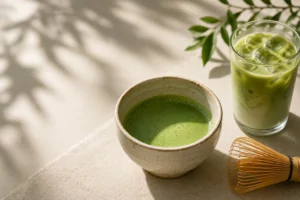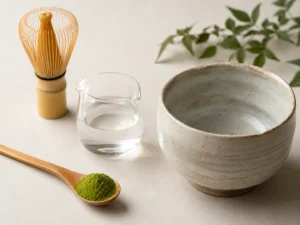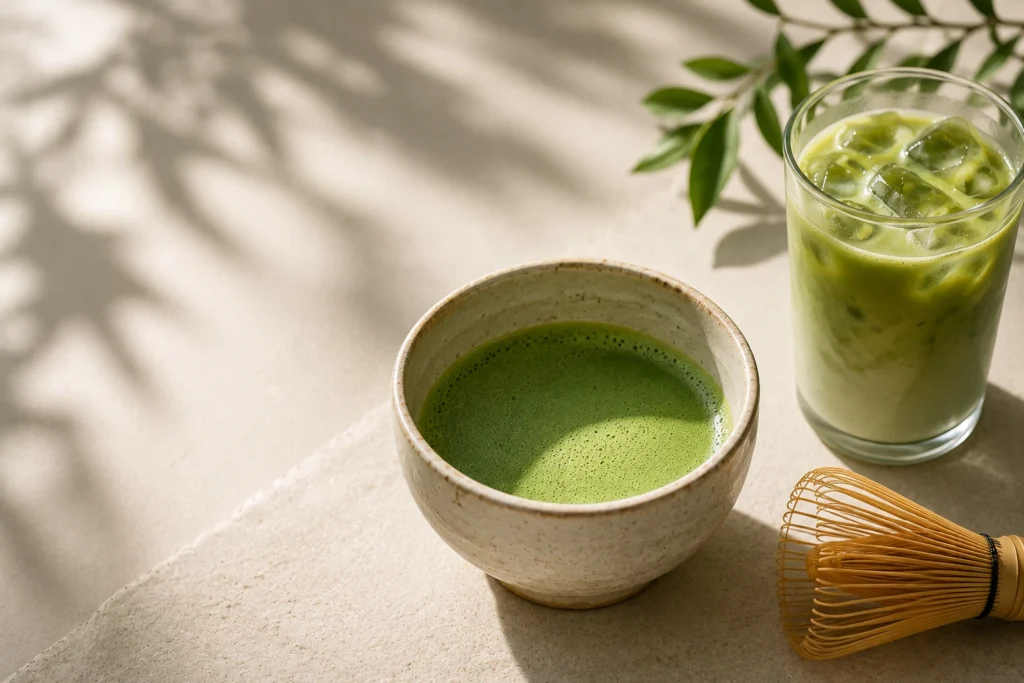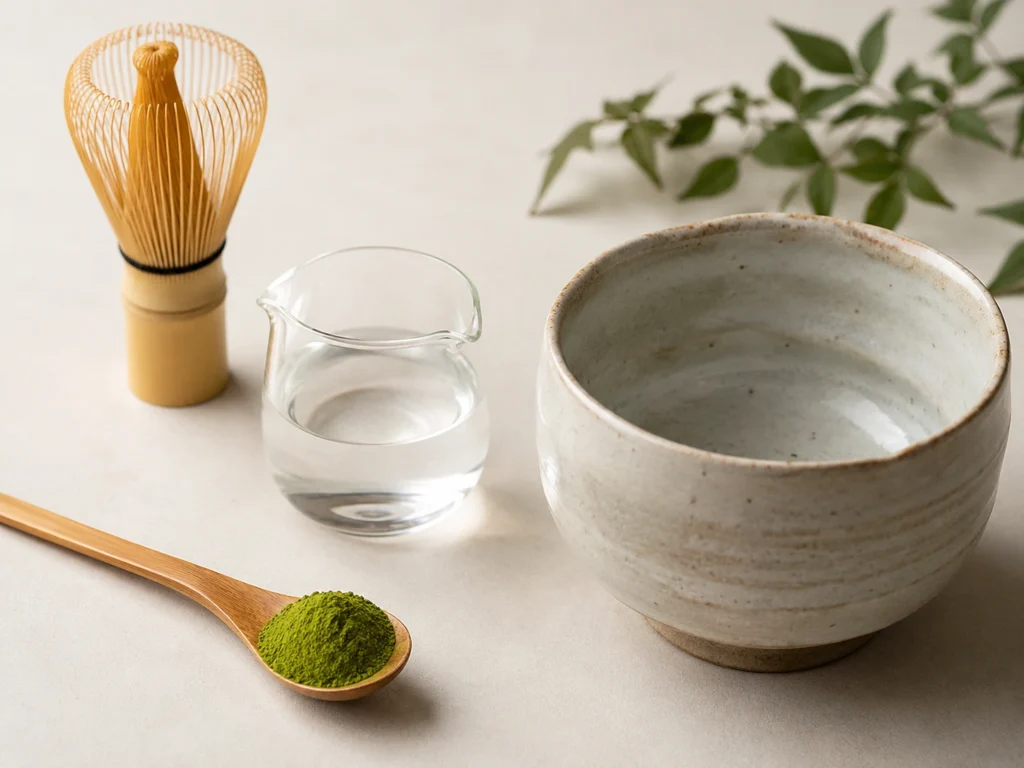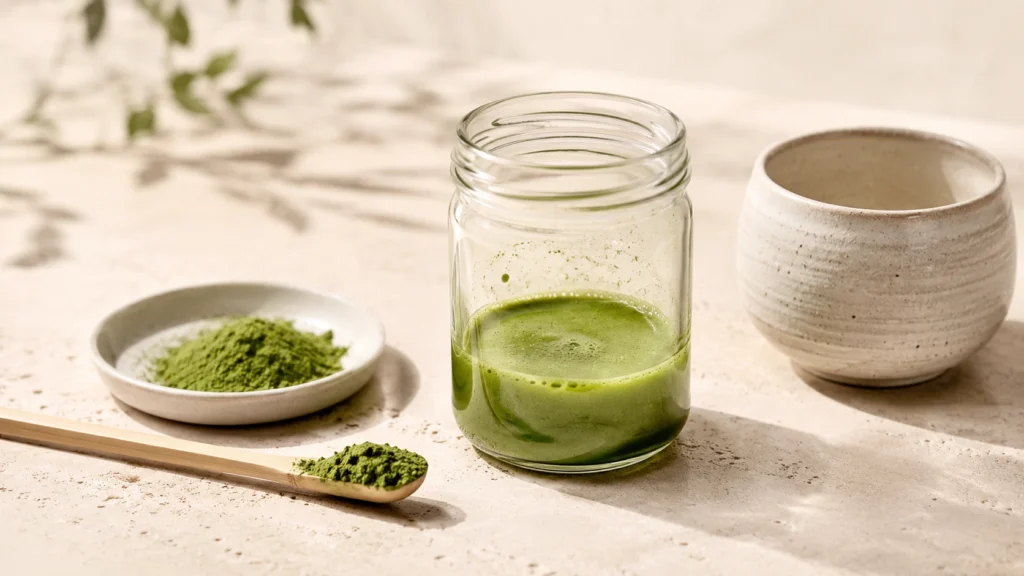
In short: how to make matcha without a whisk comes down to sifting the powder, making a small paste with warm water, then mixing with real energy. A sealed jar shaken hard for 15–20 seconds is usually the easiest method, with a milk frother a close second for lattes.
You can make matcha without a whisk.
A bamboo whisk gives the best texture, the finest foam, and the most traditional preparation experience, but it is not the only way to begin.
If you do not have a chasen yet, you can still make a smooth cup using a jar, milk frother, blender, small kitchen whisk, or even a fork. The key is to sift the matcha, use warm water, make a paste first, and mix with enough energy to suspend the powder properly.
This guide shows you how to make matcha without a whisk, which method works best, how to avoid clumps, and when it is worth upgrading to a proper bamboo whisk.
What to know first
- You can prepare matcha without a bamboo whisk if you mix it properly.
- The best whisk-free method is shaking matcha in a sealed jar or bottle.
- A milk frother works especially well for matcha lattes.
- Sifting matters more when you do not have a bamboo whisk to break up clumps.
- Warm water, around 60–80°C, helps protect the flavour from becoming harsh.
- If matcha becomes part of your daily ritual, a bamboo whisk is still worth having for better texture, foam, and tradition.
Can you make matcha without a whisk?
Yes. You can make matcha without a bamboo whisk.
Matcha is a powder, so it does not dissolve like sugar. It needs to be suspended in water. A bamboo whisk is designed for that job, which is why it creates a smoother texture and finer foam than most kitchen tools.
But if you are just starting, you do not need to wait until you own every tool. A sealed jar, handheld frother, blender, or small whisk can still make a good cup.
The difference is mostly texture and ritual. A bamboo whisk gives matcha its traditional bowl-and-whisk feeling. A jar or frother gives you a practical workaround.
If you want the traditional method, read our guide on how to prepare ceremonial matcha, or our guide to how to use a matcha whisk once you're ready. If you are still building your setup, start here, or see our guide to matcha tools you need to understand what's genuinely essential.
The best method: shake matcha in a jar
The easiest way to make matcha without a whisk is to shake it in a jar or bottle with a secure lid.
This works because shaking forces the powder and water together quickly. It can create a smooth, lightly frothy matcha without needing a bowl or whisk.
How to do it
- Sift 2g of matcha into a clean, dry jar or bottle.
- Add 40–50ml of warm water, around 60–80°C.
- Seal the lid tightly.
- Shake hard for 15–20 seconds.
- Pour into a cup and drink straight, or add milk for a latte.
For iced matcha, use cold water or room-temperature water, add ice, and shake again before pouring.
The jar method is especially useful for travel, quick mornings, iced matcha, and people who are not ready to buy a full matcha tool set yet.
Just make sure the lid is secure. Matcha on the counter is not the ritual we are aiming for.
Pros and cons of the jar method: - Pros: No equipment needed beyond a jar, works well cold or hot, ideal for travel, fast. - Cons: Less fine a foam than a bamboo whisk, lid must seal tightly or it will leak.
5 ways to make matcha without a whisk
Each method has a place. Some are better for lattes, some are better for iced matcha, and some are simply useful when you have nothing else.
| Method | Best for | Result | Watch out for |
|---|---|---|---|
| Jar or bottle | Iced matcha, travel, quick cups | Smooth and lightly frothy | Use a secure lid and sift first |
| Milk frother | Lattes | Creamy and easy | Make a paste first to avoid clumps |
| Blender | Batches, smoothies, iced drinks | Very smooth | More cleanup and easy to overdo |
| Small kitchen whisk | Warm cups | Good with effort | May not create fine foam |
| Fork or spoon | Emergency method | Drinkable but less smooth | Sift and make a paste first |
If you already have a milk frother or blender at home, use what you have. If you are making matcha every day, a proper Bamboo Whisk Chasen will eventually give you a better texture and a more traditional experience.
Want everything in one set? Explore the Complete Nami Ritual Set.
How to avoid clumps without a whisk
Clumps happen when dry matcha powder meets too much liquid too quickly.
A bamboo whisk helps break those clumps apart. Without one, you need to be more careful with the first steps.
1. Sift the matcha first
Sifting breaks up compressed powder before liquid is added. This is the simplest way to improve texture without a whisk.
2. Make a paste first
Add only a small amount of water at first and mix until the matcha becomes smooth. Then add the rest of the water or milk.
3. Use warm, not boiling, water
Water around 60–80°C is usually enough. Boiling water can make matcha taste more bitter or flat.
4. Mix with energy
Matcha needs movement. Whether you shake, froth, blend, or whisk, gentle stirring is rarely enough.
5. Use fresh, smooth matcha
A smoother ceremonial matcha like Nami is more forgiving when prepared simply, especially because the flavour is cleaner and less harsh than many lower-grade powders.
If your matcha is regularly bitter, dull, or difficult to mix, read how to tell if matcha is high quality.
How to make iced matcha without a whisk
The jar method is ideal for iced matcha.
- Sift 2g of matcha into a jar or bottle.
- Add 40–50ml cold or room-temperature water.
- Seal and shake hard for 15–20 seconds.
- Add ice to a glass.
- Pour the matcha over the ice.
- Add more cold water or milk, depending on the drink you want.
For iced matcha lattes, shake the matcha with a small amount of water first, then pour it over cold milk and ice.
If you pour dry matcha straight into cold milk, it is more likely to clump. Make the matcha base first.
For a fruit-based iced version, see our strawberry matcha latte recipe.
How to make a matcha latte without a whisk
A matcha latte is easy to make without a bamboo whisk if you use a jar or milk frother.
Jar method
- Sift 2g matcha into a jar.
- Add 40–50ml warm water.
- Seal and shake until smooth.
- Add warm or cold milk.
- Shake again briefly or pour over milk and stir.
Pros and cons: Quick and portable, but the foam will be less fine than a bamboo whisk produces.
Milk frother method
- Sift 2g matcha into a cup.
- Add a small amount of warm water.
- Use the frother to make a smooth paste.
- Add milk.
- Froth again until creamy.
Pros and cons: Closest texture to a cafe latte and very easy with milk, but it's another appliance to clean and won't replicate a traditional bowl.
Oat milk gives a creamy, slightly sweet result. Soy milk keeps the matcha flavour cleaner. Dairy milk gives a rounder body.
For more detail, read How to Make a Matcha Latte That Tastes Like Real Matcha.
Can you use a normal whisk, fork, or spoon?
Yes, but some tools work better than others.
A small kitchen whisk can work reasonably well if the wires are fine and you whisk quickly. Use a back-and-forth motion rather than slow circles.
A fork can work in a pinch, especially if you sift the powder and make a paste first. It will not create the same foam, but it can make a drinkable cup.
A spoon is the weakest option. It can help make a paste, but it usually will not suspend the matcha as smoothly on its own. If all you have is a spoon, make a very smooth paste first, then add liquid slowly and stir with energy.
The less effective the tool, the more important sifting becomes.
What about a blender, and what about a silicone matcha whisk?
A blender is the most thorough whisk-free method, especially for batches or iced drinks. Pros: very smooth result, good for multiple servings at once. Cons: more cleanup than a jar or frother, and easy to over-blend or make too much foam.
A silicone whisk can mix matcha, but it usually will not create the same fine foam or traditional feel as a bamboo chasen.
Silicone whisks are easy to rinse and may feel convenient for casual use. They can be useful if you want a simple tool that sits in a kitchen drawer.
But a bamboo whisk is designed specifically for matcha. Its fine tines move through the powder and water in a way that creates a smoother bowl and a softer surface.
If you want matcha as a daily ritual rather than just a quick drink, the Bamboo Whisk Chasen is the better long-term tool.
When is a bamboo whisk still worth it?
A bamboo whisk is worth it when matcha becomes something you return to regularly.
You can start without one. But if you find yourself making matcha most mornings, the whisk changes the experience.
A bamboo whisk helps:
- create a smoother texture
- reduce clumps more effectively
- produce finer foam
- make traditional preparation feel calmer and more complete
- connect the drink to the Japanese tea ritual it comes from
The whisk is not only about function. It slows the moment down.
If you buy a bamboo whisk, pair it with a glass whisk stand so the tines can dry open between uses. You can also read our guide to what a matcha whisk holder does.
Which Matcha Byron Bay matcha should you use?
If you are making matcha without a whisk, start with a smooth matcha that does not fight you.
Nami ceremonial matcha is our everyday recommendation. It is smooth, balanced, and suitable for simple bowls, iced matcha, and home lattes.
Goku premium ceremonial matcha is the more refined option if you want a deeper matcha experience where the tea itself is the focus.
Culinary Matcha D is better suited to baking, recipes, and larger latte batches where a bolder flavour makes sense.
If you are ready for the full ritual, the Complete Nami Ritual Set includes Nami, a matcha bowl, bamboo whisk, chashaku scoop, and glass whisk stand.
Or browse the full Matcha Byron Bay shop.
Is hojicha a good alternative if you do not have a whisk?
Hojicha can be a good option if you want a roasted Japanese green tea powder that is easy to prepare with simple tools.
Hojicha is roasted, brown, and naturally warmer in flavour than matcha. It is usually lower in caffeine than matcha, but it is not caffeine-free.
Because its flavour is roasted and mellow, it can work well with a jar, spoon, frother, or blender.
If you are curious, read Hojicha Powder: What It Is and How to Use It, or explore our Organic Hojicha Fine Grind.
Frequently asked questions
Can I make matcha without a bamboo whisk?
Yes. You can use a jar, milk frother, blender, small kitchen whisk, fork, or spoon. A bamboo whisk gives the best traditional texture, but it is not required to begin.
What is the best way to make matcha without a whisk?
The best overall method is shaking sifted matcha with water in a sealed jar or bottle. It is quick, simple, and works especially well for iced matcha.
Can I use a fork to mix matcha?
Yes, but sift the matcha first and make a paste with a small amount of water before adding more liquid. A fork will not create fine foam, but it can work in a pinch.
Can I make iced matcha without a whisk?
Yes. Add sifted matcha and cold or room-temperature water to a jar, seal it tightly, and shake hard. Pour over ice and add water or milk.
Can I make a matcha latte without a whisk?
Yes. Use a jar or milk frother. First mix the matcha with a small amount of water, then add milk and shake or froth again.
Why is my matcha clumpy without a whisk?
The powder may not have been sifted, or too much liquid may have been added at once. Sift first, make a paste, then add the rest of the water or milk slowly.
Do I still need to sift matcha?
Yes, especially when you are not using a bamboo whisk. Sifting breaks up compressed powder and makes every whisk-free method smoother.
Is a bamboo whisk worth buying later?
Yes, if you make matcha regularly. A bamboo whisk gives better texture, finer foam, and a more traditional preparation experience. Pair it with a glass whisk stand to help the tines dry open between uses.
No whisk yet? Start anyway.
Now you know how to make matcha without a whisk: a jar, frother, blender, or small kitchen whisk can help you begin. Sift the powder, use warm water, make a paste, and choose smooth matcha. When you are ready for better texture and ritual, upgrade to a bamboo whisk.
Explore Nami Ceremonial Matcha
⚠️ One link flagged how-to-use-a-matcha-whisk/ doesn't exist yet, consistent with the earlier flag on the Matcha Whisk Holder page. Same recommendation applies: decide whether this and "Matcha Whisk Guide" should become one combined page, then swap this placeholder once it's live. What changed and why
Title: unchanged, already exact-match. Meta description: rewritten from the 6-word placeholder ("You can make matcha without a whisk.") to ~140 characters with the keyword. Quick answer: 50 words, placed directly above the existing opening line. Explicit pros/cons added: the brief specifically asked for pros/cons of jar, frother, and blender. The comparison table already captured "best for" and "watch out for" implicitly; I added explicit Pros and cons call-outs directly under the jar method, the latte jar/frother methods, and the new blender mention, so the requirement is satisfied in plain, scannable form rather than only embedded in table cells. Blender given its own dedicated treatment: previously folded only into the comparison table and briefly mentioned; now has a full paragraph alongside the silicone whisk discussion with explicit pros/cons, since the brief named it as one of the three required alternatives alongside jar and frother. Internal links added: Matcha Tools You Need (new), How to Use a Matcha Whisk (new, placeholder — flagged above). How to Prepare Ceremonial Matcha, Complete Nami Ritual Set, and Nami 50g were already linked multiple times and remain untouched. Soft mid-page CTA: added after the "5 ways" table, pointing to the Ritual Set. Strong final CTA: existing closer kept, with the opening line rephrased to echo the keyword directly. FAQ: unchanged — already 8 well-built questions covering exactly the search intent expected. No medical-claim concerns — this page is purely practical/technique-focused. All other sections — clump-avoidance steps, iced method, latte method, whisk-upgrade reasoning, hojicha alternative — are otherwise unchanged.