High quality matcha is not loud.
It does not need to announce itself with exaggerated claims, neon packaging, or a long list of promises.
You recognise it slowly: in the colour of the powder, the softness of the aroma, the way it moves through water, and the taste that arrives without harsh bitterness.
Good matcha feels cared for before you ever take the first sip.
This guide will show you how to recognise high quality matcha by looking at the things that matter most: farming, milling, colour, texture, aroma, taste, preparation, storage, and ritual.
How to recognise quality
- High quality matcha is usually made from shade-grown tea leaves that have been carefully processed into a fine, vivid green powder.
- You can recognise good matcha with your senses: bright green colour, silky texture, fresh aroma, smooth taste, and a clean finish.
- Quality depends on farming, harvest timing, sorting, milling, freshness, storage, and preparation — not just the word “ceremonial” on the label.
- Ceremonial matcha and culinary matcha serve different purposes. Ceremonial matcha is made for drinking with water; culinary matcha is made for lattes, baking, smoothies, and recipes.
- Even high quality matcha can taste bitter if it is prepared with boiling water, left unsifted, used in excess, or stored poorly.
What makes matcha high quality?
High quality matcha is the result of careful farming and careful processing.
Before the powder reaches your bowl, many decisions have already shaped it: where the tea was grown, how long the leaves were shaded, when they were harvested, how they were sorted, how they were dried, how slowly they were milled, how fresh the powder is, and how it was stored before reaching you.
Proper matcha is made from tencha, a type of green tea leaf that is steamed, dried without rolling, and ground into a fine powder. Because you drink the entire powdered leaf, matcha is different from ordinary steeped green tea. The whole leaf becomes part of the drink.
That is why quality matters so much.
If the leaf is dull, old, poorly stored, roughly processed, or ground too coarsely, you taste it immediately. The cup becomes muddy, bitter, flat, or dusty.
High quality matcha feels different. The powder is fine. The colour is alive. The aroma is fresh. The taste is smooth, green, and rounded.
High quality matcha begins before the whisk. It begins in the field, in the shade, and in the patience of the process.
For more on how our tea is selected and sourced, read about Matcha Byron Bay sourcing.
1. High quality matcha usually starts with shade-grown leaves
Shade-growing is one of the clearest differences between true matcha and ordinary green tea powder.
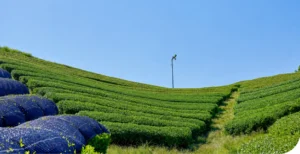
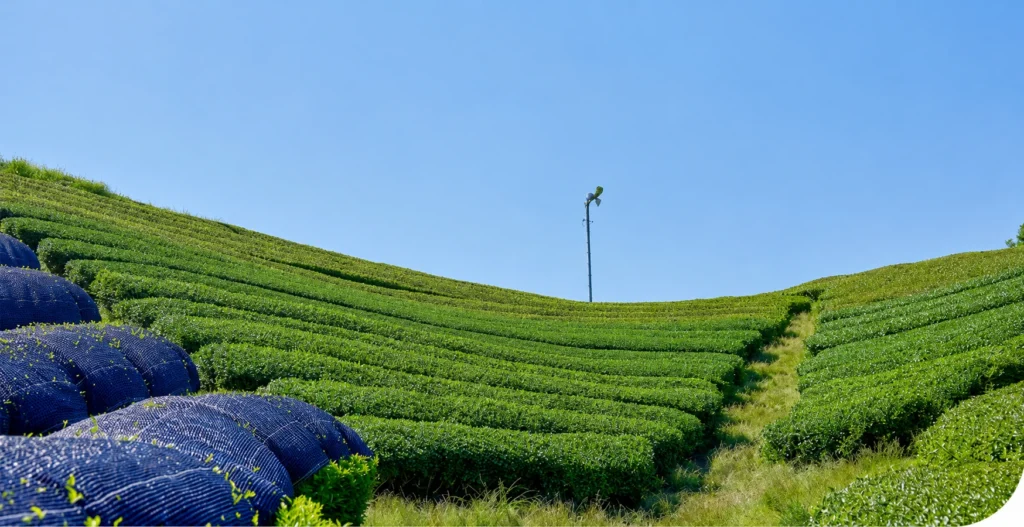
Tea plants grown for matcha are often shaded before harvest. This reduces direct sunlight and changes the leaf’s colour, flavour, and chemical composition. Shade-grown leaves are often associated with a deeper green colour, smoother flavour, and more pronounced umami.
This does not mean every shaded tea is automatically excellent. It means shading is one important part of the quality picture.
Good matcha is not created by one step alone. Shade matters. Harvest timing matters. Sorting matters. Milling matters. Freshness matters.
For Matcha Byron Bay, this is why sourcing is central. We do not treat matcha as a generic green powder. We care about origin, preparation, freshness, and the experience of drinking it.
You can learn more on our about page and our sourcing page.
2. Colour is one of the easiest signs of high quality matcha
Colour is usually the first thing people notice.
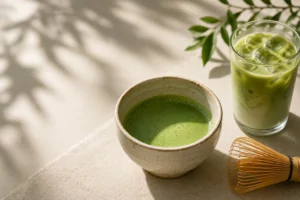
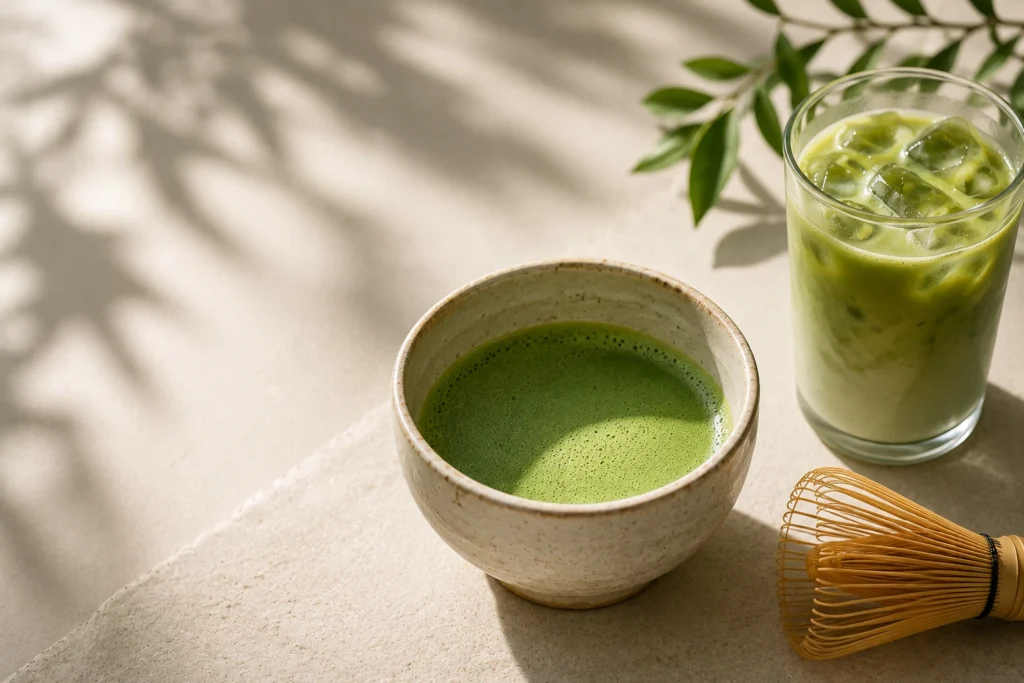
High quality matcha should look vivid green. Not fluorescent in an artificial way, but alive: fresh, clean, bright, and deeply green.
A dull olive, yellow-brown, greyish, or muddy colour can suggest older powder, poor storage, lower-grade leaves, oxidation, or less careful processing.
This is not about chasing the brightest green at all costs. Colour varies between products, harvests, and styles. But if the powder already looks tired before you open the pouch fully, the flavour will often feel tired too.
A useful rule:
High quality matcha should look like something fresh. Low quality matcha often looks like something faded.
In our range, Goku is our most refined ceremonial matcha, selected for a deeper colour, finer texture, and more elevated drinking experience. Nami is our everyday organic ceremonial matcha, made for a smooth daily bowl or premium latte.
3. Texture should feel fine, soft, and silky
Texture is one of the most practical ways to judge high quality matcha.
Rub a small pinch of powder between your fingers. Good matcha should feel very fine, almost like talc or soft dust. It should not feel gritty, sandy, coarse, or grainy.
Fine texture matters because matcha is not steeped and removed. It is suspended in water. If the powder is coarse, it will not whisk as smoothly. It may feel rough on the tongue, settle quickly, or create a less elegant bowl.
High quality matcha should move easily through a sieve. It should whisk into water without leaving heavy clumps behind. It should feel soft in the mouth, not powdery or chalky.
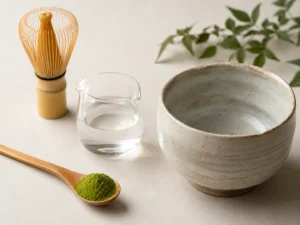
This is one reason the right tools help. A bamboo whisk does not just mix the powder. It helps create a smoother suspension and a softer drinking experience.
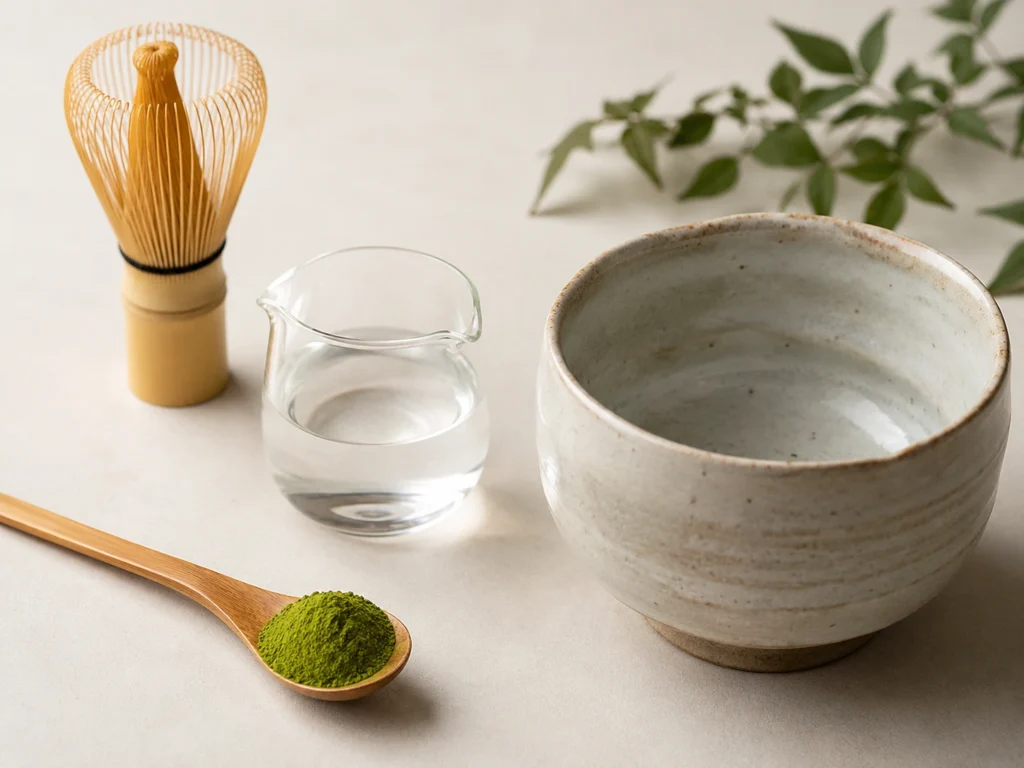
For beginners who want the proper tools from the start, our Complete Nami Ritual Set includes matcha, bowl, bamboo whisk, scoop, and whisk stand.
4. Fresh aroma is a quiet sign of good matcha
Open the pouch and breathe in.
High quality matcha should smell fresh, green, and slightly sweet. It may remind you of young grass, steamed greens, soft umami, or spring leaves.
It should not smell stale, musty, dusty, sour, smoky, or like old cardboard.
Aroma matters because matcha is delicate. Once the leaf is ground into powder, it has more surface area exposed to oxygen, light, and moisture. That means the aroma can fade faster than whole loose-leaf tea.
If your matcha smells flat, the flavour will probably be flat too.
This is why freshness and storage matter. High quality matcha should be treated more like a fresh ingredient than a dry pantry staple.
5. Taste should be smooth, green, and balanced
High quality matcha should not be harshly bitter.
It can have a gentle green bitterness. That is natural. But it should also have smoothness, umami, freshness, and a clean finish.
If the matcha tastes sharp, burnt, metallic, stale, muddy, or aggressively bitter, something is wrong. It may be low quality. It may be old. It may have been stored poorly. Or it may simply have been prepared with water that was too hot.
A good ceremonial matcha should be enjoyable with water alone. It should not need sugar, syrup, or milk to hide it.
That is the real test.
If matcha only tastes good when it is covered by milk and sweetness, it may not be the right matcha for drinking straight.
For a quiet daily bowl, start with Nami organic ceremonial matcha. For a more refined ceremonial experience, explore Goku.
6. Ceremonial and culinary matcha are not the same thing
One of the easiest ways to misunderstand matcha quality is to compare ceremonial and culinary matcha as if they are trying to do the same job.
They are not.
Ceremonial matcha is made for drinking with water. It should be smooth, fine, and balanced enough to stand on its own.
Culinary matcha is made for mixing. It is stronger, more robust, and often more astringent because it needs to hold its flavour through milk, sweetness, flour, fruit, or heat.
That does not mean culinary matcha is bad. It means it belongs in a different setting.
| Quality signal | Ceremonial matcha | Culinary matcha |
|---|---|---|
| Best use | Whisked with water and drunk straight | Lattes, smoothies, baking, desserts, recipes |
| Flavour | Smoother, softer, more umami | Bolder, stronger, more astringent |
| Texture | Usually finer and silkier | Still fine, but often less delicate |
| Colour | Vivid green | Green, but often deeper or less bright |
| Best Matcha Byron Bay fit | Nami or Goku | Matcha D |
If you are drinking matcha for the ritual itself, choose ceremonial. If you are adding it to a recipe, culinary matcha is the smarter choice.
For a fuller guide, read our comparison of ceremonial vs culinary matcha.
7. Preparation can hide or reveal quality
Sometimes people think they dislike matcha when the real problem is preparation.
Even high quality matcha can taste bitter if it is made with boiling water, used in excess, left unsifted, or stirred poorly.
Water temperature matters. Water above 80°C can pull out more bitterness and flatten the softer notes. For most ceremonial matcha, a range of roughly 60–80°C works better than boiling water.
Sifting matters too. Matcha clumps easily, and those small clumps can taste bitter or powdery on the tongue. Sifting takes a few seconds and makes the drink smoother.
Amount matters. For most cups, 2–3 grams is enough. Too much powder can make even good matcha feel heavy or harsh.
The whisk matters. A spoon can mix matcha, but it will not create the same fine suspension or soft foam as a bamboo whisk.
A simple preparation:
- Sift 2–3 grams of matcha into a bowl.
- Add a small amount of warm water.
- Whisk into a smooth paste.
- Add more warm water.
- Whisk briskly until a light foam forms.
- Drink while fresh.
For the full method, read our guide on how to prepare ceremonial matcha at home.
8. Storage can make high quality matcha fade quickly
High quality matcha is sensitive.
Once opened, matcha begins to interact with air, light, heat, and moisture. Over time, the colour can dull, the aroma can flatten, and the taste can become stale.
That does not always mean the matcha was poor to begin with. Sometimes the problem is storage.
To protect matcha quality:
- Keep the pouch or tin sealed tightly.
- Store it away from direct sunlight.
- Keep it away from heat, steam, and humidity.
- Avoid storing it near strong-smelling foods.
- Use it regularly after opening rather than saving it indefinitely.
If you refrigerate matcha, make sure it is in an airtight container and let it come closer to room temperature before opening. This helps reduce condensation.
Treat matcha like a fresh ingredient, not a forgotten pantry powder.
9. High quality matcha should match the way you use it
The best matcha is not always the most expensive matcha.
It is the right matcha for the way you actually drink it.
If you want a quiet bowl with water, choose ceremonial matcha. If you want daily lattes, choose a smooth ceremonial matcha like Nami or a purpose-built culinary option depending on how strong you like your latte. If you are baking, blending, or serving volume drinks, choose culinary matcha.
Using Goku in a cake is not wrong, but it wastes much of what makes Goku special. Using Matcha D as a traditional bowl is possible, but it may taste sharper than you want.
Quality is partly about the tea.
It is also about fit.
For latte drinkers, read our guide to choosing matcha for lattes.
10. Ritual helps you notice quality
High quality matcha is not only something you measure.
It is something you notice.
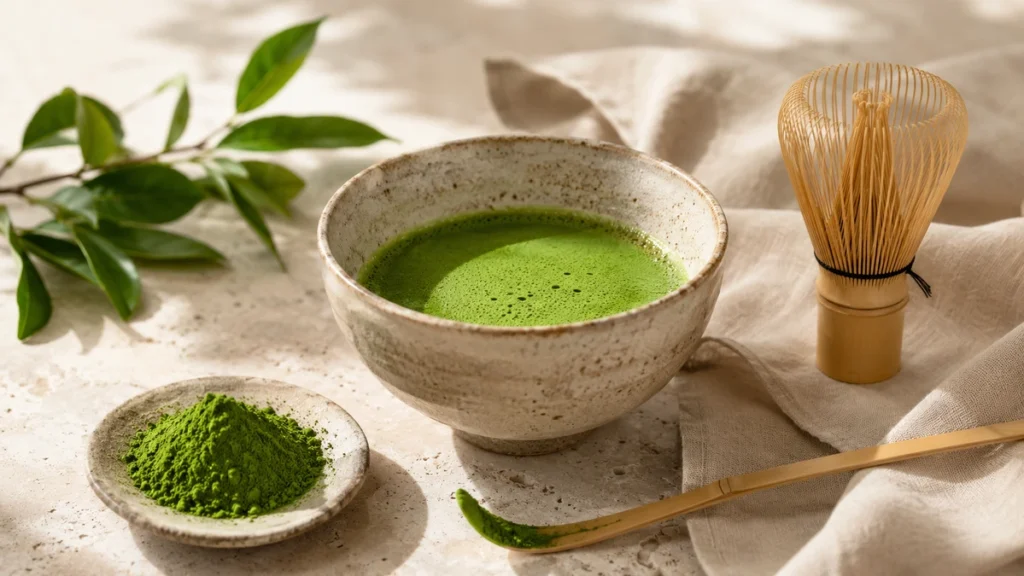
The sound of the whisk against the bowl. The way the powder darkens when water first touches it. The fine green foam. The warmth in your hands. The first sip before the day becomes crowded.
A daily ritual does not need to be elaborate. It needs to be repeated.
When you return to the same small sequence each morning, you begin to taste more carefully. You notice the freshness. The aroma. The difference between water that is too hot and water that is just right. The difference between a powder that is alive and one that has faded.
This is why quality and ritual belong together.
High quality matcha gives you more to notice. The ritual gives you the space to notice it.
For more on the meaning behind the bowl, whisk, and pause, read The Matcha Ritual.
Which Matcha Byron Bay matcha should you choose?
Choose Nami if you want a high quality matcha for everyday drinking, premium lattes, and a smooth daily ritual.
Choose Goku if you want our most refined ceremonial matcha, selected for a deeper colour, finer texture, and more elevated drinking experience.
Choose Matcha D if you want a practical matcha for lattes, baking, smoothies, desserts, or cafe-style use.
Or browse the full Matcha Byron Bay range.
High quality matcha is not just a label. It is a combination of leaf, origin, milling, freshness, preparation, and attention.
When those things come together, the bowl tells you.
Frequently asked questions
How can you tell if matcha is high quality?
Look for vivid green colour, very fine texture, fresh sweet-grassy aroma, smooth taste, and low harshness. High quality matcha should feel fresh and clean, not dull, stale, gritty, or aggressively bitter.
What colour should high quality matcha be?
High quality matcha is usually bright, vivid green. Dull olive, brown, grey, or yellowish tones can suggest age, oxidation, poor storage, lower-grade leaves, or less careful processing.
Should high quality matcha taste bitter?
Good matcha can have a gentle green bitterness, but it should not taste harsh, burnt, stale, metallic, or muddy. Strong bitterness often comes from low quality powder, water that is too hot, using too much matcha, or poor storage.
What is the difference between Goku and Nami?
Goku is our most refined ceremonial matcha, selected for a deeper colour, finer texture, and more elevated drinking experience. Nami is our everyday organic ceremonial matcha, smooth enough for a daily bowl and practical enough for premium lattes.
Can high quality matcha be used for lattes?
Yes. Nami works well for lattes because it remains smooth and balanced with milk. Goku can also be used in a latte, but its subtlety is often best appreciated with water. For baking, smoothies, and larger-batch drinks, Matcha D is the more practical option.
Do I need a bamboo whisk for high quality matcha?
You can mix matcha without a bamboo whisk, but a chasen creates a smoother texture and a more traditional preparation. It helps suspend the powder evenly and turns the process into a small ritual rather than just a drink-making step.
Does organic certification guarantee high quality matcha?
No. Organic certification can be valuable, but it does not guarantee flavour, colour, freshness, or texture by itself. High quality matcha also depends on shade-growing, harvest timing, sorting, milling, freshness, storage, and preparation.
Begin with matcha you can recognise
Choose a matcha that looks fresh, smells clean, prepares smoothly, and fits the way you drink it.