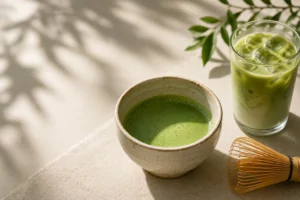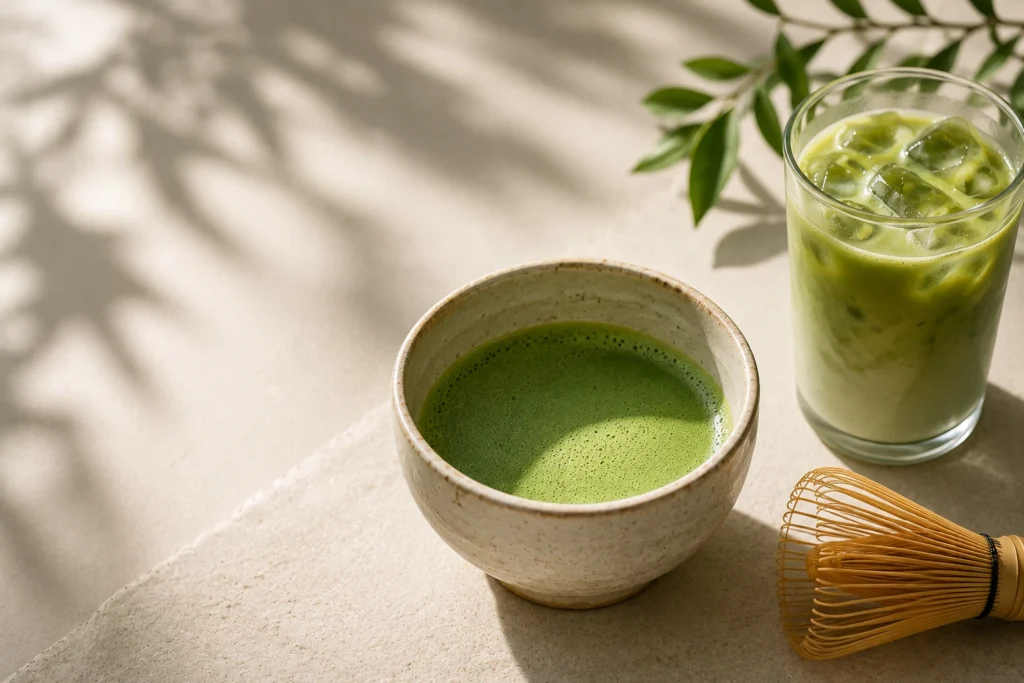
In short: ceremonial vs culinary matcha comes down to leaf quality, taste, and purpose. Ceremonial matcha is finer, smoother, and made for drinking with water. Culinary matcha is stronger and more robust, made to hold its flavour in lattes, smoothies, and baking. Both come from the same plant, prepared differently.
If you’re exploring Japanese matcha, you’ve likely encountered two terms: ceremonial matcha and culinary matcha.
At first glance they may seem similar. Both are green tea powders made from finely ground tea leaves.
But when you understand ceremonial vs culinary matcha, the differences become clear. These two grades of matcha are grown, processed, and used in very different ways.
Understanding ceremonial vs culinary matcha helps you choose the right tea depending on how you plan to enjoy it – whether you’re preparing a quiet morning bowl or blending matcha into smoothies, lattes, or desserts.
Below are five essential differences that actually matter.
If you’re curious about the deeper philosophy behind traditional preparation, you may also enjoy our journal exploring what is ceremonial matcha and the traditions behind it.
What Is the Difference Between Ceremonial vs Culinary Matcha?
The difference between ceremonial vs culinary matcha comes down to quality, taste, and purpose.
Ceremonial matcha is made from the youngest tea leaves and is intended to be whisked with hot water and enjoyed on its own.
Culinary matcha is made from more mature leaves and has a stronger flavour designed to hold up in recipes like lattes, smoothies, and baking.
Both types come from the same tea plant, but the way they are processed and used is very different.
Ceremonial vs Culinary Matcha at a Glance
| Feature | Ceremonial Matcha | Culinary Matcha |
|---|---|---|
| Leaf quality | Youngest leaves | Mature leaves |
| Taste | Smooth, umami, naturally sweet | Stronger, more bitter |
| Colour | Bright vibrant green | Darker green |
| Texture | Ultra fine powder | Slightly coarser |
| Best use | Drinking with water | Recipes and lattes |
Ceremonial vs Culinary Matcha Infographic
1. Leaf Quality
The biggest difference between ceremonial and culinary matcha begins with the leaves themselves.
Ceremonial matcha
- Made from the youngest, most tender tea leaves
- Carefully selected during harvest
- Stems and veins removed before grinding
- This produces an extremely fine powder with a smooth, delicate flavour.
Ceremonial matcha is intended to be enjoyed on its own, where the complexity of the tea can be appreciated fully. If you’re looking for a refined daily bowl, our Nami ceremonial matcha offers a smooth and balanced expression of ceremonial grade tea, suited to those who want an everyday drinking-with-water preference.
For those who prefer a deeper and more robust profile, Goku ceremonial matcha provides a richer, more premium ceremonial experience while maintaining the same traditional quality.
Culinary matcha
- Made from older, more mature leaves
- Leaves contain more tannins
- Less selective harvesting
The result is a stronger flavour that works well when combined with milk, sugar, or baking ingredients. A dedicated culinary matcha powder is typically best for recipes because its stronger flavour holds up when mixed with other ingredients.
Many beginners researching ceremonial vs culinary matcha assume the difference is small, but the quality of the leaves plays a major role in flavour and texture.
Still deciding? Browse the full Matcha Byron Bay range or jump to the comparison and decision guide below.
2. Taste
Taste is where the difference becomes most obvious.
Ceremonial matcha
- Smooth
- Naturally sweet
- Creamy
- Low bitterness
- Umami rich
High-quality ceremonial matcha should taste balanced and pleasant when prepared with water alone.
Culinary matcha
- More bitter
- Stronger flavour
- Earthier profile
- Less sweetness
This stronger taste is intentional because it allows the matcha flavour to remain noticeable when mixed into other ingredients.
If you drink culinary matcha on its own, it often tastes harsh or overly bitter.
For milk-based drinks like matcha lattes, however, culinary matcha performs very well. Our journal to matcha for lattes explains what characteristics to look for when preparing matcha with milk.
3. Colour
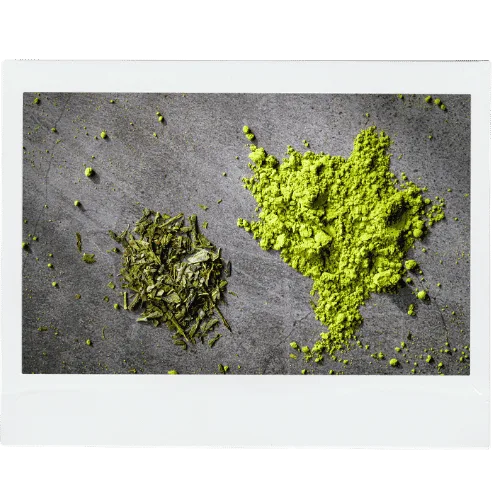
Colour is one of the easiest ways to identify high-quality matcha.
Ceremonial matcha
- Bright vibrant green
- Almost neon in appearance
- High chlorophyll levels from shade growing
Culinary matcha
- Darker green
- Sometimes slightly yellow or olive
- Less vibrant overall
The youngest leaves used for ceremonial matcha produce the brightest colour and most balanced flavour. For more on judging this yourself, read how to tell if matcha is high quality.
Image alt text for comparison image: ceremonial vs culinary matcha powder comparison
4. Texture

Another major difference between ceremonial vs culinary matcha is the fineness of the powder.
Ceremonial matcha
- Stone-ground slowly using traditional mills
- Extremely fine texture
- Silky and soft
- This allows ceremonial matcha to whisk smoothly into water.
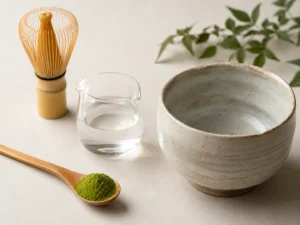
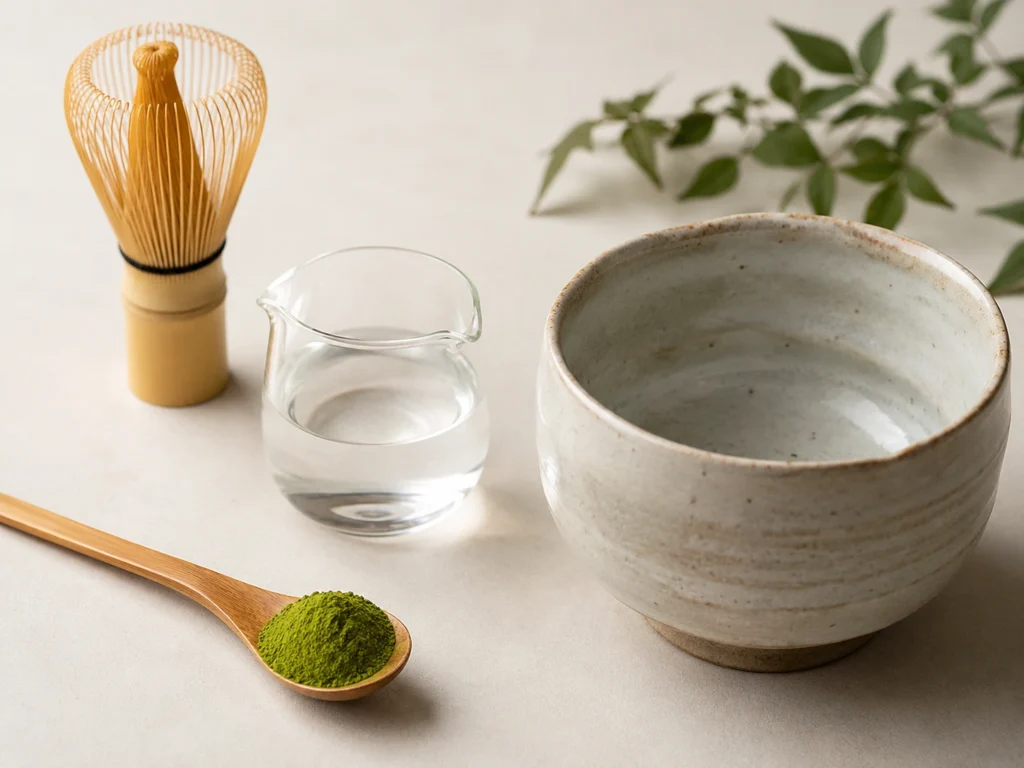
Traditional preparation requires only a few simple tools. If you’re new to the ritual, our journal on essential matcha tools explains which items are truly necessary and which ones often create unnecessary clutter.
Culinary matcha
- Often ground more quickly
- Slightly coarser
- Less silky texture
Texture matters most when drinking matcha traditionally because the powder is consumed directly rather than filtered.
5. How It’s Used
Ceremonial and culinary matcha exist for different purposes.
Ceremonial matcha is designed for drinking.
Traditionally it is:
- sifted
- whisked with hot water
- served in a bowl
This preparation method comes from the Japanese tea ceremony, a tradition that emphasises harmony, respect, purity, and tranquillity.
You can learn more about this tradition through the teachings of the Urasenke tea school:
https://www.urasenke.or.jp/texte/english/
Culinary matcha is designed for recipes.
Common uses include:
- matcha lattes
- smoothies
- baking
- desserts
- ice cream
Its stronger flavour allows the taste of matcha to remain present alongside milk, sugar, or other ingredients.
If you’re looking to buy matcha in Australia, understanding ceremonial vs culinary matcha helps ensure you choose the right grade for your intended use. Our guide to buying matcha in Australia covers what to check before you choose.
Why Ceremonial Matcha Costs More
Ceremonial matcha is typically more expensive than culinary matcha.
Producing ceremonial-grade matcha requires:
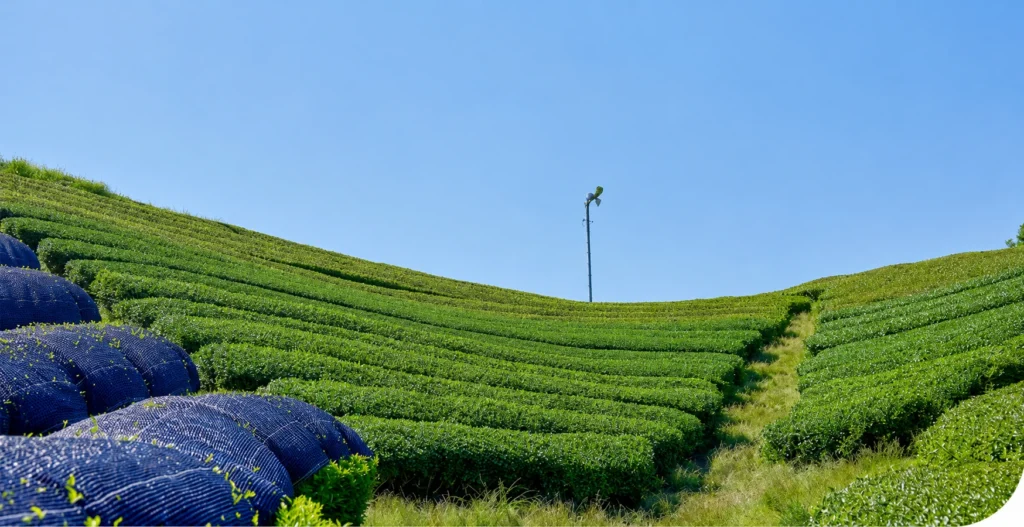
- weeks of shade growing
- careful leaf selection
- removal of stems and veins
- slow stone grinding
Traditional stone mills produce only 30-40 grams of matcha per hour, which contributes to the higher cost.
This slow process helps preserve the delicate flavour and nutrients found in high-quality matcha.
Matcha is also widely studied for its combination of caffeine and L-theanine, which contributes to calm focus and sustained energy. You can read more about the research behind matcha’s benefits here:
https://www.healthline.com/nutrition/7-benefits-of-matcha-tea
Can You Use Ceremonial Matcha for Lattes?

Yes – and many people prefer it.
Ceremonial matcha can produce a noticeably smoother and more balanced latte compared with culinary matcha. The natural sweetness and lower bitterness of high-quality ceremonial matcha can still come through even when combined with milk.
Culinary matcha is commonly recommended for lattes because it is more affordable and designed to maintain its flavour when mixed with other ingredients.
However, when flavour is the priority, many people choose ceremonial matcha instead. The result is often a softer, more rounded latte with greater depth and less bitterness.
If you enjoy matcha lattes but want a more refined flavour, using a high-quality ceremonial matcha such as Nami ceremonial matcha can elevate the experience significantly.
How to Choose High Quality Ceremonial Matcha
If you’re selecting ceremonial matcha, look for these signs of quality:
- vibrant bright green colour
- ultra fine powder texture
- origin listed from Japan
- smooth taste with minimal bitterness
The flavour should feel balanced, creamy, and slightly sweet, not harsh or overly astringent.
Ceremonial vs Culinary Matcha: Which Should You Choose?
Once you understand ceremonial vs culinary matcha, choosing the right type becomes much easier. The right choice depends mainly on how you plan to drink it.
| If you want… | Choose | Why |
|---|---|---|
| A daily ritual with water alone | Ceremonial | Smoother, finer, and balanced enough to drink without milk or sugar |
| A more refined, traditional bowl | Ceremonial (Goku) | Deeper, richer profile for those who already enjoy ceremonial matcha |
| Everyday lattes at home | Ceremonial (Nami) | Balanced enough to drink straight, but holds its flavour well with milk |
| Smoothies, baking, or desserts | Culinary | Stronger flavour holds up against milk, sugar, and other ingredients |
| Cafe-style or large-batch lattes | Culinary | More affordable and consistent for high-volume preparation |
Choose ceremonial matcha if you want:
- a daily ritual
- traditional preparation
- smooth flavour
- calm, steady energy
Choose culinary matcha if you want:
- matcha lattes
- smoothies
- baking
- desserts
Both grades have their place, but they serve very different roles.
Frequently asked questions
What is the main difference between ceremonial and culinary matcha?
Ceremonial matcha is made from the youngest leaves, stone-ground into a fine powder, and meant to be whisked with water and drunk on its own. Culinary matcha is made from more mature leaves, has a stronger flavour, and is designed to hold up in lattes, smoothies, and baking.
Can I use ceremonial matcha instead of culinary matcha?
Yes. Ceremonial matcha can be used in lattes or recipes, and many people prefer its smoother, less bitter flavour. It is simply more expensive than culinary matcha, so it is not always the most practical choice for large-batch or commercial use.
Can I use culinary matcha for a traditional bowl?
You can, but it is not recommended. Culinary matcha is stronger and more astringent, so it often tastes harsh or bitter when prepared with water alone rather than mixed with other ingredients.
Which is better for matcha lattes, ceremonial or culinary?
Both work. Culinary matcha is more affordable and holds its flavour well with milk, while ceremonial matcha like Nami gives a smoother, more refined latte for those who want a higher quality result.
Is ceremonial matcha always higher quality than culinary matcha?
Ceremonial matcha is generally more refined and carefully processed, but “higher quality” depends on intended use. A good culinary matcha is well suited to its purpose, just as a good ceremonial matcha is well suited to drinking with water.
Where can I buy ceremonial or culinary matcha in Australia?
Look for a brand that explains origin, grade, and freshness clearly. Our guide to buying matcha in Australia covers what to check before you choose, including how Nami, Goku, and culinary options compare.
A Simple Place to Begin
Ceremonial matcha does not require expertise or perfection.
Just warm water. A bowl. A whisk.
A small moment in the morning to slow down and begin the day deliberately.
Now that you understand ceremonial vs culinary matcha, the choice comes down to how you actually plan to drink it.
Start with Nami for an everyday ceremonial bowl, or explore Goku for a more premium ceremonial choice.
What changed and why
Title/H1: unchanged — already contains the exact keyword, already strong. Quick answer: 50 words, inserted directly above the existing opening paragraph. Comparison table: the existing “at a glance” table is preserved as-is (already required, already good). I added a second table under “Which Should You Choose?” that’s use-case-driven rather than feature-driven, since the brief specifically asked for a decision section “based on use case” — the original section was a plain bullet list without that structure, so this fills the gap while keeping the original bullets underneath for redundancy/skimmability. Soft mid-page CTA: added after the Leaf Quality section, pointing to the shop and jumping to the decision table. Strong end CTA: replaced the previous soft “explore our Nami or Goku” mention with two explicit linked CTAs at the very end. Internal links added: How to Tell If Matcha Is High Quality (Colour section), Buy Matcha Australia (How It’s Used section, plus new FAQ). What Is Ceremonial Matcha, Nami, and Goku were already linked multiple times in the original and remain untouched. Product bridge: Nami now explicitly tied to “everyday drinking-with-water preference,” Goku to “richer, more premium ceremonial experience” — subtle, one mention each in the new use-case table, matching your instruction not to overdo it. FAQ: new 6-question block, covering definition, substitution either direction, latte comparison, quality framing, and where-to-buy. Healthline citation and “contributes to calm focus and sustained energy” line: left untouched per your instruction. Everything else — all five sections, the cost explanation, the latte section, the quality checklist — unchanged.