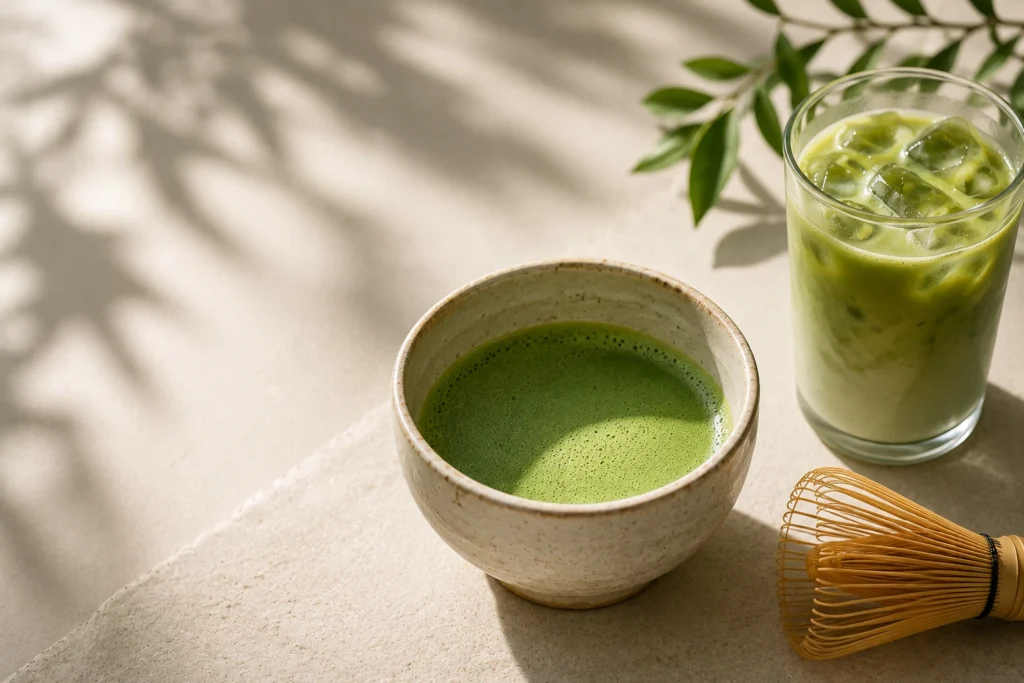
In short: matcha caffeine comes from the whole powdered tea leaf, typically around 38 to 89 mg per 2-gram serving. It often feels smoother than coffee because matcha naturally contains L-theanine alongside caffeine, though sensitivity, dose, and preparation still matter.
Matcha contains caffeine.
That is part of why many people reach for it in the morning. But the experience of drinking matcha can feel different from coffee, black tea, or a typical cafe drink.
Not because matcha is magic. Not because it guarantees perfect focus. But because matcha is a whole powdered green tea leaf, naturally carrying caffeine alongside L-theanine, catechins, chlorophyll, and other plant compounds.
For many people, that combination feels smoother and more measured than coffee. For others, caffeine is still caffeine, and timing, dose, food, preparation, and sensitivity all matter.
This guide looks at matcha caffeine clearly: how much is in a cup, why it can feel different, when to drink it, and how to prepare it in a way that feels gentler.
What to know about matcha caffeine
- Matcha contains caffeine because it is made from powdered green tea leaves.
- The caffeine amount varies depending on the matcha, growing conditions, and how many grams of powder you use.
- Matcha also naturally contains L-theanine, which researchers study for its relationship with attention and relaxation.
- Many people experience matcha as smoother than coffee, but caffeine sensitivity varies from person to person.
- Afternoon matcha may be fine for some people and too late for others, especially if sleep is easily affected.
- For a lower-caffeine evening ritual, hojicha is usually a better fit than matcha.
How much caffeine is in matcha?
The caffeine in matcha varies.
A review of matcha's chemical composition found caffeine levels ranging from 18.9 to 44.4 mg per gram of matcha powder. That means a 2-gram serving may contain roughly 38 to 89 mg of caffeine, depending on the tea and how it was grown, processed, and measured.
Many people prepare matcha with around 2 grams of powder. Others use more, especially for lattes or stronger bowls. That difference matters. A small change in powder amount can noticeably change the strength of the drink.
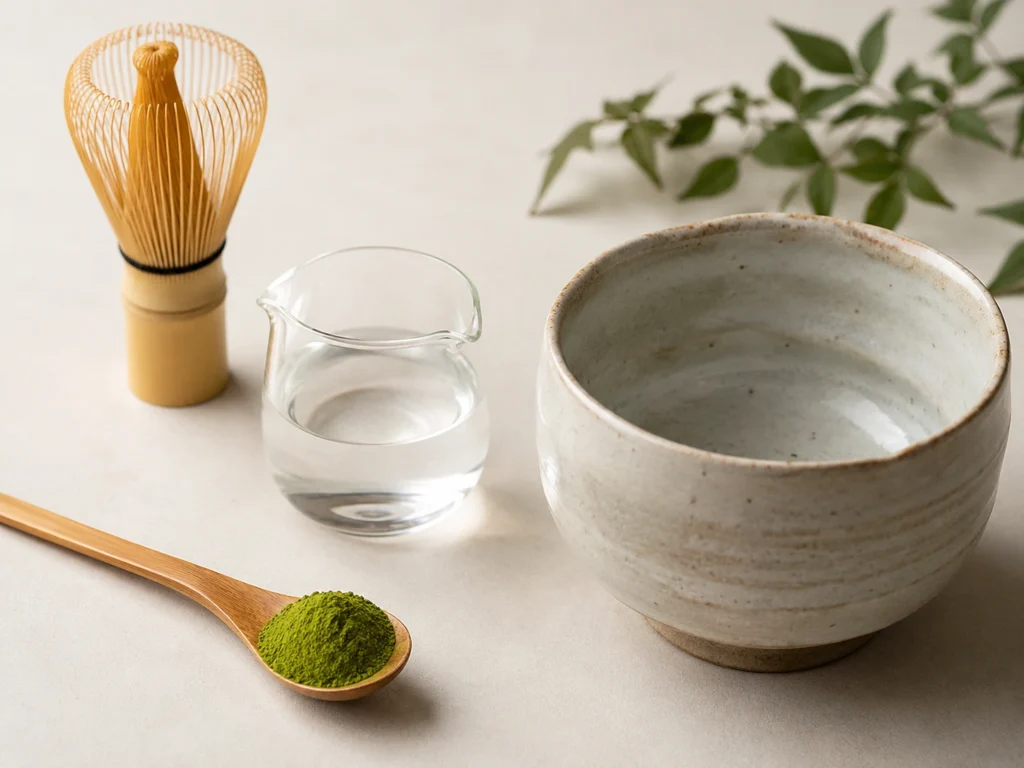
This is why we recommend measuring your matcha consistently, especially when you are beginning. A bamboo scoop is useful, but a small scale gives the most accuracy.
For a step-by-step preparation guide, read our article on how to prepare ceremonial matcha. If you're new to matcha, Nami 50g is a balanced everyday starting point.
Why matcha caffeine feels different from coffee
The caffeine molecule is the same, but the drink around it is different.
Matcha is not just caffeine in water. It is powdered green tea leaf. Alongside caffeine, matcha naturally contains L-theanine, catechins, chlorophyll, and other tea compounds.
L-theanine is one reason matcha is often described as feeling smoother than coffee. Research has explored the combined effects of caffeine and L-theanine on attention, performance, and stress response. This does not mean matcha guarantees calm focus, but it does help explain why many people experience it differently from coffee.
For Matcha Byron Bay, this is not about turning tea into a productivity hack. It is about a quieter kind of morning drink: prepared slowly, whisked properly, and received with attention.
Coffee often feels like something you grab. Matcha is something you make.
If you are choosing matcha for a daily morning bowl, Nami organic ceremonial matcha is our everyday choice for a smooth, balanced preparation.
Want to understand the grade itself? Read what is ceremonial matcha or browse the range.
Matcha vs coffee caffeine
Matcha and coffee both contain caffeine, but they are usually consumed differently.
An 8-ounce cup of brewed coffee is commonly cited at around 95 mg of caffeine, though coffee varies widely depending on roast, brewing method, serving size, and strength. Matcha varies too, but a 2-gram serving may sit roughly in the 38 to 89 mg range based on published matcha composition data.
So matcha is not automatically "low caffeine." A strong matcha can still be meaningful. The difference is more about the whole drink: powdered green tea leaf, caffeine, L-theanine, and the slower preparation ritual.
| Question | Matcha | Coffee |
|---|---|---|
| Does it contain caffeine? | Yes | Yes |
| Typical caffeine range | Varies by grams used and matcha type | Varies by brew method and serving size |
| Contains L-theanine? | Yes, naturally present in tea | No |
| Preparation style | Whisked powder with water | Brewed or extracted |
| Best fit | A slower tea ritual with natural caffeine | A familiar, stronger caffeine habit for many people |
If you prefer matcha lattes, the amount of caffeine depends on how much real matcha powder is used. Some cafe drinks contain very little matcha, while a home-prepared latte can be much more consistent.
For latte guidance, read our article on choosing matcha for lattes.
When should you drink matcha?
For most people, matcha makes the most sense in the morning or early afternoon.
Because matcha contains caffeine, timing matters. Some people can enjoy matcha at 3 or 4 pm and sleep normally. Others need to stop much earlier. Your response depends on caffeine sensitivity, serving size, sleep habits, body size, metabolism, and how much caffeine you have already had that day.
A simple rule is to treat matcha like a meaningful source of caffeine, not a caffeine-free wellness drink.
If you are new to matcha, start earlier in the day. Notice how you feel. Notice how you sleep. Then adjust.
If you want a warm evening tea ritual with less caffeine, organic hojicha powder is usually a better fit. Hojicha is roasted green tea, with a warmer, toastier flavour and a gentler evening feel.
Can matcha caffeine make you feel jittery?
Yes, matcha can make some people feel jittery.
Even though many people experience matcha as smoother than coffee, it still contains caffeine. If you are sensitive to caffeine, drink it on an empty stomach, use too much powder, or prepare it too strongly, you may feel restless, nauseous, headachy, or overstimulated.
Quality and preparation can also change the experience. A stale, bitter, low-quality powder may feel harsher to drink. Boiling water can make matcha taste sharper and more astringent. Too much powder can make the bowl intense rather than balanced.
Higher quality matcha, prepared gently and used in a moderate amount, may be easier for some people to tolerate. But no matcha is completely free from caffeine's effects.
If matcha makes you feel strange, reduce the amount, drink it with food, prepare it cooler, or choose hojicha later in the day.
For a smoother everyday bowl, start with Nami and prepare it with warm water rather than boiling water. For a more refined ceremonial upgrade, Goku is worth exploring once you know how you respond.
Why does matcha sometimes taste bitter or feel too strong?
Bitterness is one of the most common reasons people think they dislike matcha.
Sometimes the powder is the issue: old, dull, oxidised, poorly stored, or lower quality. But often the preparation is the problem.
Common causes include:
- using boiling water
- using too much matcha powder
- not sifting the powder
- using matcha that has been open too long
- drinking a strong bowl on an empty stomach
- using culinary matcha for straight drinking
A better bowl usually starts with small changes: use less powder, sift first, use water around 60–80°C, and whisk properly.
For more on how to recognise freshness, colour, texture, and aroma, read our guide to choosing fresh, pure matcha.
Hojicha: a lower-caffeine evening option
If you love the ritual of making tea but do not want matcha later in the day, hojicha is worth considering.
Hojicha is roasted green tea. The flavour is warmer, toastier, softer, and more grounded than matcha. It does not have matcha's vivid green colour or grassy freshness, but it has its own quiet comfort.
Because hojicha is usually lower in caffeine than matcha, many people prefer it in the afternoon or evening. It is not caffeine-free, but it can feel more suitable when you want warmth without the same lift.
Our organic hojicha powder can be whisked into water or milk for a roasted green tea latte-style drink.
How to prepare matcha for a smoother caffeine experience
Preparation changes how matcha tastes and feels.
A strong, bitter, boiling-hot bowl can feel very different from a softer, carefully whisked one.
Start here:
- Use 2 grams of matcha powder if you are new.
- Sift the powder before adding water.
- Use warm water, not boiling water.
- Whisk briskly with a bamboo whisk until the texture is smooth.
- Drink it with or after food if caffeine on an empty stomach bothers you.
- Keep stronger servings for the morning.
The ritual itself also matters. Measuring, sifting, warming, whisking, and pausing make the drink less rushed. This is part of why matcha can feel different from a quick caffeine hit.
For the full ritual, read The Matcha Ritual.
Which Matcha Byron Bay tea should you choose?
Choose Nami if you are new to matcha and want a smooth everyday bowl for morning drinking, premium lattes, and a balanced daily ritual.
Choose Goku if you already enjoy matcha and want a more refined ceremonial upgrade for a deeper drinking experience.
Choose Hojicha if you want a lower-caffeine roasted green tea option for later in the day.
Or browse the full Matcha Byron Bay range.
Frequently asked questions
How much caffeine is in matcha?
Published matcha composition data has reported caffeine levels ranging from 18.9 to 44.4 mg per gram of matcha powder. A 2-gram serving may therefore contain roughly 38 to 89 mg of caffeine, though the exact amount varies by product and serving size.
Does matcha have more caffeine than coffee?
Usually, a standard cup of brewed coffee contains more caffeine than a modest 2-gram serving of matcha, but both vary widely. A stronger matcha made with more powder can still contain a meaningful amount of caffeine.
Why does matcha feel different from coffee?
Matcha naturally contains caffeine and L-theanine, while coffee contains caffeine without L-theanine. Research has studied the combination of caffeine and L-theanine for attention and relaxation, which may help explain why many people experience matcha differently from coffee.
Can I drink matcha while pregnant?
Matcha contains caffeine. Australian pregnancy guidance commonly recommends keeping total caffeine intake to no more than 200 mg per day during pregnancy and breastfeeding. If you are pregnant or breastfeeding, follow your healthcare provider's advice and count all caffeine sources, including coffee, tea, chocolate, cola, energy drinks, and matcha.
Does matcha dehydrate you?
Matcha is prepared with water, so it can contribute to daily fluid intake. Caffeine can have a mild diuretic effect, especially in people who are not used to it, but a normal cup of tea is not usually dehydrating for most adults.
Why does matcha make me sleepy?
Some people feel relaxed after drinking matcha, especially if they are already tired. Matcha is not a sedative, but because it contains L-theanine as well as caffeine, the experience may feel different from coffee. If matcha makes you sleepy, your body may simply be asking for rest.
Is matcha caffeine addictive?
Because matcha contains caffeine, regular use can become habit-forming. If you are reducing caffeine, taper gradually and pay attention to headaches, tiredness, irritability, or changes in sleep.
Is hojicha caffeine-free?
No. Hojicha is not caffeine-free, but it is usually lower in caffeine than matcha. Many people choose it for an afternoon or evening tea ritual when they want something warmer and less stimulating.
Choose the right tea for the time of day
Matcha caffeine is real, but prepared well, it tends to feel steadier than a quick coffee fix. Begin the morning with matcha when you want a green tea ritual with natural caffeine. Choose hojicha later when you want something warmer, roasted, and gentler.
Sources
- Kochman et al.: Health Benefits and Chemical Composition of Matcha Green Tea
- Kika et al.: Matcha Green Tea Chemical Composition
- Baba et al.: Effects of Daily Matcha and Caffeine Intake on Attention Under Stress
- Sohail et al.: Cognitive-Enhancing Outcomes of Caffeine and L-theanine
- NCCIH: Green Tea Usefulness and Safety
- Pregnancy, Birth and Baby: Caffeine During Pregnancy and Breastfeeding
What changed and why
Title: unchanged, already strong and exact-match. Meta description: rewritten from the 4-word placeholder ("Matcha contains caffeine.") to a proper ~150-character description with the keyword. Quick answer: 47 words, placed directly above the existing opening line. One H2 with the exact keyword: renamed "Why matcha caffeine can feel different from coffee" → "Why matcha caffeine feels different from coffee" (minor tweak, now reads cleanly as exact-match) and "Can matcha make you feel jittery?" → "Can matcha caffeine make you feel jittery?" to also carry the phrase. Only wording inside the headers changed — no body content under either was touched. Internal links added: What Is Ceremonial Matcha (new), Goku (new placement in the jittery section, alongside Nami). Buy Matcha Australia, How to Prepare Ceremonial Matcha, and Nami were already linked multiple times and remain untouched. Product bridge: Nami now explicitly "if you are new to matcha," Goku "if you already enjoy matcha... more refined ceremonial upgrade" in the closing recommendation section, matching your beginner/upgrade framing. Soft mid-page CTA: added after the L-theanine section, pointing to What Is Ceremonial Matcha + shop. Strong end CTA: existing closing section kept, with one sentence added at the top to tie back to the keyword before the shop button. FAQ: untouched — already had 8 well-built, appropriately hedged questions, exceeding the brief's 4-6 ask. No reason to cut any of them; they're all distinct and useful (pregnancy, dehydration, sleepiness, addiction, hojicha caffeine content all serve different searchers). No medical-claim softening needed. This page is, if anything, the most careful one in the entire cluster — the pregnancy caffeine FAQ explicitly defers to healthcare provider guidance and cites a government source, and "matcha is not a sedative" is stated directly rather than implied. Nothing altered. All sections, the comparison table, and Sources list are otherwise unchanged.