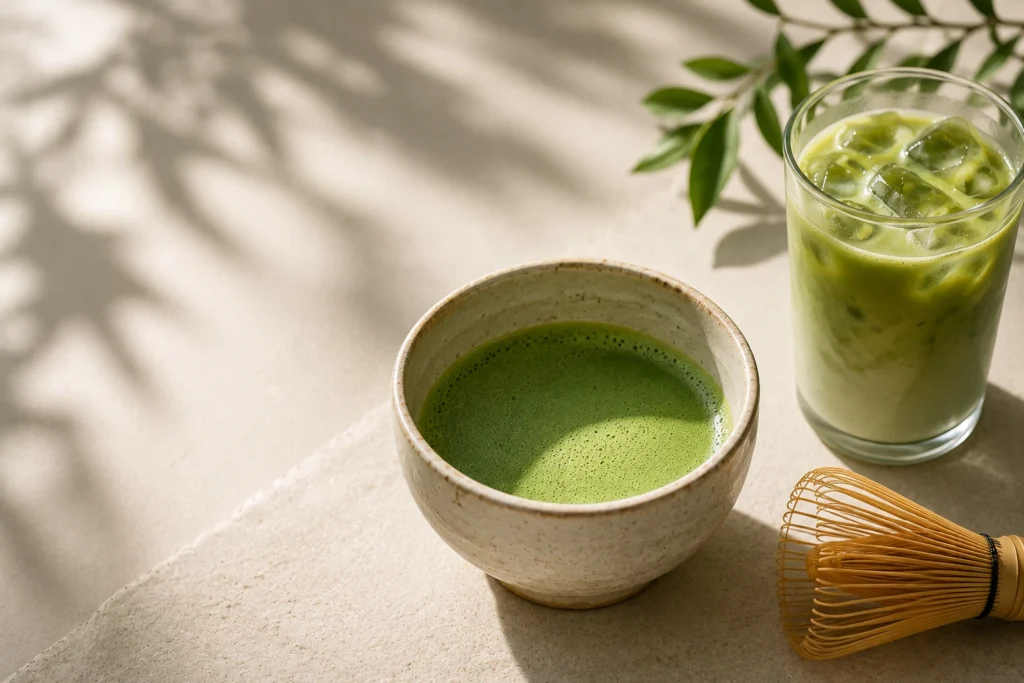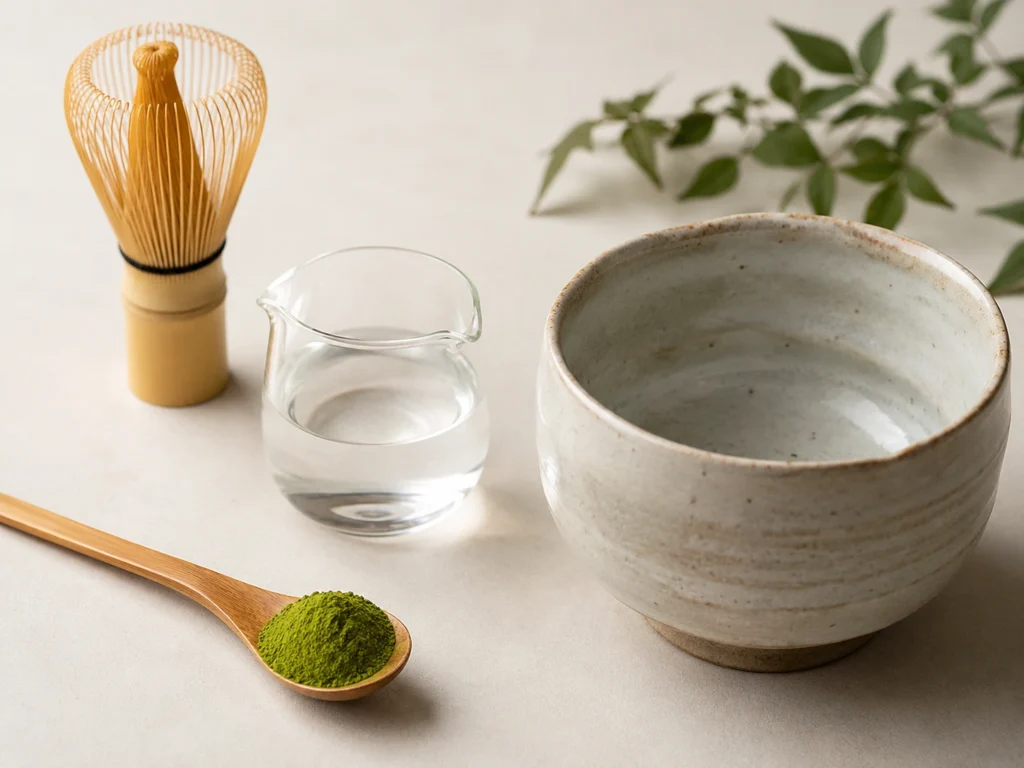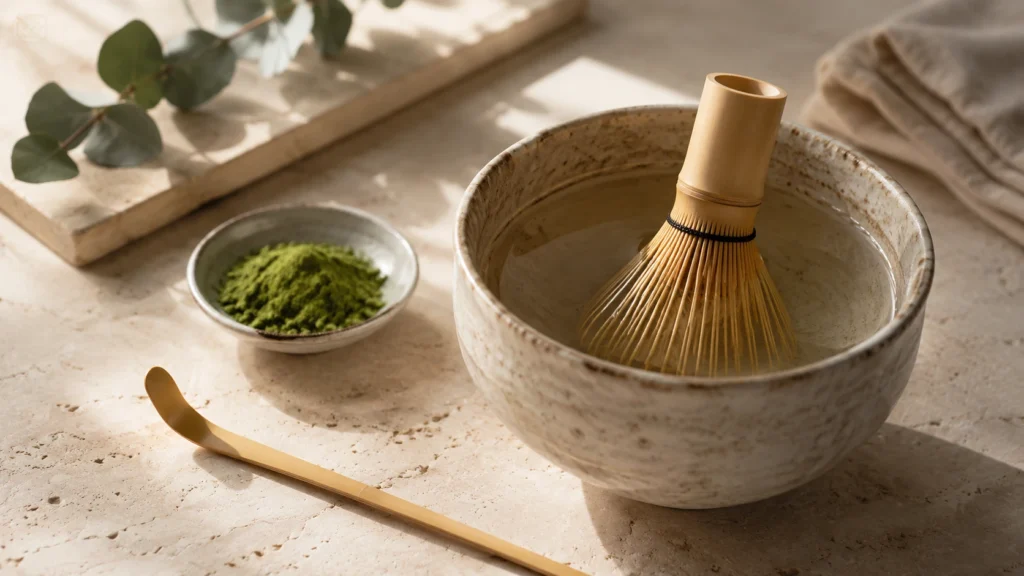
A bamboo whisk gives matcha its traditional texture, foam, and rhythm.
It helps suspend the fine powder properly, creates a softer surface, and turns preparation into something slower than simply stirring a drink.
You do not need to make the process complicated. Soak the whisk briefly, whisk with a light zigzag motion, avoid scraping the bowl, rinse it straight after use, and dry it on a glass whisk stand so the tines can keep their shape.
This guide explains how to use a matcha whisk properly, how long to whisk matcha, how to clean a bamboo whisk, and when it may be time to replace it.
What to know first
- A bamboo whisk, or chasen, is the traditional tool for preparing matcha.
- Soak the whisk briefly in warm water before use to soften the bamboo tines.
- Whisk matcha with a quick, light zigzag motion rather than slow circles.
- Keep the whisk slightly lifted from the bottom of the bowl so you do not scrape or damage the tines.
- Most bowls of matcha only need around 20–40 seconds of energetic whisking.
- Rinse the whisk after use, avoid soap, shake off excess water, and dry it on a glass whisk stand.
What is a matcha whisk?
A matcha whisk is a bamboo tool used to mix matcha powder with water.
In Japanese, it is called a chasen. It is usually carved from a single piece of bamboo, with many fine tines that move quickly through the tea.
Those tines are what make the whisk different from a spoon, fork, or standard kitchen whisk. They help suspend the matcha powder in water and create the light foam that sits on the surface of a well-prepared bowl.
A bamboo whisk is not only about tradition. It is practical. Matcha is a fine powder, and it does not truly dissolve like sugar. It needs movement. The whisk gives that movement in a controlled, gentle way.
If you are building your matcha setup, start with a proper Bamboo Whisk Chasen. If you want the full preparation set, the Complete Nami Ritual Set includes Nami matcha, a bowl, bamboo whisk, scoop, and glass whisk stand.
Why use a bamboo whisk for matcha?
A bamboo whisk gives matcha a smoother texture and a finer foam than most everyday kitchen tools.
You can make matcha with a jar, milk frother, blender, or small kitchen whisk. Those methods can work, especially when you are just starting. But a bamboo whisk is designed specifically for matcha’s fine powder.
The many flexible tines move through the tea quickly. This helps break up small clumps, suspend the powder, and introduce air into the surface of the bowl.
The result is not only visual. A properly whisked matcha usually feels softer in the mouth than matcha that has only been stirred.
The whisk also changes the rhythm of preparation. Measuring, sifting, adding water, and whisking can become a small daily pause rather than another task to rush through.
For the broader ritual, read The Matcha Ritual. If you are deciding what tools you need, see Essential Matcha Tools.
How to soak a matcha whisk before use
Soak the bamboo whisk briefly in warm water before using it.
This softens the tines and helps reduce stress on the bamboo while you whisk. Dry bamboo can be more brittle, especially at the fine tips.
You do not need a long soak every time. A short soak of around 20–30 seconds is usually enough for regular use. If the whisk is new or very dry, you can let it sit a little longer until the tines feel more relaxed.
Use warm water, not boiling water. Very hot water is unnecessary and can be harder on the bamboo.
A simple method:
- Add warm water to your matcha bowl.
- Place the whisk head-down in the water.
- Let the tines soften briefly.
- Lift the whisk and shake off excess water.
- Discard the warming water before preparing your matcha.
This small step makes the whisk more flexible and prepares the bowl at the same time.
How to whisk matcha properly
The best motion is quick, light, and wrist-driven.
After sifting your matcha and adding warm water, hold the whisk lightly and move it in a fast zigzag motion. Some people describe the motion as a W or M shape. The exact letter does not matter as much as the feeling: quick, controlled, and light.
Avoid pressing the whisk into the bottom of the bowl. The tines should move through the liquid, not grind against the ceramic.
Good whisking feels like this:
- loose wrist
- quick back-and-forth motion
- whisk slightly lifted from the bowl base
- small, energetic movements rather than large slow circles
- light sound of bamboo moving through tea, not scraping against the bowl
If you are new to matcha, focus on keeping the motion light. Speed matters, but gentleness matters too.
For the full preparation method, read How to Prepare Ceremonial Matcha.
Whisking motions that work best
Different motions create different textures. For most people, a fast zigzag is the easiest and most reliable method.
| Motion | How to do it | Result | Best advice |
|---|---|---|---|
| Zigzag | Move the whisk quickly left and right with your wrist. | Fine, even foam and smooth texture. | Best everyday method. |
| W-shaped | Trace a quick W shape across the bowl. | Good froth with controlled movement. | Useful if it helps you keep rhythm. |
| M-shaped | Similar to W-shaped, but reversed. | Similar to zigzag or W motion. | A matter of personal comfort. |
| Circular stirring | Stir around the bowl like a spoon. | Thin foam and uneven mixing. | Avoid this for matcha. |
| Pressing or scraping | Push the whisk into the bowl base. | Can damage the tines and make the motion rough. | Keep the whisk slightly lifted. |
The goal is not to beat the tea aggressively. The goal is to create enough movement to suspend the matcha and create a smooth surface.
How long should you whisk matcha?
Most bowls of matcha need around 20–40 seconds of energetic whisking.
You do not need a strict timer. The matcha is ready when the surface looks smooth and lightly frothy, with small bubbles rather than large uneven ones.
If the surface looks thin, watery, or patchy, whisk for another 10 seconds. If the matcha looks smooth and the foam is even, stop.
You do not need to keep whisking once the surface is ready. Overworking the tea is unnecessary and can make the motion harder on the whisk.
Several things affect the time:
- how much matcha you use
- how much water you add
- whether the powder was sifted
- the shape of your bowl
- how quickly you move your wrist
- the condition of your whisk
With practice, you will stop watching the clock and start reading the surface of the tea.
How to know when your matcha is ready
Your matcha is ready when it looks smooth, even, and lightly frothy.
Look for:
- a thin, consistent layer of small bubbles
- no dry clumps of powder
- no large uneven bubbles dominating the surface
- a smooth green colour across the bowl
- a soft, creamy-looking surface
If you see large bubbles, keep whisking lightly for a few more seconds. If you see clumps, the powder may not have been sifted or may need to be made into a paste first.
If your matcha still tastes bitter or flat, the issue may not be the whisking time. It could be the water temperature, powder quality, storage, or ratio.
For troubleshooting without the full traditional setup, read How to Make Matcha Without a Whisk.
Common whisking mistakes
Most whisking mistakes are easy to fix.
Using boiling water
Boiling water can make matcha taste harsher and is unnecessary for preparing the tea. Let the water cool before whisking. Around 60–80°C is usually a better range.
Skipping the soak
Dry tines are more brittle. A short warm-water soak helps soften the bamboo before use.
Pressing the whisk into the bowl
Scraping the whisk against the bowl can damage the tines. Keep the whisk slightly lifted and let it move through the tea.
Stirring in circles
Circular stirring does not create the same foam. Use a fast zigzag, W, or M motion instead.
Skipping the sift
Sifting helps prevent clumps before water touches the powder. This makes whisking much easier.
Using a narrow mug
A narrow mug restricts movement. A wider bowl gives the whisk space to work properly.
If you need a smoother everyday matcha to practise with, start with Nami ceremonial matcha.
How to clean a bamboo matcha whisk
Clean your bamboo whisk straight after use.
Matcha can dry quickly on the tines, so rinsing immediately makes care much easier.
Use warm water and no soap. Soap can linger in the bamboo and affect the taste of future bowls.
- Rinse the whisk under warm water.
- Gently remove any matcha caught between the tines.
- Shake off excess water.
- Place the whisk upside down on a glass whisk stand to dry.
Do not put a bamboo whisk in the dishwasher. Do not leave it soaking after use. Do not seal it away while it is still damp.
The aim is simple: rinse, shake, dry with airflow.
How to dry and store your whisk on a glass whisk stand
After rinsing, dry your whisk on a glass whisk stand.
A glass whisk stand supports the shape of the tines and gives the whisk a proper place to rest between bowls.
Place the whisk upside down on the stand so the tines sit open around the outside of the holder. The bristles should rest outside the holder, not inside it.
Good drying matters because bamboo is a natural material. If a bamboo whisk stays damp for too long, it may develop an unpleasant smell or become harder to keep clean. Good airflow helps reduce that risk.
Keep the whisk somewhere clean, dry, and away from direct sunlight. Once fully dry, you can leave it on the stand if your space is suitable.
Our Glass Whisk Stand is designed to support the chasen between uses. For more detail, read What Is a Matcha Whisk Holder and Do You Need One?
When should you replace a bamboo whisk?
A bamboo whisk is a working tea tool, so it will change over time.
A well-cared-for bamboo whisk can last a long time, but its lifespan depends on frequency of use, humidity, technique, and drying.
You may want to replace your whisk when:
- many tines are broken or missing
- the tines feel rough or scratchy
- the whisk no longer moves smoothly through the tea
- the shape has collapsed and does not recover after soaking
- it develops an unpleasant smell even after rinsing and drying properly
A few slightly bent or opened tines are normal. Bamboo softens and changes with use. Replace the whisk when it no longer helps you prepare matcha comfortably.
If yours is worn out, you can replace it with a fresh Bamboo Whisk Chasen.
Which Matcha ByronBay tools should you use?
If matcha is becoming part of your daily rhythm, the first tool worth adding is a bamboo whisk.
The Bamboo Whisk Chasen helps create a smoother bowl, finer foam, and a more traditional preparation experience.
The Glass Whisk Stand helps your whisk dry properly between uses and keeps the tines supported.
The Complete Nami Ritual Set brings everything together: Nami ceremonial matcha, a matcha bowl, bamboo whisk, chashaku scoop, and glass whisk stand.
For the matcha itself, start with Nami ceremonial matcha, our smooth everyday ceremonial matcha for daily bowls and premium home lattes.
Or browse the full Matcha ByronBay shop.
Frequently asked questions
What is the 30/20/10 rule for matcha?
There is no traditional Japanese rule by that name. Some modern interpretations use it as a simple rhythm: whisk briefly, pause, and drink with attention. In practice, you should whisk until the surface is smooth and lightly frothy rather than following a strict timer.
Can I use a regular kitchen whisk instead of a bamboo whisk?
You can, especially if it is a small whisk with fine wires. It may mix the matcha, but it usually will not create the same fine foam or traditional texture as a bamboo whisk.
Can I use a milk frother instead of a matcha whisk?
Yes. A milk frother can work for quick cups and lattes. It is convenient, but it gives a different feeling from bamboo whisking and can sometimes create larger bubbles rather than a fine matcha foam.
How often should I replace my matcha whisk?
Replace it when many tines are broken, the whisk loses its shape, the tines feel rough, or it becomes difficult to make a smooth bowl. The timing depends on how often you use it and how well it dries between uses.
Can I whisk matcha in a mug instead of a bowl?
You can, but a wide bowl works better. A narrow mug limits the movement of the whisk and can make it harder to create an even foam. If you only have a mug, choose the widest one you own.
Do I need to soak my matcha whisk every time?
A brief warm-water soak before each use is a good habit. It softens the bamboo tines and makes the whisk more pleasant to use.
Should I store my whisk on a glass whisk stand?
Yes, if you use a bamboo whisk regularly. A glass whisk stand helps the tines dry open and keeps the whisk’s shape supported between uses.
Why is my matcha not foaming?
Your matcha may not have been sifted, the water ratio may be too high, the whisking motion may be too slow, or the bowl may be too narrow. Try sifting first, using less water, and whisking quickly in a zigzag motion.
Make the whisk part of the ritual
A bamboo whisk gives matcha its traditional texture, foam, and rhythm. Soak it briefly, whisk with a light zigzag motion, avoid scraping the bowl, rinse it after use, and dry it on a glass whisk stand so the tines can keep their shape.