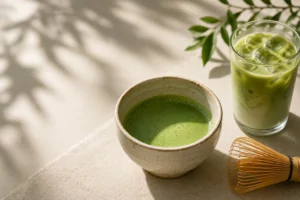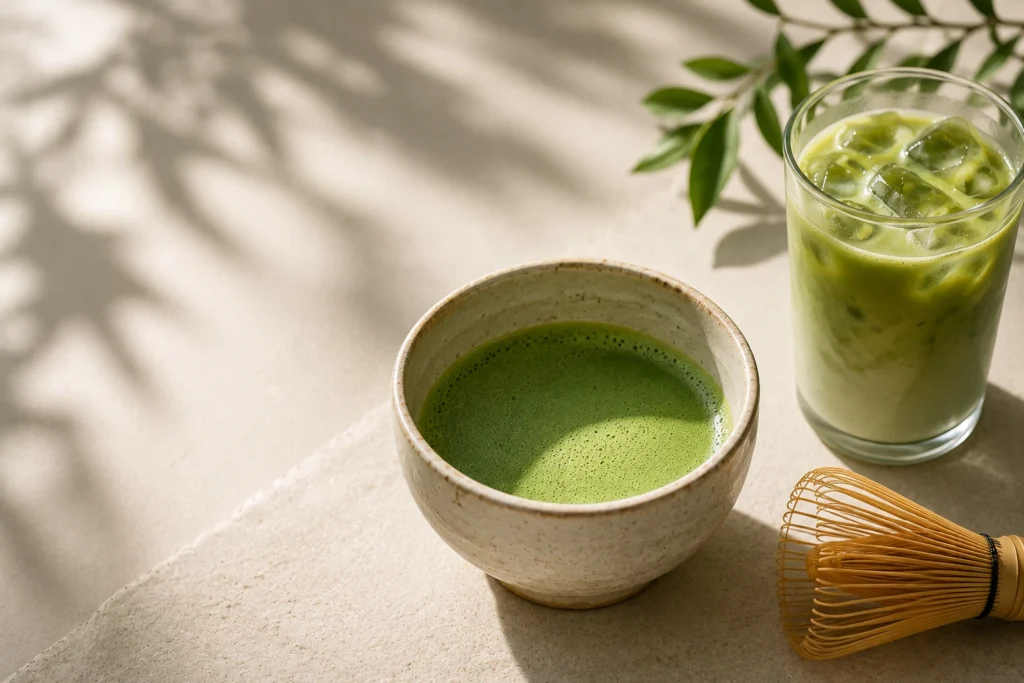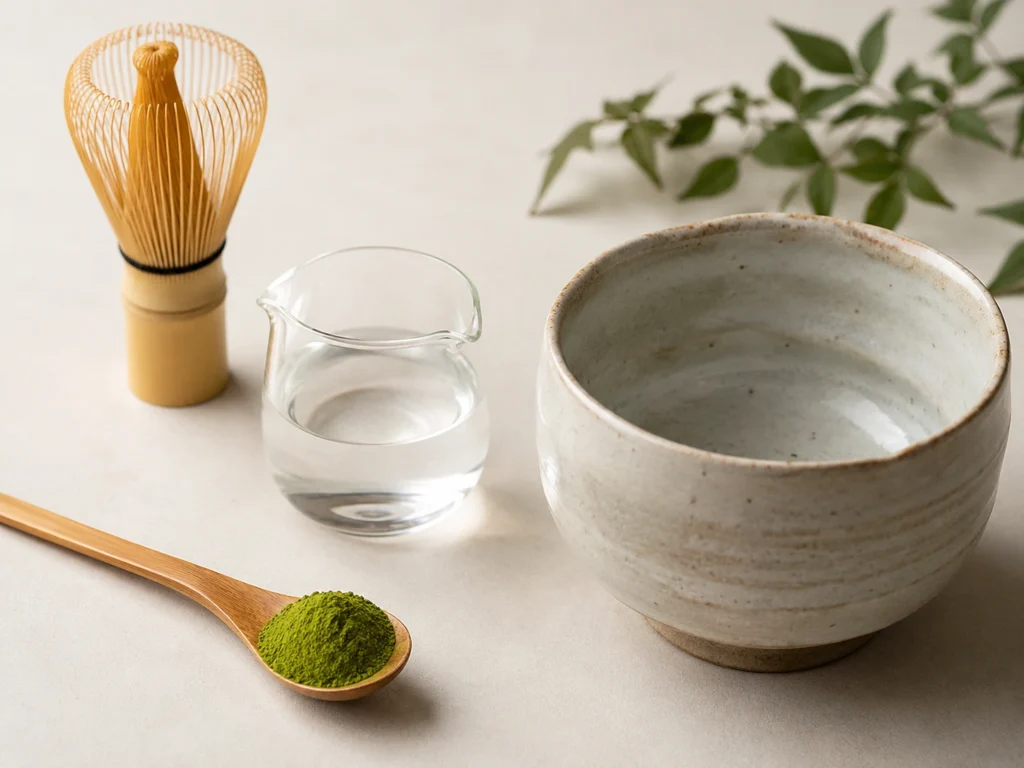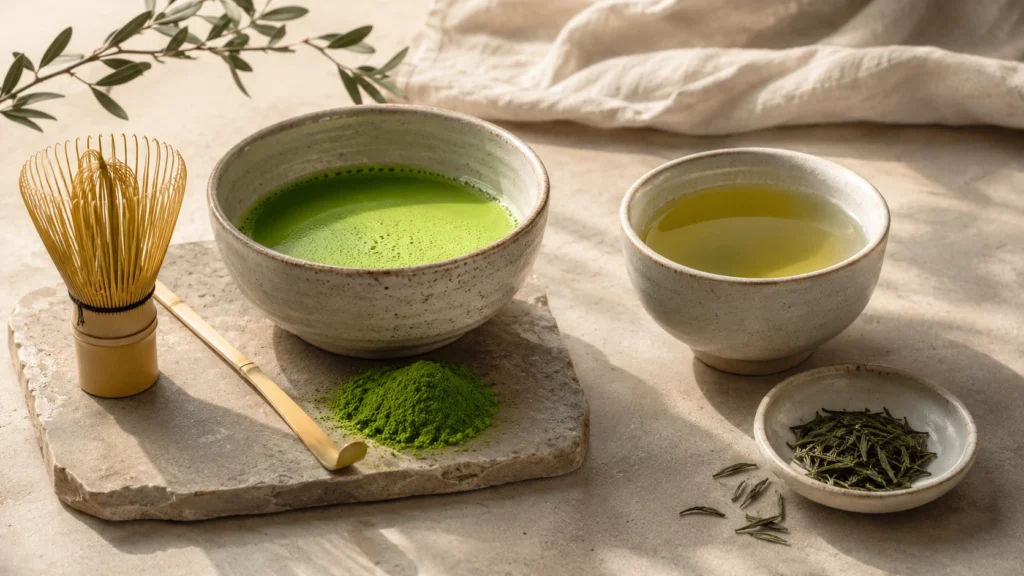
In short: matcha vs green tea comes down to whole leaf vs infusion. Matcha is shade-grown tea ground into powder and whisked directly into water, so you drink the leaf itself. Green tea is steeped and the leaves are removed. Matcha is richer, more concentrated, and more ritual-based.
Matcha and green tea come from the same plant, but they are not the same experience.
One is steeped. The other is whisked.
One gives you an infusion of the leaf. The other gives you the powdered leaf itself, suspended in water.
That difference changes almost everything: the flavour, the texture, the caffeine, the preparation, and the kind of pause each tea creates in your day.
So when people ask about matcha vs green tea, the answer is not simply that one is better. It is that they belong to different rituals.
The simple difference
- Matcha is a powdered green tea made from shade-grown tencha leaves and whisked directly into water.
- Green tea usually refers to loose leaves or tea bags that are steeped in hot water and then removed.
- With matcha, you consume the powdered leaf itself. With steeped green tea, you drink only the infusion.
- Matcha is usually richer, creamier, more umami, and more concentrated than a standard cup of steeped green tea.
- Green tea is usually lighter, clearer, easier to prepare, and gentler in flavour.
- The better choice depends on whether you want a quick cup or a more deliberate tea ritual.
Is matcha the same as green tea?
Matcha is a type of green tea, but it is not the same as a normal cup of steeped green tea.
Both come from the tea plant, Camellia sinensis. The difference is in how the leaf is grown, processed, prepared, and consumed.
Most green teas are steeped. You add hot water to the leaves, wait, and then remove the leaves. The drink in your cup is an infusion.
Matcha is different. Proper matcha is made from tencha: tea leaves that are shaded before harvest, steamed, dried without rolling, and ground into a fine powder. Instead of steeping and removing the leaves, you whisk the powder into water and drink the leaf itself.
Green tea is steeped from the leaf. Matcha is the leaf.
That is the foundation of the matcha vs green tea difference. To understand the most refined version of this leaf, read what is ceremonial matcha.
How matcha is grown and processed differently
The difference begins before the tea reaches the cup.
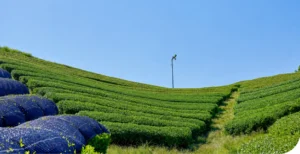
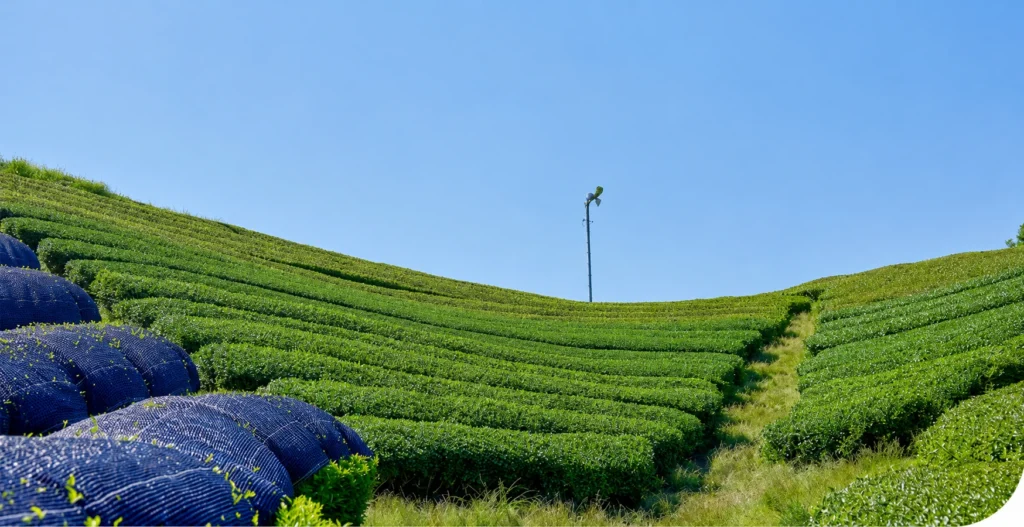
Matcha is usually made from tea plants that are shaded before harvest. Shade-growing changes the leaf's colour, flavour, and chemical composition, often contributing to a deeper green colour and a smoother, more umami-rich profile.
After harvest, the leaves are steamed to help preserve their colour, then dried without rolling. The stems and veins are often removed, leaving the soft leaf material known as tencha. This tencha is then ground into a very fine powder.
By contrast, many steeped green teas are steamed or pan-fired, rolled, dried, and kept as whole or broken leaves. They are designed to release flavour into hot water and then be removed.
This is why matcha feels more concentrated. The entire powdered leaf becomes part of the drink.
For more on how Matcha Byron Bay sources its Japanese matcha, read our sourcing story.
Curious where to buy with confidence? Our guide to buying matcha in Australia covers what to check before you choose.
How preparation changes what you drink
Preparation is one of the biggest differences between matcha and green tea.
With steeped green tea, the process is simple. Add leaves to water, wait, strain, and drink. The liquid is usually clear, light, and thin-bodied.
With matcha, the powder is sifted, mixed with warm water, and whisked until it becomes a smooth green suspension. The texture is thicker. The colour is more vivid. The flavour is fuller.
Because you are drinking the powdered leaf, matcha preparation asks for more care. Water that is too hot can make it taste bitter. Powder that is not sifted can clump. Too much powder can make the bowl feel heavy.
A good bowl of matcha is not complicated, but it is deliberate.
For the full method, read our guide on how to prepare ceremonial matcha.
Matcha vs green tea: side-by-side comparison
| Feature | Matcha | Steeped green tea |
|---|---|---|
| Form | Fine powdered green tea | Loose leaves or tea bags |
| Preparation | Whisked directly into water | Steeped in water, then removed |
| What you consume | The powdered leaf itself | An infusion of the leaf |
| Texture | Smooth, fuller-bodied, lightly frothy | Clear, thin, lighter-bodied |
| Flavour | Rich, umami, green, creamy when prepared well | Light, grassy, fresh, sometimes astringent |
| Caffeine | Usually more concentrated per serving | Usually lighter per cup |
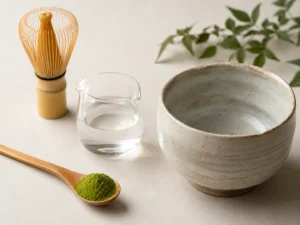
| Ritual | Bowl, whisk, scoop, and a slower preparation | Kettle, cup, leaves, and a simpler steep |
| Best fit | A more intentional daily tea ritual | A quick, clear, everyday cup |
Why does matcha taste richer than green tea?
Matcha often tastes richer because you are drinking the powdered leaf itself.
Instead of extracting flavour from leaves and removing them, you whisk the finely ground tea into water. That gives matcha its fuller body, vivid green colour, and creamy mouthfeel.
Shade-growing also contributes to matcha's flavour. High quality matcha is often smoother, more savoury, and more umami-forward than standard steeped green tea.
Steeped green tea can be beautiful too. It is often lighter, brighter, and more refreshing. But it usually does not have the same density or texture as matcha.
If you have only tried bitter or dusty matcha before, the difference may not have been matcha itself. It may have been poor quality powder, water that was too hot, or a preparation that hid the tea's softer notes.
For a deeper look at what ceremonial matcha is meant to taste like, read our guide: What Is Ceremonial Matcha?
Want the simple version? Browse Nami, our everyday choice for tasting this difference yourself.
Does matcha have more caffeine than green tea?
Usually, yes. Matcha is often more concentrated than steeped green tea because you consume the powdered leaf.
With steeped green tea, only some of the caffeine moves from the leaves into the water. With matcha, the powdered leaf remains in the drink, so the caffeine content per serving is usually higher.
That said, the exact amount varies. It depends on the matcha, the green tea, the serving size, the amount of powder or leaves used, and the preparation method.
The important point is simple: matcha is not caffeine-free, and it should be treated as a meaningful source of caffeine.
If you want a fuller discussion of caffeine amounts, timing, and how matcha can feel different from coffee, read our guide to matcha caffeine.
Does matcha have more antioxidants than green tea?
Matcha can offer a more concentrated green tea experience because you consume the powdered leaf instead of drinking only an infusion.
Green tea contains catechins, including EGCG, and matcha contains these compounds too. The difference is that matcha is consumed whole-leaf, while steeped green tea only transfers some compounds into the water.
You may have seen the claim that matcha has 137 times more antioxidants than regular green tea. That figure comes from a specific study and should not be used as a universal comparison between all matcha and all green tea.
A better way to say it is this:
Matcha can be more concentrated than steeped green tea because you consume the powdered leaf, but the exact difference depends on the tea, serving size, and preparation.
This keeps the comparison useful without turning it into a marketing exaggeration.
Matcha vs green tea: which should you choose?
Bringing taste, preparation, caffeine, and ritual together, here is the simple version.
| Based on… | Choose Matcha | Choose Green Tea |
|---|---|---|
| Taste preference | Rich, umami, creamy, fuller-bodied | Light, grassy, fresh, easy-drinking |
| Preparation style | Sifted and whisked, more deliberate | Steeped and strained, quick and simple |
| Caffeine | Usually more concentrated per serving | Usually lighter per cup |
| Daily ritual | Bowl, whisk, scoop, a slower morning pause | Kettle and cup, fits easily around a busy day |
| Best for | A more intentional, ceremonial daily practice | A light, simple, everyday drink |
If you want a lighter, simpler, clearer cup, steeped green tea may be the better choice. It is easy to prepare, gentle in flavour, and still part of a long tea tradition.
If you want something more concentrated, textured, and ritual-based, matcha is the stronger fit.
Matcha asks for more attention. You sift. You add warm water. You whisk. You notice the colour, the foam, the aroma, the bowl in your hands.
That is why many people choose matcha not only for what it contains, but for what it creates: a slower moment in the day.
For us, this is the heart of the difference. Matcha is not just a stronger green tea. It is a different way of receiving tea.
To explore that side of the practice, read The Matcha Ritual.
How to choose between matcha and green tea
Choose steeped green tea if you want something light, quick, and simple.
Choose matcha if you want a richer tea, a more concentrated green tea experience, and a ritual you prepare with your hands.
For everyday drinking, Nami organic ceremonial matcha is our smooth daily choice. It is approachable enough for beginners, refined enough for a morning bowl, and versatile enough for premium lattes.
For a deeper ceremonial experience, Goku offers a more elevated matcha ritual, with a finer texture and deeper drinking experience.
For later in the day, Hojicha gives you a roasted green tea option with a warmer, toastier profile.
And if you are starting from the beginning, the Complete Nami Ritual Set includes the powder, bowl, whisk, whisk stand, and scoop so you can prepare matcha properly at home.
You can also browse the full Matcha Byron Bay shop.
Frequently asked questions
Is matcha just powdered green tea?
Matcha is powdered green tea, but not all powdered green tea is proper matcha. Authentic matcha is made from tencha leaves that are shaded before harvest, processed carefully, and ground into a fine powder.
Can I make matcha like normal green tea?
No. Matcha is not steeped and removed like normal green tea. It is whisked directly into water so the powdered leaf becomes part of the drink.
Does matcha taste like green tea?
Matcha tastes related to green tea, but richer and fuller. It is usually more umami, creamier, and more textured than steeped green tea. Poor quality or badly prepared matcha can taste harsh, but good matcha should be smooth and green.
Is matcha healthier than green tea?
Matcha can be more concentrated because you consume the powdered leaf, while regular green tea is steeped and the leaves are removed. But "healthier" depends on serving size, quality, caffeine tolerance, and how each tea fits into your routine.
Does matcha have more caffeine than regular green tea?
Usually, yes. Because matcha is consumed as a powdered whole leaf, it is often more concentrated than steeped green tea. The exact amount depends on the serving size and the tea.
Is matcha more expensive than green tea?
High quality ceremonial matcha is usually more expensive than ordinary steeped green tea because it involves careful cultivation, processing, sorting, and milling. But because you use a small amount per bowl, the cost per serving can still be reasonable for a daily ritual.
Can I drink matcha every day?
Many adults enjoy matcha daily, but it does contain caffeine. Start with one serving, notice how you feel, and adjust based on your tolerance, sleep, and total caffeine intake.
Begin with the whole leaf
Now that you understand matcha vs green tea, the choice comes down to how much ritual you want in your cup. Begin with matcha prepared properly: sifted, whisked, and received slowly.
Sources
- Japan Matcha Association: Details of Matcha
- Global Japanese Tea Association: What is Matcha?
- Kochman et al.: Health Benefits and Chemical Composition of Matcha Green Tea
- Kika et al.: Matcha Green Tea Chemical Composition
- Weiss and Anderton: Determination of Catechins in Matcha Green Tea
- NCCIH: Green Tea
What changed and why
Title: unchanged, already exact-match and strong. Meta description: rewritten from the 14-word hook to ~140 characters with the keyword leading. Quick answer: 49 words, placed directly above the existing opening line. Comparison table: the existing side-by-side table is preserved untouched. Added the brief's separately requested "which should you choose" section as its own table, organised specifically around taste/preparation/caffeine/ritual (the four dimensions named in the brief), distinct from the original feature-by-feature table. Internal links added: Buy Matcha Australia (new), What Is Ceremonial Matcha (already linked once, left as-is). Nami, Goku, How to Prepare Ceremonial Matcha, and Matcha Caffeine were already linked and remain untouched. Soft mid-page CTA: added after "Why does matcha taste richer" section, pointing to Nami. Strong end CTA: existing "Begin with the whole leaf" closer kept, with one line added to tie back to the keyword before the shop button. FAQ: unchanged — already 7 well-targeted, appropriately hedged questions covering definition, caffeine, cost, and daily-use intent. No medical-claim softening needed. This page already corrects its own potential overclaim in real time (the 137x antioxidant figure), which is exactly the right move and needed no adjustment. All sections, the antioxidant-claim correction, and Sources list are otherwise unchanged.