Quick Answer
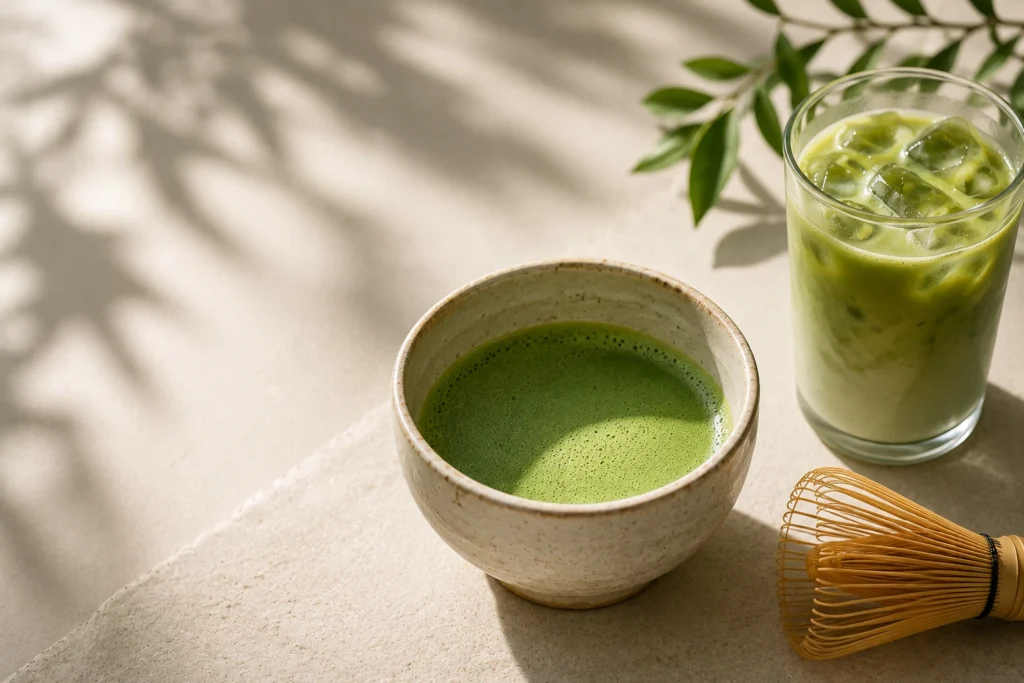
A matcha whisk is shaped the way it is because its curved bamboo tines are designed to break apart clumps, suspend matcha powder evenly in water, and create a fine layer of foam across the surface of the tea.
- The curved tines help move matcha through water instead of simply stirring it.
- Bamboo is flexible, gentle on ceramic bowls, and neutral in the cup.
- Different tine counts suit different preparation styles, from everyday usucha to thicker koicha-style matcha.
- Rinsing, reshaping, and drying your whisk on a whisk holder helps preserve its shape and performance.
- A bamboo whisk does more than mix matcha. It turns preparation into a calmer, more intentional ritual.
The shape is not an accident
A chasen is not a random bundle of bamboo. It is a decision, refined through centuries of tea practice.
The chasen has been shaped by centuries of tea practice. It emerged during Japan's Muromachi period, when the art of preparing ceremonial matcha was finding its form. Every part of the tool was refined to answer a single purpose: to suspend matcha powder in water, not just mix it.
Its form was never about speed. It was about what the tea needs to become in the bowl. The curve of each tine follows the arc of a bamboo shoot, carved from a single piece of bamboo so the tool acts as one flexible body. That unity matters when you whisk. The outer tines sweep the sides of the chawan gently, while the inner core provides resistance that helps introduce air into the tea.
This is not decoration. It is a quiet solution to a quiet problem.
The whisk breaks clumps, suspends powder, and helps create a soft foam that carries aroma to the nose before the first sip.
In our own practice, we see the whisk not as a gadget but as the tool that turns matcha from a drink into a routine, a meditation, and a ritual.
The chasen is a decision made again each morning. Not a flourish.
Curious about the technique itself? Read our guide on how to use a matcha whisk.
Why are matcha whisks shaped like that? The four reasons behind the design
The shape is designed to whip air into the tea, break apart clumps, and create a fine, stable foam that coats the palate evenly, all while being gentle on the bowl.
Whisk shape and foam: The many flexible outer tines curve to follow the chawan's contours, whisking the tea in a way that evenly suspends powder while introducing air. That aeration is what creates the fine, stable foam matcha is known for.
Tine design: Unlike a spoon, which simply stirs, the chasen's tines break apart clumps as they move, forcing powder through the fine spaces between them rather than pushing it around in larger pieces.
Bamboo flexibility: The material's gentle give helps create a smoother texture without the hard feel of metal against ceramic. This is why traditional matcha tools focus on the chasen, not a frother.
Ritual function: The zigzag or "M" motion is not a design flaw. It is the fastest path through the tea, and the shape of the whisk makes that motion work, turning a few seconds of mixing into a small, repeatable act of attention.
What's so special about a matcha whisk?
A bamboo whisk is the traditional tool designed to create the right texture and mouthfeel for matcha: smooth, suspended, lightly aerated, and free from heavy clumps.
Electric frothers spin quickly and can create larger bubbles that disappear faster. A chasen creates a finer foam that carries aroma and helps the tea feel more even on the tongue. Metal whisks may also feel harsher in the bowl and can introduce a different preparation experience from bamboo.
This is not only about foam. It is about the whole moment. Electric frothers may be faster, but the bamboo whisk connects you to the traditional way of preparing matcha. We explore this more in our guide to preparing ceremonial matcha.
The right tool turns powder and water into something calmer, smoother, and more complete.
If you are building your matcha setup at home, our bamboo whisk chasen is designed for traditional ceremonial preparation.
Want everything in one set? Explore the Complete Nami Ritual Set.
How is a matcha whisk supposed to look?
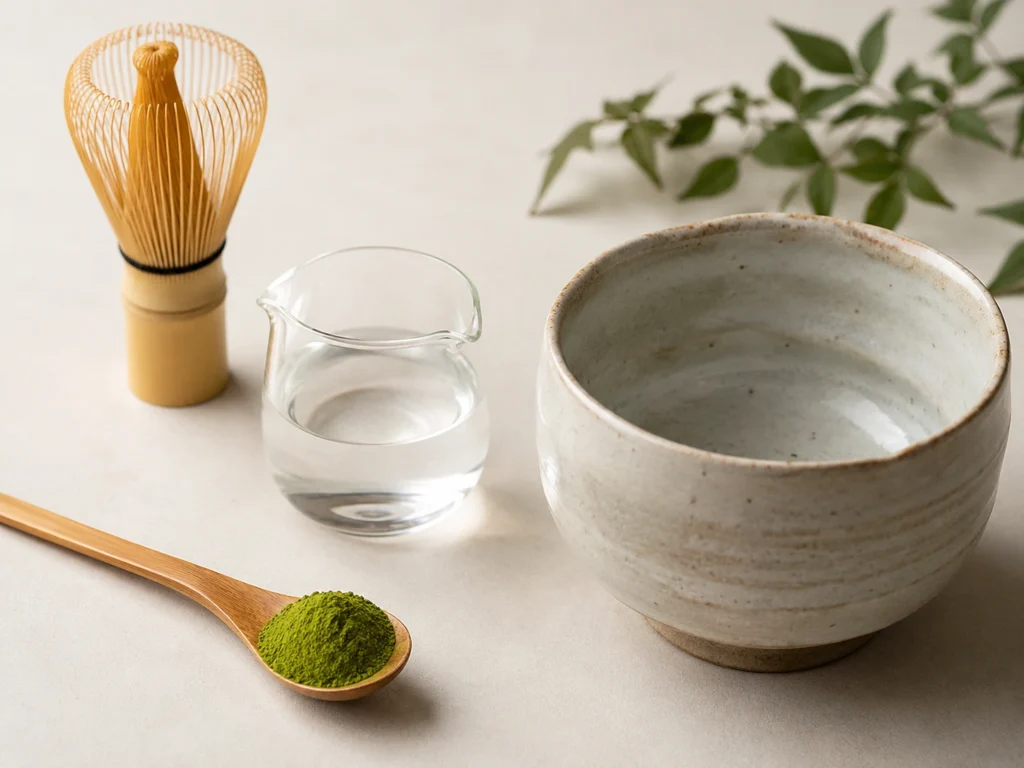
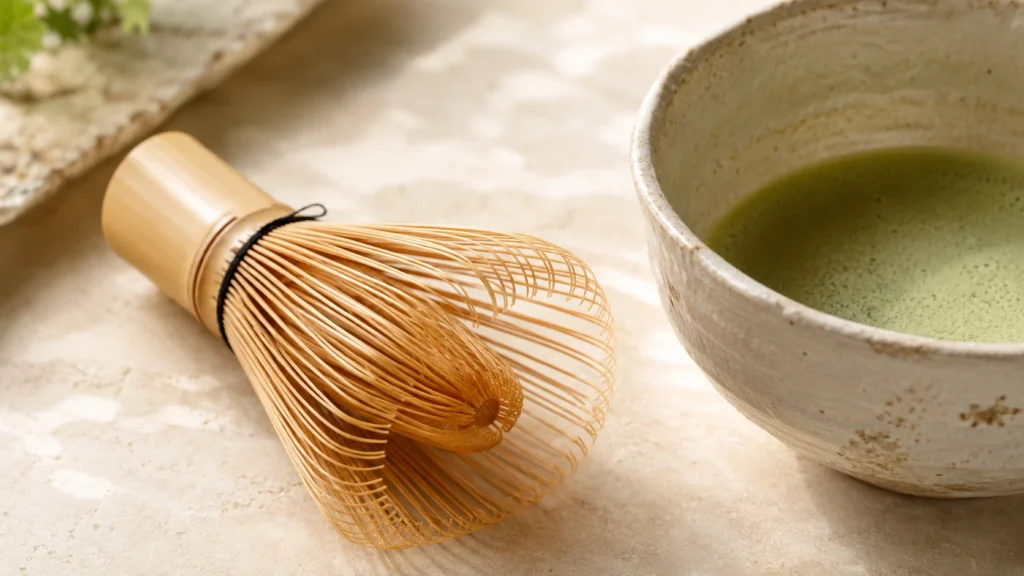
A new chasen looks like a tightly gathered bloom of pale bamboo: a single piece of bamboo carved into a central core surrounded by dozens of fine, curved outer tines.
The tines are not completely uniform. They taper delicately at the tips and are sometimes curled inward. Depending on the style, a chasen may have as few as 68 or as many as 120 tines, each tapering delicately at the tips. The overall silhouette is a gentle teardrop or bell shape, with the outer tines sometimes curling inward to gently gather the tea as you whisk.
With use, the whisk relaxes and the tines spread slightly. This is normal. But the silhouette should remain balanced.
A well-kept chasen never looks ragged. It looks lived-in.
Why do some whisks have 80 tines and others 120?
The number of tines changes the character of the foam and the style of matcha the whisk is often used for. As a general guide, more tines tend to produce finer, lighter foam for usucha, while fewer, sturdier tines are often preferred for thicker styles such as koicha.
| Tine Count | Matcha Style | Foam Texture | Best For |
|---|---|---|---|
| 80 tines | Usucha, versatile | Creamy, fine, stable | Daily ceremonial matcha; also well-suited for latte preparation |
| 100 tines | Usucha, light koicha | Extra-fine, silky | Everyday usucha with Nami; smooth, balanced mouthfeel |
| 120 tines | Usucha, premium | Delicate, soft, airy | Fragrant, light foam for delicate high-grade matcha |
The 80-tine chasen is widely regarded as a versatile all-rounder. Our ceremonial vs culinary matcha guide helps you match the right grade of matcha to your preparation style. Choosing the right chasen is the next step.
The bamboo is not just for tradition
Bamboo earned its place through function, not nostalgia.
It is flexible enough to move quickly through water without feeling rigid. It is soft enough to protect the surface of a ceramic bowl. Its natural fibres are gentle on ceramic surfaces, while metal tools can feel harsher against glaze over time.
Bamboo also keeps the preparation quiet and neutral. It does not dominate the experience. It allows the tea, water, bowl, and hand movement to work together.
A single chasen, cared for properly, can last for months. It is not a disposable gadget. It is a tool you return to. Our sourcing philosophy extends from the tea to the tools: care, authenticity, and quality over volume.
How to care for a matcha whisk so it keeps its shape
Rinse it under cool running water immediately after each use, gently reshape the tines with your fingers, and place it upright on a whisk holder to dry.
Never use soap. Never leave it soaking for long periods. Never store it in a closed container while damp. Soaking for too long or using soap can weaken the bamboo and may encourage mould if the whisk is stored wet.
An upright drying position on a kuse naoshi, or whisk holder, helps preserve the tine shape and prevents warping.
Your whisk stand is not a decoration. It is there to keep the tines from curling the wrong way.
Our glass whisk stand is designed to help your chasen dry properly while keeping its form between uses. For more on this, read our guide to the matcha whisk holder.
Frequently asked questions
Can I use a matcha whisk for hojicha?
Yes, the bamboo chasen works for hojicha powder as well. Hojicha is roasted green tea with a fine, light texture, and the whisk helps suspend it without clumps. Just rinse it thoroughly afterwards, as the roasted flavour can cling to the tines more than matcha. A dedicated whisk is ideal, but sharing is fine if you rinse well.
Do I need to soak a new bamboo whisk before first use?
Most makers recommend a quick soak in warm water for 1–2 minutes before first use. This hydrates the bamboo and makes the tines more flexible, helping to prevent breakage. After the initial soak, you only need to wet the whisk briefly before whisking. It will gradually relax with each use.
How do I know when to replace my matcha whisk?
Replace it when the tines become severely bent, broken, or start shedding bamboo fragments into your tea. A well-cared-for chasen can last several months, and sometimes longer depending on use. If the whisk can no longer hold its shape after drying, or you see black mould spots, it is time for a new one.
Why does my matcha taste better when I use a whisk?
The whisk aerates the tea, creating tiny bubbles that help carry aroma before and during each sip. This can enhance the perception of sweetness and umami, while the even suspension of powder helps prevent bitter clumps. A spoon or frother can mix matcha, but it does not create the same traditional texture.
Is a broken matcha whisk still usable?
It depends. A single broken tine is usually fine, as long as there are no loose pieces falling into your tea. If many tines are snapped or the core is splitting, the whisk will no longer create proper foam and may leave bamboo fragments behind. If the shape is compromised, it is best to retire it gracefully and start fresh.
Why are matcha whisks shaped like that compared to a regular kitchen whisk?
A regular kitchen whisk is designed to incorporate air into liquids like eggs or cream using wide loops of metal. A matcha whisk uses many fine bamboo tines specifically to break apart clumping powder and suspend it in a small amount of water, which a wider, stiffer whisk cannot do as effectively.
Bring the ritual together
Now you know why matcha whisks are shaped like that: every curve and tine serves the tea. If you are building a calmer matcha ritual at home, the right whisk matters. A bamboo chasen helps you prepare matcha properly: smoother, softer, and closer to the traditional method.
⚠️ Two links flagged (same as before) how-to-use-a-matcha-whisk/ and matcha-whisk-guide/ are referenced once each as placeholders — same unresolved pages flagged on the Matcha Whisk Holder and How to Make Matcha Without a Whisk pages. Worth resolving whether these become one combined page before any of these three articles go live. What changed and why
Title: unchanged, already exact-match. Meta description: rewritten from a description that was cut off mid-sentence (134+ characters, truncated awkwardly) to a clean ~135-character version. Quick answer: already existed as its own "## Quick Answer" H2 — left in place, since it already satisfies the brief's requirement and removing or reformatting it would disrupt the page's existing structure more than necessary. H2 with exact keyword: renamed "Why are matcha whisks shaped like that?" section header to "Why are matcha whisks shaped like that? The four reasons behind the design," and restructured its content into four explicitly labelled points (whisk shape and foam / tine design / bamboo flexibility / ritual function) matching the brief's exact requested structure — this was previously present as flowing prose covering similar ground, now made scannable and explicit. Competitor citations removed: all six external retailer links (ichateashop, nioteas, matchadirect.kyoto, tezumi.com ×2, sazentea, heymatcha.com.au) removed throughout, per your direction. The factual claims they supported (500 years of history, Muromachi period origin, tine counts, soaking advice, care instructions) are all preserved in the text, just no longer linking out to competing retailers. Internal links added: How to Use a Matcha Whisk (new, placeholder, two placements), Matcha Tools You Need (already linked once, untouched), Matcha Whisk Holder (new — pointing to the real, confirmed-live page), Complete Nami Ritual Set (new). What Is Ceremonial Matcha, Ceremonial vs Culinary Matcha, How to Prepare Ceremonial Matcha, Bamboo Whisk Chasen, and Whisk Stand were already linked and remain untouched. Soft mid-page CTA: added after "What's so special about a matcha whisk," pointing to the Ritual Set. Strong final CTA: existing closer kept, with the opening line rephrased to echo the keyword directly. FAQ: kept all 5 existing questions, added one new question contrasting matcha whisks with regular kitchen whisks, landing at 6 total. No medical-claim concerns — this page is purely about tool design and care. All other sections — tine-count table, bamboo material discussion, care instructions — are otherwise unchanged apart from the citation removals.