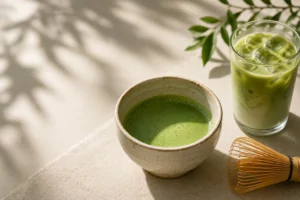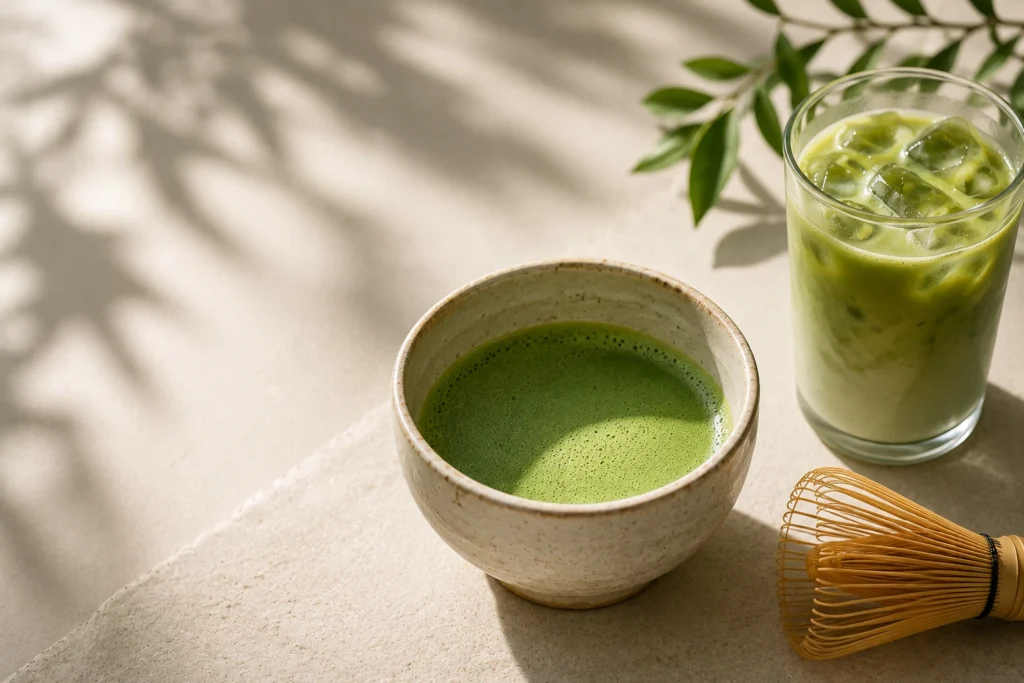
In short: yes, matcha is green tea. Both come from the same tea plant, Camellia sinensis. The difference is in the process: matcha is shade-grown, ground into a fine powder, and whisked directly into water, so you drink the whole leaf rather than a steeped infusion.
Yes, matcha is green tea.
But it is not the same as the loose-leaf green tea most people know.
Matcha comes from the same tea plant, Camellia sinensis, but it is grown, processed, prepared, and consumed differently. Instead of steeping the leaves and removing them, matcha is ground into a fine powder and whisked directly into water.
That means the leaf becomes part of the drink.
This is the simple difference at the heart of matcha: it is green tea, but expressed in a more concentrated, textured, and ritual-based form.
The simple answer
- Matcha is a traditional Japanese green tea made from finely ground tea leaves.
- Both matcha and regular green tea come from the Camellia sinensis plant.
- Regular green tea is usually steeped in water and then removed.
- Matcha is whisked into water, so you consume the powdered leaf itself.
- Because of this, matcha can offer a more concentrated green tea experience than steeped tea.
- Matcha contains caffeine, so individual tolerance and timing still matter.
Is matcha green tea, or something else entirely?
Matcha is a type of green tea, but it belongs to a specific Japanese tea tradition.
Green tea is a broad category. It includes teas such as sencha, gyokuro, bancha, hojicha, and matcha. They all come from the tea plant, but the way they are grown and prepared changes the final drink.
Most green teas are steeped. You place the leaves in hot water, wait, and then remove them. The drink in your cup is an infusion of the leaf.
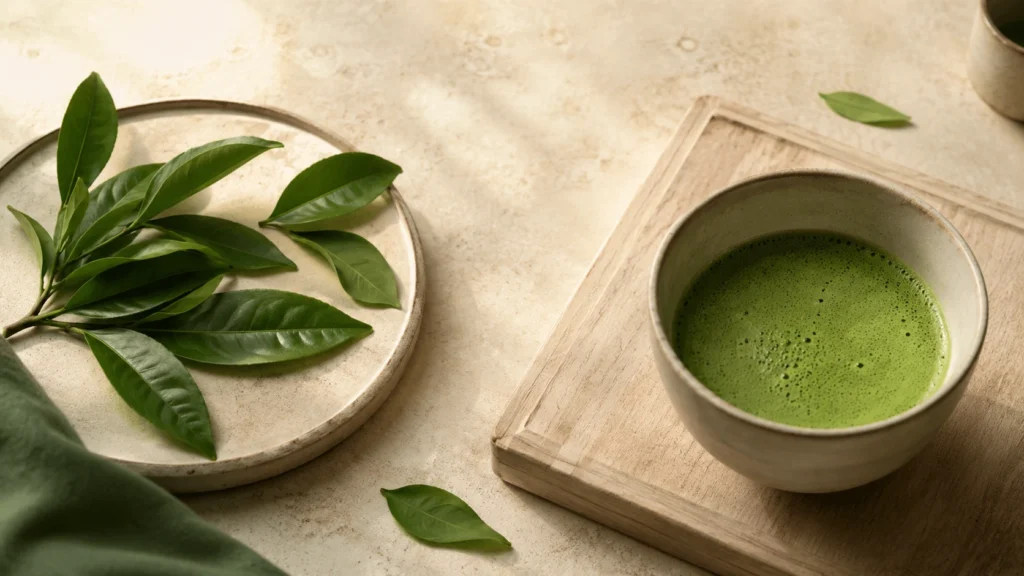
Matcha is different. The leaf is ground into a fine powder and whisked into water. Nothing is removed. The tea powder remains suspended in the cup.
Regular green tea is steeped from the leaf. Matcha is the leaf, whisked into water.
For a broader introduction, read our pillar guide: Matcha Tea: A Quiet Guide to Authentic Japanese Matcha. For more on the most refined grade, read what is ceremonial matcha.
How matcha is different from regular green tea
The main difference is not the plant. It is the process.
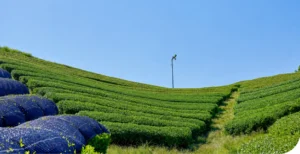
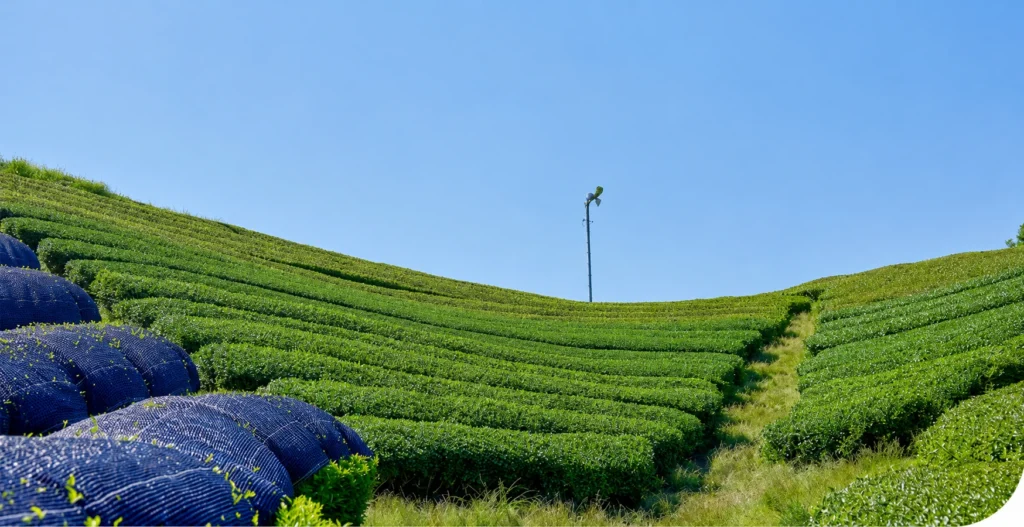
Matcha is usually made from tencha, a type of tea leaf that is shaded before harvest, steamed, dried without rolling, and ground into a fine powder.
Regular Japanese green teas, such as sencha, are usually steamed, rolled, dried, and kept as loose leaves. They are designed to release flavour into water during steeping.
Matcha is designed to be consumed as a powder. That is why it has a fuller body, thicker texture, and more vivid green appearance when prepared well.
The taste is different too. Good matcha is usually smooth, green, umami-rich, and gently savoury. Steeped green tea is often lighter, clearer, grassier, and more delicate.
For a full comparison, read our deeper article on matcha vs green tea.
Curious to taste the difference? Nami 50g is our smooth everyday starting point.
Why is matcha powdered instead of steeped?
Matcha is powdered because it is prepared differently from ordinary tea.
Rather than extracting flavour from the leaves and discarding them, matcha allows the whole powdered leaf to become part of the drink. This gives matcha its distinctive colour, texture, and flavour.
This also changes the preparation. Matcha is not brewed in a teapot. It is sifted, mixed with warm water, and whisked until smooth.
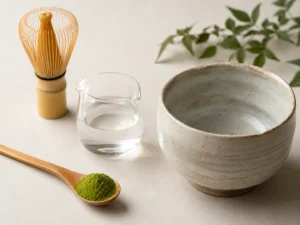
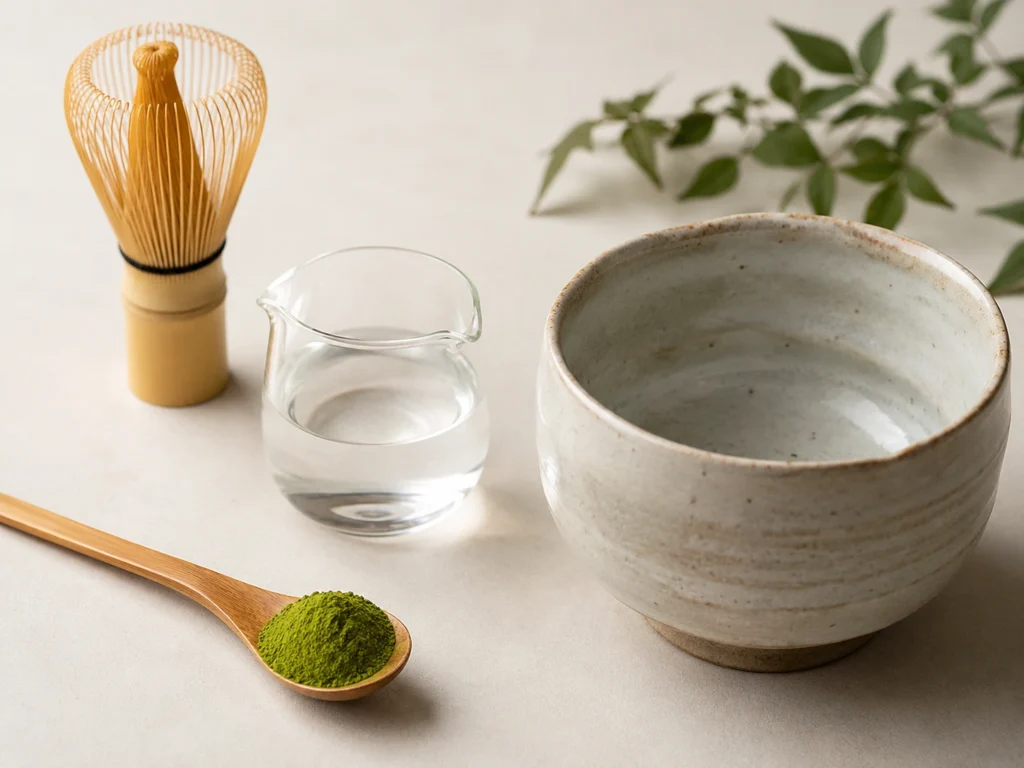
The bowl, whisk, and scoop are not just decorative tools. They help create the texture that makes matcha feel different from ordinary steeped tea.
For the full method, read our guide on how to prepare ceremonial matcha.
If you want to understand the meaning behind the tools and the pause, read The Matcha Ritual.
Does matcha have more caffeine than green tea?
Usually, yes. Matcha is often more concentrated than steeped green tea because the powdered leaf is consumed rather than removed.
However, caffeine content varies. It depends on the matcha, the serving size, the amount of powder used, and how strong you prepare it.
Many people experience matcha as smoother than coffee, partly because matcha naturally contains L-theanine as well as caffeine. But caffeine sensitivity varies from person to person.
Matcha is not caffeine-free, and it should not be treated as a guaranteed calm-energy drink. Some people prefer it in the morning, while others can enjoy it later in the day. Your sleep, body, and total caffeine intake matter.
For a deeper guide to caffeine amounts, timing, and how matcha can feel different from coffee, read our article on matcha caffeine.
Is hojicha green tea too?
Yes. Hojicha is also a Japanese green tea, but it is very different from matcha.
Matcha is a vivid green powdered tea, usually associated with a fresh, umami-rich flavour. Hojicha is roasted green tea, usually warmer, toastier, and more mellow in flavour.
The roasting process gives hojicha its brown colour and comforting roasted aroma. Many people choose hojicha later in the day because it is usually lower in caffeine than matcha, though it is not caffeine-free.
If you want a warmer roasted green tea option, explore our organic hojicha powder.
Which Matcha Byron Bay tea should you choose?
If you want to begin with matcha, choose the tea based on how you want to drink it.
Choose Nami if you are new to matcha and want a smooth everyday ceremonial matcha for daily bowls, premium lattes, and a simple home ritual.
Choose Goku if you already enjoy matcha and want a more refined ceremonial upgrade for quiet moments where the flavour of the tea itself is the focus.
Choose Matcha D if you want matcha for baking, smoothies, recipes, larger batches, or cafe-style use.
Choose Hojicha if you want a roasted Japanese green tea with a warmer, toastier flavour and a gentler later-day feel.
If you are starting from the beginning, the Complete Nami Ritual Set includes Nami, bowl, bamboo whisk, scoop, and whisk stand.
Or browse the full Matcha Byron Bay shop. If you're deciding where to buy, our guide to buying matcha in Australia covers what to check first.
Frequently asked questions
Is matcha green tea or something else?
Matcha is green tea. It comes from the same tea plant as other green teas, but it is grown, processed, and prepared differently. Instead of steeping the leaves and removing them, matcha is ground into powder and whisked into water.
Is matcha the same as sencha?
No. Matcha and sencha are both Japanese green teas, but they are different. Sencha is usually steeped as loose leaves. Matcha is ground into a fine powder and whisked into water.
Is matcha stronger than regular green tea?
Matcha can be more concentrated because you consume the powdered leaf itself. Regular green tea is steeped, and the leaves are removed. The exact strength depends on the amount of tea used and how it is prepared.
Does matcha taste like green tea?
Matcha tastes related to green tea, but it is usually richer, smoother, and more umami-forward. Steeped green tea is usually lighter and clearer, while matcha has more body and texture.
Can I drink matcha if I am sensitive to caffeine?
It depends on your sensitivity. Matcha contains caffeine, so start with a smaller serving and notice how you feel. If you are very caffeine-sensitive, hojicha may be a better option later in the day.
Can I use matcha in smoothies?
Yes. Matcha can be added to smoothies because it is already a powder. For smoothies, lattes, and recipes, culinary matcha can be a practical option. For traditional bowls, ceremonial matcha is usually better.
How much matcha should I use?
For a standard bowl or latte, start with around 2 grams of matcha powder. You can adjust slightly depending on taste, caffeine tolerance, and whether you are drinking it with water or milk.
Begin with real Japanese matcha
So, is matcha green tea? Yes, but green tea prepared with more attention: sifted, whisked, and received as the whole powdered leaf.
Sources
- Japan Matcha Association: Details of Matcha
- Global Japanese Tea Association: What is Matcha?
- Kochman et al.: Health Benefits and Chemical Composition of Matcha Green Tea
- NCCIH: Green Tea
What changed and why
Title: unchanged, already a clean exact-match. Meta description: rewritten from the 5-word placeholder ("Yes, matcha is green tea.") to ~115 characters carrying the keyword and a fuller answer. Quick answer: 47 words, placed directly above the existing opening line. H2 with bare keyword: renamed "Yes, matcha is green tea" → "Is matcha green tea, or something else entirely?" so the literal phrase "is matcha green tea" appears as a question header, matching how the page itself is framed. Internal links added: What Is Ceremonial Matcha (new), Buy Matcha Australia (new). Matcha Tea pillar guide, Matcha vs Green Tea, How to Prepare Ceremonial Matcha, Matcha Caffeine, Nami, Goku, and Hojicha were already linked and remain untouched — this page was already well-connected into the hub-and-spoke structure. Soft mid-page CTA: added after the "how matcha is different" section, pointing to Nami. Strong final CTA: existing "Begin with real Japanese matcha" closer kept, rephrased slightly to echo the keyword as a direct callback ("So, is matcha green tea? Yes, but..."). Product bridge: Nami now explicitly "if you are new to matcha," Goku "if you already enjoy matcha... more refined ceremonial upgrade," matching the pattern used across the rest of the cluster. FAQ: unchanged — already 7 well-targeted questions matching search intent (sencha comparison, strength, taste, caffeine sensitivity, smoothies, dosage). No medical-claim softening needed. The caffeine section already hedges appropriately ("should not be treated as a guaranteed calm-energy drink"). All other sections and the Sources list are otherwise unchanged. This page's short, direct-answer structure (its role as a "spoke" funnelling into the two deeper pillar/comparison pages) is preserved exactly as designed.