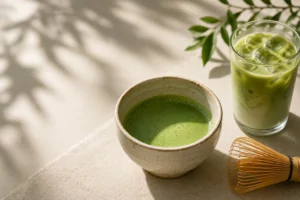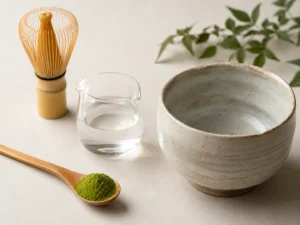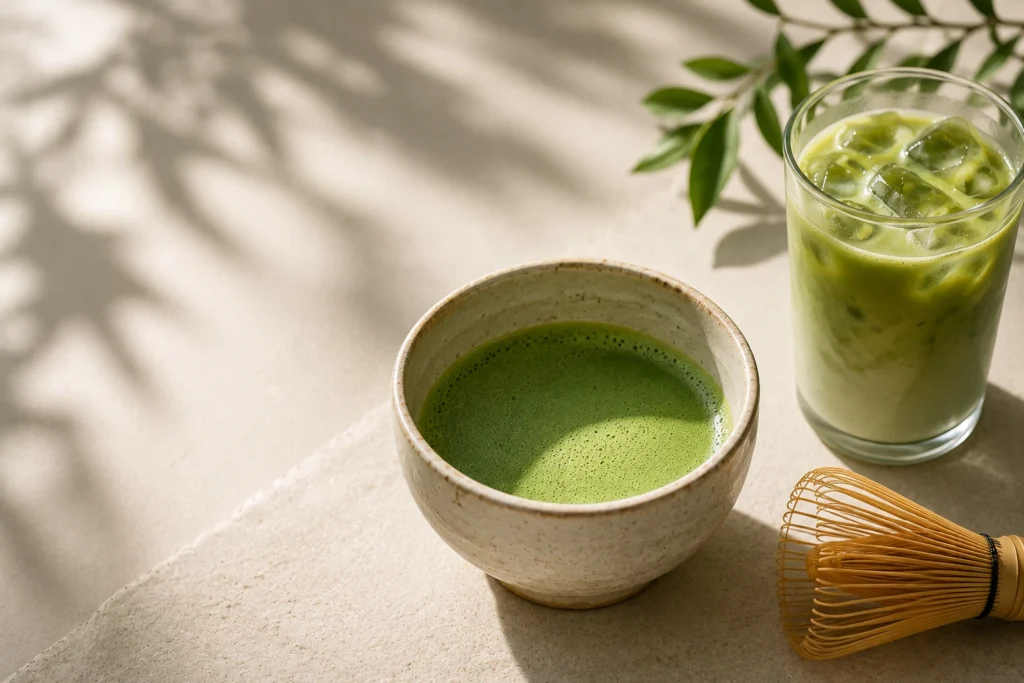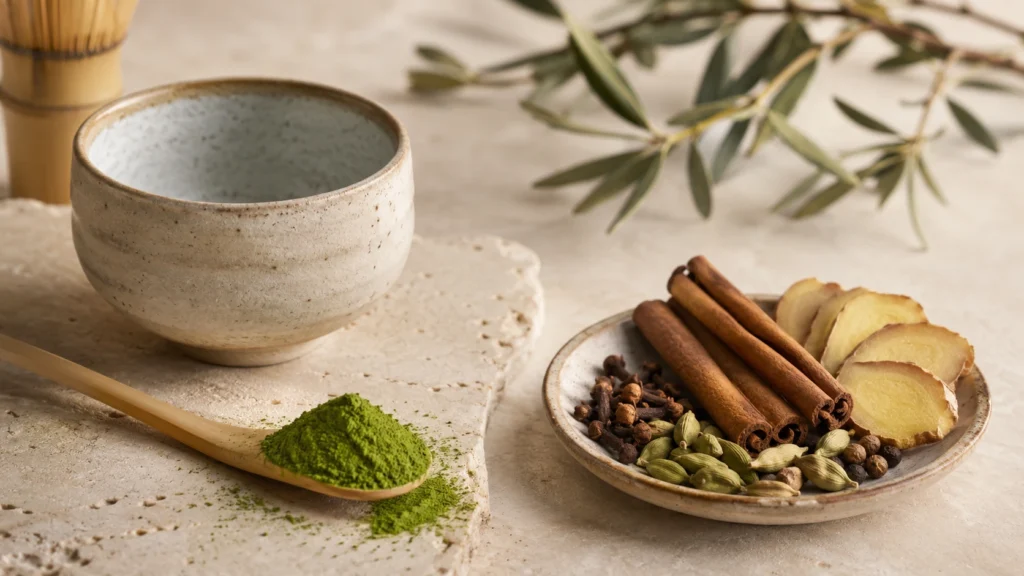
In short: matcha vs chai comes down to mood and ritual, not better or worse. Matcha is minimal, green, and whisked, suited to a quiet morning bowl. Chai is spiced, milky, and often simmered, suited to a warmer, more aromatic moment. Both contain caffeine, prepared very differently.
Matcha and chai are both ritual drinks, but they create very different moments.
Matcha is minimal, green, Japanese, and whisked. Chai is spiced, milky, aromatic, and often simmered. One begins with powdered green tea and water. The other begins with black tea, warming spices, milk, and sometimes sweetener.
Neither is better in every situation.
Choose matcha when you want a quiet bowl-and-whisk ritual. Choose chai when you want warmth, spice, and comfort. The best choice depends on the flavour, preparation style, caffeine level, and daily rhythm you want.
What to know first
- Matcha is powdered Japanese green tea whisked into water.
- Chai is usually black tea brewed or simmered with spices such as cardamom, cinnamon, ginger, cloves, and black pepper.
- Matcha tastes green, smooth, umami-rich, and sometimes grassy.
- Chai tastes warm, spiced, aromatic, and often sweet or milky.
- Both contain caffeine, though the exact amount depends on serving size, preparation, and strength.
- Matcha suits a quiet, minimal tea ritual. Chai suits a warmer, kitchen-based ritual.
What is matcha?
Matcha is a fine Japanese green tea powder whisked directly into water.
Unlike ordinary steeped green tea, the leaves are not removed from the cup. The powdered tea becomes part of the drink, which gives matcha its vivid colour, fuller body, and concentrated green tea flavour. For a fuller comparison with steeped green tea, read matcha vs green tea.
High-quality ceremonial matcha is usually smooth, green, umami-rich, and balanced. It can have a gentle bitterness, but it should not taste harsh, stale, or muddy when prepared well.
At Matcha Byron Bay, our ceremonial matcha is sourced from Uji, Japan, and prepared for daily ritual rather than fast consumption. If you want to understand the grade more deeply, read What Is Ceremonial Matcha?
For an everyday ceremonial option, start with Nami ceremonial matcha. For a deeper, more refined bowl, explore Goku premium ceremonial matcha.
What is chai?
Chai usually refers to masala chai: black tea brewed with spices and often served with milk and sweetener.
The spice blend can vary, but common ingredients include cardamom, cinnamon, ginger, cloves, and black pepper. Some versions are strong and peppery. Others are sweeter, creamier, and softer.
Chai is not a single-ingredient tea in the same way matcha is. It is a layered drink. The black tea gives structure, the spices give aroma, the milk adds body, and the sweetener changes the flavour dramatically.
That makes chai feel very different from matcha. Matcha is quiet and minimal. Chai is warm, fragrant, and often more kitchen-based.
Curious to taste matcha for yourself? Browse the Matcha Byron Bay range.
Matcha vs chai: the main differences
Matcha and chai differ in base tea, preparation, flavour, caffeine, and ritual feel.
| Aspect | Matcha | Chai |
|---|---|---|
| Base | Powdered Japanese green tea | Usually black tea with spices |
| Preparation | Whisked with water, then served plain or with milk | Steeped or simmered with spices, often with milk and sweetener |
| Flavour | Green, umami-rich, smooth, sometimes grassy | Spiced, warming, aromatic, often sweet and milky |
| Caffeine | Usually moderate; varies by powder amount and serving size | Usually moderate; varies by black tea strength and steeping time |
| Ritual feel | Quiet, minimal, focused, bowl-and-whisk ritual | Warm, aromatic, kitchen-based, often shared |
| Best fit | People who want a simple Japanese tea ritual | People who want a spiced, milky comfort drink |
How do they taste?
Matcha tastes green, smooth, and umami-rich.
A good ceremonial matcha can feel creamy even before milk is added. It may have fresh grassy notes, a soft savoury depth, and a gentle natural sweetness. When the powder is fresh and the water is not too hot, matcha should taste clean rather than harsh.
Chai tastes warmer and more aromatic. Depending on the recipe, it can be spicy, sweet, creamy, peppery, or rich. The milk and sweetener often play a major role, which means two cups of chai can taste very different from each other.
If you like minimal, green tea flavour, matcha is likely to feel more precise. If you like spice, warmth, and milk, chai may feel more familiar.
If bitterness is your main concern, preparation matters. Our guide on how to prepare ceremonial matcha walks through water temperature, whisking, and powder amount.
How much caffeine do matcha and chai have?
Both matcha and chai contain caffeine.
Matcha is usually moderate in caffeine because you consume the powdered green tea leaf directly. Chai is also usually caffeinated because it is commonly made with black tea.
The exact amount in either drink depends on how it is prepared. With matcha, caffeine varies based on powder amount, serving size, and grade. With chai, it varies based on the black tea used, steeping time, tea strength, and serving size.
Matcha also contains L-theanine, an amino acid naturally found in tea. Many people experience matcha's caffeine as smoother than coffee, but individual caffeine sensitivity varies.
Chai's caffeine experience depends heavily on the black tea base and whether the drink includes milk and sweetener. A strong chai can feel more stimulating than a weak one.
For a deeper matcha-specific guide, read Matcha Caffeine: Why It Feels Different and When to Drink It.
Which is better for a latte?
Both matcha and chai work beautifully with milk, but they create different kinds of lattes.
A matcha latte is green, creamy, and smooth. It works best when the milk softens the tea without covering it. Oat milk, soy milk, and dairy milk can all work well, depending on whether you want sweetness, clarity, or body.
A chai latte is spiced, warming, and usually more aromatic. The milk carries the spices, while sweetener often rounds the edges. A chai latte can feel richer and more dessert-like, depending on how it is made.
| Latte style | Matcha latte | Chai latte |
|---|---|---|
| Colour | Vivid green | Warm beige or brown |
| Flavour | Green, creamy, umami-rich | Spiced, sweet, aromatic |
| Main ingredient | Matcha powder | Black tea and spices |
| Milk role | Softens the green tea flavour | Carries the spices and adds body |
| Best for | A cleaner Japanese tea latte | A warming spiced milk tea |
For a smooth green tea latte, read How to Make a Matcha Latte That Tastes Like Real Matcha.
Which is simpler to prepare?
Matcha is simpler in ingredients, but it asks for a little technique.
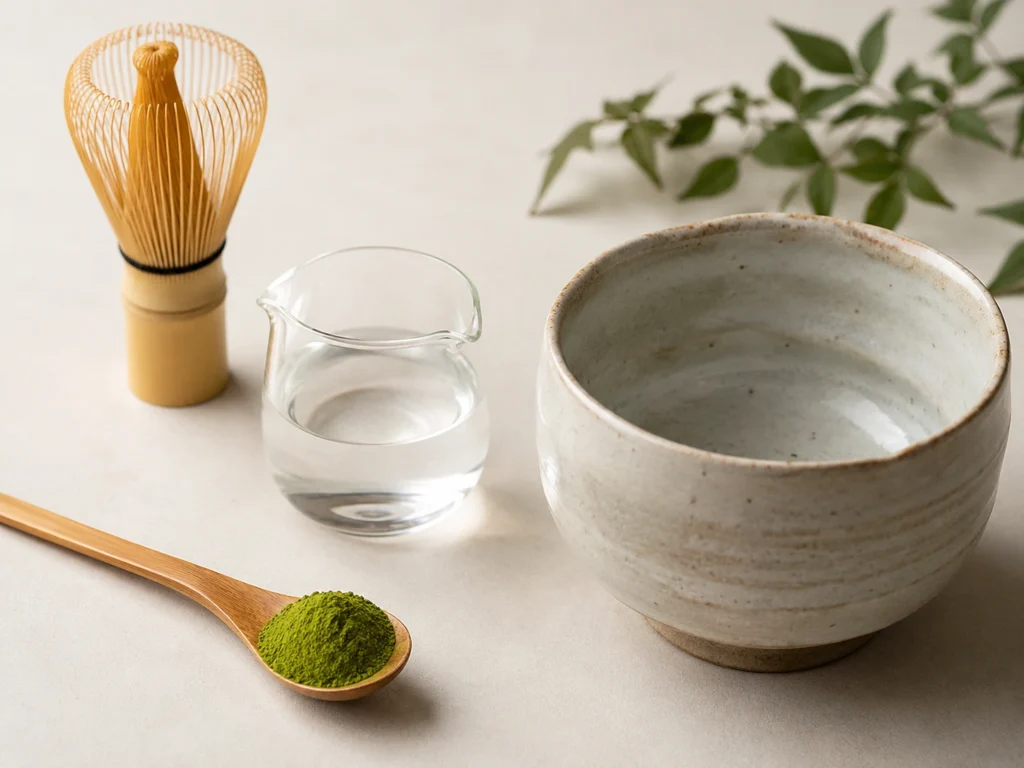
To prepare matcha, you sift the powder, add warm water, and whisk with a bamboo whisk until smooth. The whole process can take only a few minutes, but the details matter. Water that is too hot or too much powder can make the bowl taste bitter.
Chai usually takes longer because the spices and tea need time to steep or simmer. A stovetop chai can be beautiful, but it is less minimal. You may need a pot, strainer, spices, milk, and sweetener.
So the answer depends on what you mean by simple.
- Matcha is simpler if you want fewer ingredients and a quiet preparation ritual.
- Chai is simpler if you already enjoy stovetop drinks and like building flavour with spices.
If you want the tools for a proper matcha setup, the Complete Nami Ritual Set includes Nami matcha, a bowl, bamboo whisk, scoop, and glass whisk stand.
Matcha vs chai: which should you choose?
The best tea depends on the kind of daily moment you want, based on flavour, ritual, caffeine feel, and routine.
| If you want... | Choose matcha | Choose chai |
|---|---|---|
| A minimal tea ritual | Yes | Less so |
| A spiced milk tea | No | Yes |
| A vivid green latte | Yes | No |
| A warm aromatic drink | Possible, but more subtle | Yes |
| Fewer ingredients | Yes | No |
| A stovetop ritual | No | Yes |
Matcha fits when you want quiet. A bowl, a whisk, warm water, and a few minutes before the day fills up. It suits people who like a minimal ritual and want to taste the tea itself.
Chai fits when you want warmth and aroma. A pot on the stove, spices opening in the heat, milk softening the tea, and a cup that feels fuller and more fragrant.
Neither ritual is wrong. They simply ask for different things.
For the meaning behind the bowl-and-whisk ritual, read The Matcha Ritual.
Ready to start your own ritual? Browse the Matcha Byron Bay range.
Can you drink both?
Yes. You do not need to choose one tea forever.
Matcha and chai can sit in different parts of your routine. You might choose matcha when you want something clean, green, and minimal. You might choose chai when you want spice, milk, and warmth.
The only thing to keep in mind is caffeine and sweetness. Both drinks can contain caffeine. Chai often includes milk and sweetener, while matcha can be prepared with only powder and water or made into a latte.
If you want a lower-caffeine Japanese tea for later in the day, you may also like hojicha, a roasted green tea with a warm, toasty flavour. Our Organic Hojicha Fine Grind works well in warm cups, lattes, and simple recipes.
Which Matcha Byron Bay tea should you choose?
Choose Nami ceremonial matcha if you want a smooth everyday matcha for daily bowls and premium home lattes.
Choose Goku premium ceremonial matcha if you want a deeper, more refined matcha experience where the flavour of the tea itself is the focus.
Choose the Complete Nami Ritual Set if you want the full preparation setup in one place: matcha, bowl, bamboo whisk, scoop, and glass whisk stand.
Choose Organic Hojicha Fine Grind if you want a roasted Japanese green tea that feels warmer and lower in bitterness than matcha.
Or browse the full Matcha Byron Bay shop.
Frequently asked questions
Does matcha or chai have more caffeine?
Both contain caffeine. Matcha is usually moderate in caffeine because the powdered leaf is consumed. Chai is also usually caffeinated because it is commonly made with black tea. The exact amount in both depends on serving size, strength, and preparation.
Is matcha healthier than chai?
Neither drink should be treated as a health product. Matcha is usually simpler because it can be made with only powdered green tea and water. Chai often includes milk and sweetener, though it depends on the recipe. The better choice depends on how each drink is prepared and what suits your routine.
Which tastes sweeter, matcha or chai?
Chai usually tastes sweeter because it is often made with milk and sweetener. Matcha has a natural green tea flavour that can be gently sweet, but it is not usually sweet in the same way unless you add milk or sweetener.
Which is better for lattes?
Both are good for lattes. Matcha makes a vivid green latte with a smooth tea flavour. Chai makes a spiced, aromatic latte that is often sweeter and warmer in character.
Which is easier to prepare?
Matcha is usually quicker because it only needs powder, warm water, and a whisk. Chai often takes longer because the black tea and spices are steeped or simmered before milk is added.
Is matcha or chai better for an evening drink?
Both can contain caffeine, so neither is automatically ideal late at night. If you are caffeine-sensitive, pay attention to timing and serving size. For a lower-caffeine Japanese tea, consider hojicha instead.
Can I make a matcha chai latte?
Yes, you can combine matcha with chai spices and milk, but the flavours can compete. Matcha is delicate and green, while chai spices can be strong. If you want to taste each one clearly, enjoy them as separate rituals.
Which feels more calming, matcha or chai?
That depends on the person. Matcha has a quieter preparation ritual and contains L-theanine. Chai feels warming and comforting because of its spices and milk. Both contain caffeine, so sensitive people should pay attention to timing and serving size.
Choose the ritual you want to return to
Now you know what separates matcha vs chai, the choice comes down to the moment you want to create. Choose matcha when you want something green, minimal, and quietly prepared. Choose chai when you want spice, milk, and warmth. Both can be beautiful. They simply belong to different moments.
Sources
- Global Japanese Tea Association: What is Matcha?
- Japan Matcha Association: Details of Matcha
- Japan Tea Export Promotion Council: Japanese Green Tea
- NCCIH: Green Tea
What changed and why
Title: unchanged, already exact-match. Meta description: rewritten from the 13-word hook to ~135 characters with the keyword. Quick answer: 50 words, placed directly above the existing opening line. Comparison table and "which should you choose" table: both already existed exactly as the brief requested (flavour/ritual/caffeine/routine framing) — fully preserved, no changes needed. Internal link added: Matcha vs Green Tea (new, in the "what is matcha" section). Matcha Caffeine, Nami, Goku, How to Make a Matcha Latte were all already linked multiple times and remain untouched — this page already exceeded the brief's 5-8 link requirement. Soft mid-page CTA: added after the "what is chai" section, pointing to shop. Strong final CTA: existing closer kept, with the opening line rephrased to echo the keyword directly. FAQ: unchanged — already 8 well-built, carefully hedged questions, including a direct "neither drink should be treated as a health product" answer. No medical-claim concerns — this page already handles the caffeine/health framing with appropriate care throughout. All other sections, both comparison tables, and Sources list are otherwise unchanged.