Quick Answer
How to make iced matcha that tastes smooth comes down to good ceremonial matcha, cooler water, and proper whisking. Most bitterness or clumping comes from using water that is too hot, adding matcha directly to cold liquid, or using powder that is not suited to drinking cold.
- Use warm water around 70–80°C instead of boiling water.
- Sift the matcha first to prevent clumps.
- Make a smooth paste with 40–50ml of warm water before adding ice or milk.
- Use ceremonial-grade matcha like Nami or Goku for a smoother, less astringent iced drink.
- Oat and soy milk are usually the smoothest, most balanced choices for iced matcha lattes.
Iced matcha should taste smooth, not bitter
Iced matcha is the kind of drink that should feel like a cool, calm pause. Not bitter. Not clumpy. Just smooth, steady, and refreshing.
If your iced matcha has ever tasted harsh or separated into watery layers, the problem usually is not matcha itself. It is often a few simple preparation choices: water temperature, powder quality, whisking technique, and how quickly you add ice or milk.
Once you understand those details, iced matcha becomes much easier to make at home. You do not need a complicated cafe setup. You need good matcha, warm water, a smooth paste, and the right method.
This guide covers how to make iced matcha step by step, including the ratio, ice and water balance, sweetness, milk choices, and what to do if something goes wrong.
For the traditional preparation foundation, see our guide to how to prepare ceremonial matcha. If you don't have a bamboo whisk yet, read how to make matcha without a whisk.
Why does iced matcha sometimes taste bitter?
Most bitterness in iced matcha comes from water that is too hot, low-grade powder, or undissolved clumps.
When you pour boiling water over matcha, the flavour can become sharper and more astringent. A water temperature of around 70–80°C is usually better for preserving the tea's natural sweetness, softness, and umami.
The powder itself matters too. Good ceremonial matcha should not taste harshly bitter when it is fresh and prepared carefully. Lower-grade matcha can taste grassy, flat, or sharp, especially when served cold.
We hear this often at markets: people who thought they disliked matcha often change their mind when they taste a smoother ceremonial grade prepared properly.
If you are new to matcha, our guide to what ceremonial matcha is explains why grade, freshness, colour, and texture matter.
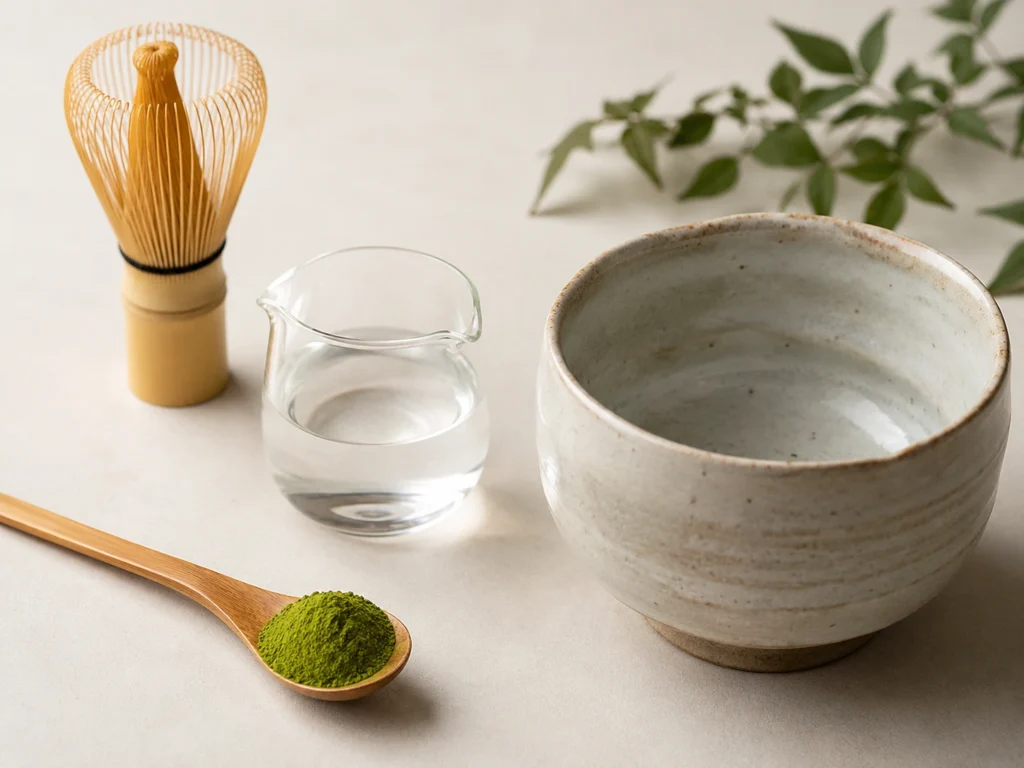
Want the right tools before you start? Our guide to matcha tools you need covers exactly what's essential.
What kind of matcha should I use for iced drinks?
Ceremonial-grade matcha like Nami or Goku usually gives a smoother, less astringent flavour for iced drinks.
Culinary matcha can work in lattes, but it is often more astringent and can taste rougher when served cold. Cold temperatures make bitterness and texture more noticeable, so the quality of the matcha becomes even more important.
For everyday iced matcha lattes, Nami organic ceremonial matcha is our usual recommendation. It is our everyday ceremonial grade, suited to regular home use, iced matcha, and matcha lattes.
If you want a deeper, more aromatic experience, Goku premium ceremonial matcha offers a greener colour, finer texture, and more pronounced umami. For most iced drinks, though, Nami hits the sweet spot: balanced, clean, and smooth without feeling too precious for daily use.
For a broader comparison, read our guide to ceremonial vs culinary matcha.
Iced matcha ratio
A smooth iced matcha latte starts with the right ratio. Too much powder can make the drink taste strong or chalky. Too much milk can make the matcha disappear. The ratio below is a good starting point for most home preparations.
| Ingredient | Amount | Purpose |
|---|---|---|
| Matcha | 2–3g | Creates the flavour, colour, and body of the drink |
| Warm water | 40–50ml | Helps dissolve the powder and create a smooth paste |
| Ice | 1 glass | Chills the drink without needing cold water at the paste stage |
| Milk | 150–200ml | Adds creaminess and softens the flavour |
| Sweetener | Optional | Balances the flavour if you prefer a softer cafe-style drink |
You can adjust from here. Use 2g for a lighter iced matcha, or 3g if you want the tea to stand out more clearly through milk and ice.
Want to skip the milk entirely? A straight iced matcha works the same way: sift, make the paste, then pour over a full glass of ice and top with cold water instead of milk for a cleaner, lighter drink.
How do I make iced matcha without clumps?
Sift the powder, make a paste with a small amount of warm water, then whisk thoroughly before adding ice or milk.
Clumps happen when dry matcha hits cold liquid too quickly. Matcha is a fine powder, and it needs a little warm water to bloom and suspend properly. If you add it straight to cold milk, the powder often forms small pockets that never fully dissolve.
Start by sifting 2–3g of matcha through a fine strainer into your bowl. Sifting breaks up small lumps and helps the powder blend more evenly.
Next, add 40–50ml of warm water at around 70–80°C. Whisk briskly in a zigzag motion until the mixture becomes smooth, glossy, and lightly frothy. Only then should you add ice, milk, or sweetener.
A traditional bamboo whisk chasen makes this easier because the fine tines help break apart clumps and create a smoother texture. If you are building your matcha setup, our guide to matcha tools you need explains the essentials, or get everything at once with the Complete Nami Ritual Set.
How to make an iced matcha latte
This is the simple method we recommend for a smooth iced matcha latte at home.
- Sift 2–3g of ceremonial matcha into a bowl.
- Add 40–50ml of warm water at around 70–80°C.
- Whisk with a bamboo whisk in a quick zigzag motion until the paste is smooth and lightly frothy.
- If you like a touch of sweetness, stir in a little honey or maple syrup while the paste is still warm.
- Fill a glass with ice and pour in 150–200ml of your preferred milk.
- Slowly pour the matcha paste over the milk and ice.
- Stir gently, or leave it layered for a cafe-style look.
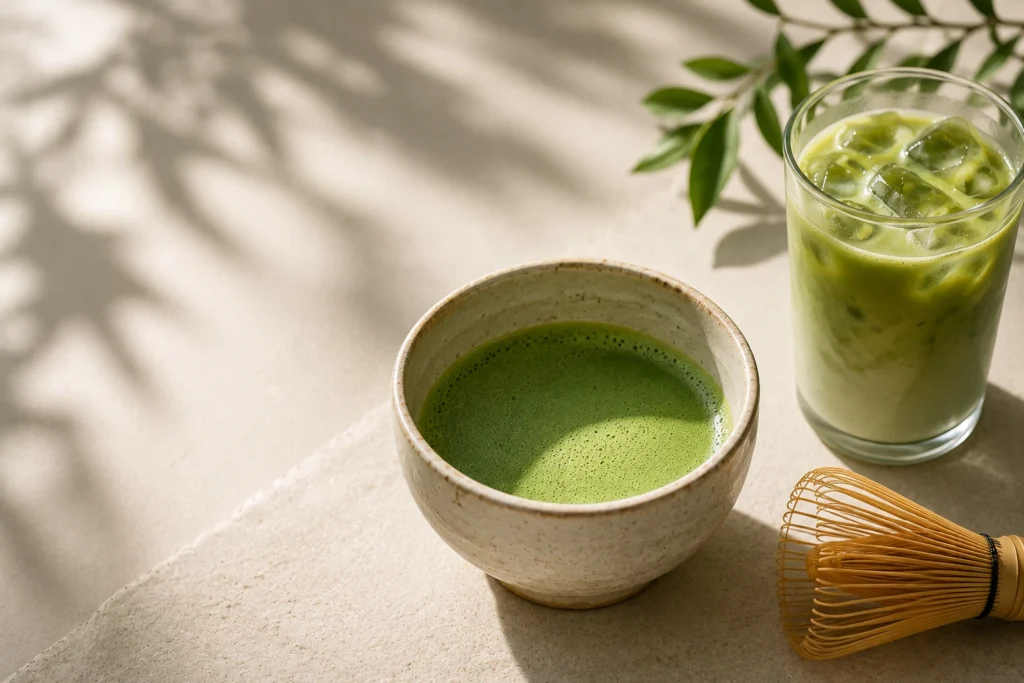
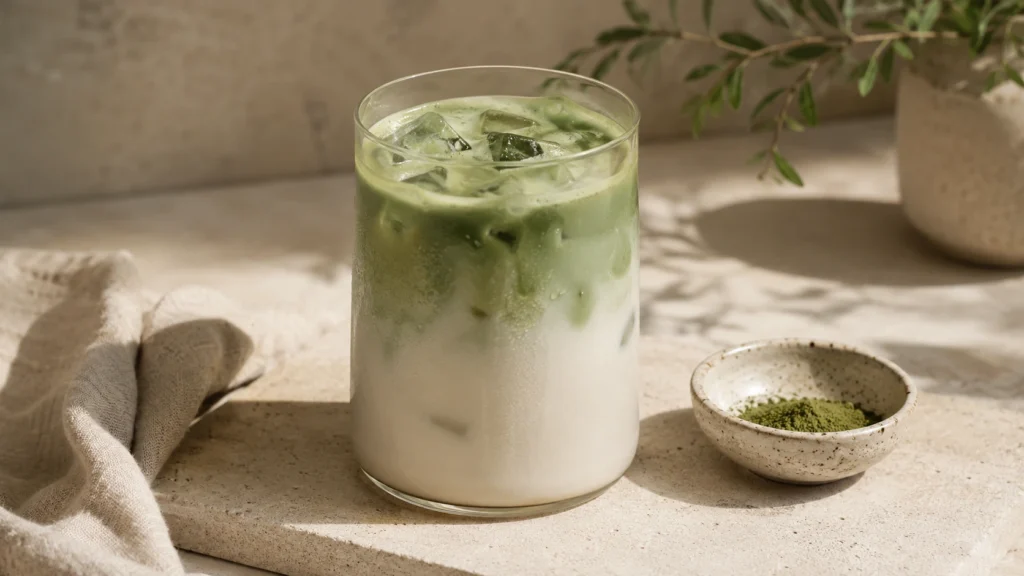
The result is a creamy, vibrant green iced latte with a smoother texture and fewer clumps.
The preparation itself can become a quiet moment in your day: sift, whisk, pour, pause. That is the heart of the matcha ritual, even when the drink is served cold.
Sweetness guidance for iced matcha
Sweeten lightly, if at all, and add it while the paste is still warm.
Honey and maple syrup dissolve more easily into a warm matcha paste than into a finished cold drink, where sweeteners can sit unmixed at the bottom of the glass. Stir a small amount in right after whisking, then taste before deciding whether to add more.
If you are coming from sweetened cafe versions, reduce gradually rather than cutting sweetener entirely on the first try. Oat milk's natural sweetness already does some of that work for you, so it often needs less added sugar than soy or almond milk.
With milk or without?
Iced matcha works well either way, and the choice changes the character of the drink more than you might expect.
With milk: Creamier, softer on the palate, and more forgiving if your matcha is slightly bolder than you'd like straight. This is the more familiar cafe-style drink.
Without milk: Lighter, cleaner, and lets the tea's actual flavour lead. Top the matcha paste with cold water and ice instead of milk for a crisper, more refreshing version that's closer to traditional usucha served cold.
If you are unsure which you'll prefer, make the paste first and taste it before deciding. A paste that already tastes balanced and pleasant on its own will work well either way.
Which milk makes the smoothest iced matcha?
Different milks change the flavour, texture, and overall smoothness of your iced matcha. Oat and soy tend to be the smoothest and most neutral, letting the matcha's character come through clearly.
Dairy milk adds creaminess but can soften some of the tea's more delicate notes. Coconut milk brings its own strong flavour, which you may enjoy, but it can dominate the matcha. Almond milk is lighter and slightly nutty, but it can sometimes feel thinner.
Our founder, Ayumu, personally prefers soy or oat milk for their clean, balanced taste. Cow's milk makes the drink creamier, while coconut milk can be clean but adds a distinct coconut flavour.
| Milk | Flavour Impact | Texture | Smoothness |
|---|---|---|---|
| Oat | Neutral, slightly sweet | Creamy and full-bodied | Very smooth |
| Soy | Clean and mild | Silky and light | Very smooth |
| Almond | Subtly nutty | Thinner and can separate slightly | Smooth |
| Dairy | Creamy and familiar | Rich and thick | Smooth |
| Coconut | Strong coconut flavour | Can feel thin or oily | Less neutral |
For a deeper dive into milk pairings, see our guide to choosing matcha for lattes. A milk that complements rather than competes with the tea will usually give you the smoothest result.
Troubleshooting: why does my iced matcha separate or get watery?
Iced matcha can separate because matcha powder is suspended rather than fully dissolved. If the paste is not whisked well before it meets ice and milk, the liquid and solids can drift apart as the ice melts.
| Problem | Likely cause | Fix |
|---|---|---|
| Tastes bitter | Water too hot, or low-quality matcha | Use water around 70–80°C and a fresh ceremonial-grade powder |
| Clumpy texture | Skipped sifting, or powder added to cold liquid | Sift first, then whisk into warm water before adding ice or milk |
| Separates or looks watery | Under-whisked paste, ice added too soon | Whisk the paste until smooth and glossy before adding ice |
| Tastes flat or thin | Too little matcha, or weak paste | Use closer to 3g and a more concentrated 40–50ml paste |
| Sweetener won't dissolve | Added after the drink is already cold | Stir sweetener into the warm paste before adding ice or milk |
Under-whisking, adding ice too soon, or using a milk that does not blend well can all make the drink feel watery. The fix is simple: whisk your matcha paste until it is completely smooth and lightly frothy before it touches any ice.
Pour the paste gently over the milk and ice rather than dumping everything together at once. If you want a more unified drink, use a cocktail shaker: combine the matcha paste, milk, and a few ice cubes, shake hard for 10–15 seconds, then strain into a fresh glass of ice.
The right tools also help. A wide bowl and a bamboo whisk make it easier to create a smooth, lump-free paste before you build the iced drink.
Iced matcha vs hot matcha: what changes?
Cold temperatures mute sweetness and subtle aromas, so iced matcha may need a slightly stronger paste or a little more powder than hot matcha.
When matcha is hot, its floral and umami notes open more clearly on the palate. Over ice, those same notes become quieter. The solution is not to use boiling water. It is to adjust the ratio slightly or make the paste a little more concentrated.
The caffeine content does not meaningfully change just because the drink is served cold. Matcha contains caffeine and L-theanine, a combination many people find gentler than coffee. Individual responses vary.
What changes most is the ritual itself. A hot bowl of matcha is a moment of warmth and stillness. Iced matcha is a refreshing pause, a different kind of presence. Neither is better. Both are ways to slow down in different weather.
That sense of returning to yourself is part of why ceremonial matcha matters: not only as a tea, but as a daily ritual.
Frequently asked questions
Can I make iced matcha with a milk frother instead of a whisk?
You can, but a bamboo whisk gives a smoother, more traditional texture and helps incorporate the powder more thoroughly. A milk frother works best if you have already made a smooth paste first. Whisk the matcha and warm water into a paste, then add milk and use the frother to blend and chill.
How much caffeine is in an iced matcha latte compared to coffee?
A typical iced matcha latte made with 2g of matcha contains around 60–70mg of caffeine, depending on the matcha and serving size. Coffee varies widely depending on the beans, roast, and brewing method. Matcha contains caffeine and L-theanine, and many people find the experience different from coffee. Individual responses vary.
Is iced matcha healthy?
Iced matcha can be part of a simple, lower-sugar drink routine when made with good matcha, milk, and little or no added sweetener. Many people choose matcha as part of a broader wellness routine, but it is not a cure or quick fix. The simplest version is usually best: ceremonial matcha, your favourite milk, and optional light sweetener.
How can I make a lower-sugar iced matcha at home?
Skip sweetened syrups and use a small amount of honey, maple syrup, or no sweetener at all. Oat milk has a natural subtle sweetness that can balance the matcha without needing much added sugar. If you are used to sweet cafe versions, reduce the sweetener gradually.
Why is iced matcha so popular right now?
Iced matcha is refreshing, visually beautiful, and easy to turn into a small daily ritual. It offers a different experience from coffee: cooler, softer, and more intentional. For many people, the appeal is not only the flavour but the pause that comes with making it properly.
Can I use culinary matcha for iced matcha?
You can use culinary matcha, especially in sweetened lattes, but it is usually stronger, more astringent, and less smooth than ceremonial matcha. If you want a cleaner iced matcha with less bitterness, start with a ceremonial grade such as Nami.
Can I make iced matcha without milk?
Yes. Make the matcha paste the same way, then top it with cold water and ice instead of milk. This gives a lighter, cleaner drink that lets the matcha's actual flavour come through more clearly.
Make iced matcha smoother at home
Now you know how to make iced matcha that tastes smooth: start with ceremonial matcha, warm water, and the right whisking method. Nami is our everyday ceremonial matcha for smooth iced lattes, while Goku offers a deeper, more premium umami experience.
⚠️ Goku URL fixed The two existing Goku links on this page used /product/premium-ceremonial-grade-organic-matcha-goku-50g/, which doesn't match the correct URL you confirmed (/product/ceremonial-grade-organic-matcha-goku-for-depth-and-traditional-use-50g/). I corrected both existing instances and used the right URL for all new ones — worth double-checking the old URL isn't a valid redirect before assuming it was simply wrong. What changed and why
Title: unchanged, already exact-match. Meta description: rewritten from a description cut off mid-sentence to a clean ~140-character version. Quick answer: already existed as its own "## Quick Answer" H2 — kept the format, added the literal keyword phrase to the opening sentence to satisfy the H2/first-100-words requirement more directly. Stronger recipe structure: measurements, ice/water balance via the ratio table, and milk options were already excellent and untouched. Added two genuinely missing pieces: a dedicated sweetness guidance section (previously only mentioned briefly inline) and a dedicated with milk vs without milk section (previously only the milk-comparison table existed, with no explicit no-milk option described) — both placed as new H2s in their logical spot in the flow. New troubleshooting table: added directly above the existing "why does my iced matcha separate" prose section, which stays fully intact underneath. Covers the 5 most common failure points (bitter, clumpy, watery, flat, sweetener not dissolving). Internal links added: Matcha Tools You Need (new, two placements), How to Make Matcha Without a Whisk (new), Complete Nami Ritual Set (new). How to Make a Matcha Latte wasn't directly named in this article before — checking the brief's link list again, it wasn't actually linked, so I left it out rather than forcing it in somewhere unnatural; happy to add if you'd like it included regardless. Soft mid-page CTA: added after the "why does iced matcha taste bitter" section, pointing to Matcha Tools You Need. Strong final CTA: existing closer kept, with the opening line rephrased to echo the keyword directly. FAQ: kept all 6 existing questions, added one new question on making iced matcha without milk, landing at 7. No medical-claim concerns — the existing FAQ already hedges the caffeine and "is it healthy" questions appropriately ("not a cure or quick fix," "individual responses vary"). All other sections — bitterness explanation, matcha grade recommendation, clump-avoidance steps, hot-vs-iced comparison — are otherwise unchanged apart from the Goku URL fix.