Quick Answer
Matcha vs sencha comes down to whole leaf vs infusion. Matcha is a shade-grown, stone-milled powder that you whisk into water. Sencha is a steamed, rolled whole-leaf tea that you steep and strain. Matcha is richer and more caffeinated; sencha is lighter and more refreshing.
- Matcha is a shade-grown, stone-milled green tea powder; sencha is a steamed, rolled whole-leaf green tea.
- With matcha, you consume the whole leaf. With sencha, you steep the leaves and drink the infusion.
- Matcha is usually richer, creamier, and more umami; sencha is usually brighter, lighter, and more refreshing.
- Matcha generally contains more caffeine per serving, while sencha offers a gentler everyday cup.
- The better choice depends on your rhythm: matcha for ritual, lattes, and depth; sencha for quick, clean refreshment.
Matcha vs sencha: what are they?
Matcha and sencha are both Japanese green teas, but their form and experience differ completely.
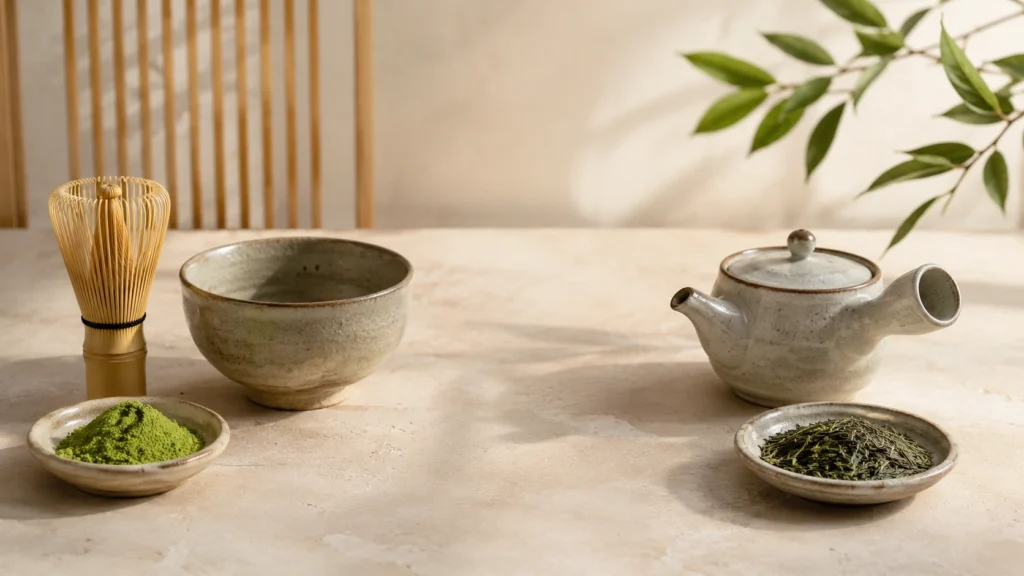
Matcha is a fine powder made from shade-grown tea leaves that are dried and slowly stone-milled. It is whisked into water, which means you drink the whole leaf in powdered form. Sencha is made from steamed, rolled, and dried leaves. It is steeped in hot water, then the leaves are removed before drinking.
The form dictates everything. With matcha, you consume the entire leaf. With sencha, you drink an infusion. This single difference shapes the flavour, texture, caffeine, preparation, and ritual.
Both come from the same plant, Camellia sinensis, and both are central to Japanese tea culture. They are not rivals. They are two different expressions of green tea.
One is a leaf you visit. The other is a leaf you consume.
If you are new to matcha, our guide to what ceremonial matcha is explains how quality, colour, texture, and preparation shape the cup. For a broader introduction to matcha as a whole, read Matcha Tea: A Quiet Guide to Authentic Japanese Matcha.
How are matcha and sencha grown differently?
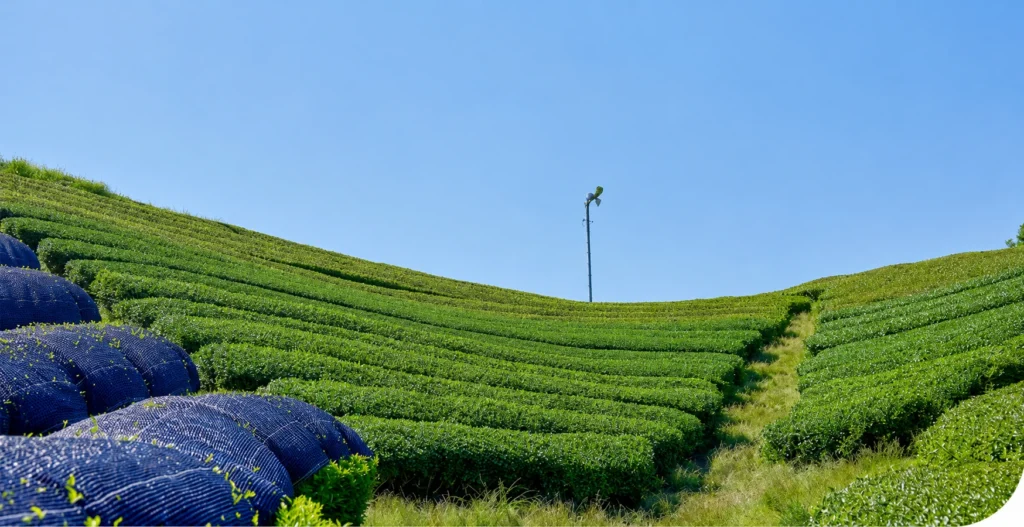
The key difference happens before harvest: matcha leaves are shaded, while sencha leaves usually grow in full sun.
For matcha, tea plants are covered before harvest to reduce direct sunlight. This shading encourages a deeper green colour and changes the balance of naturally occurring compounds in the leaf, including amino acids such as L-theanine.
At Matcha Byron Bay, our matcha is grown under 20-day shading before harvest, a practice central to its colour, softness, and umami character.
Sencha basks in sunlight. That exposure tends to produce a brighter, grassier, more refreshing cup with a cleaner finish. One tea leans into richness; the other into clarity.
Curious how matcha compares to ordinary steeped green tea too? Read our guide to matcha vs green tea.
How processing changes the tea
After harvest, sencha is steamed, rolled, and dried into needle-like leaves. Matcha leaves are steamed and dried, then slowly stone-milled into a fine powder.
Sencha's rolling preserves the whole leaf shape. It invites you to steep, watch the leaves unfurl, and pour. Matcha's stone-milling turns the leaf into something you whisk directly into water. There is no steeping and no straining.
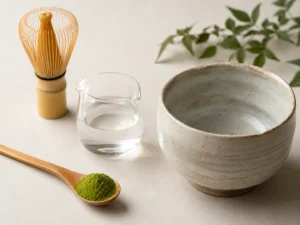
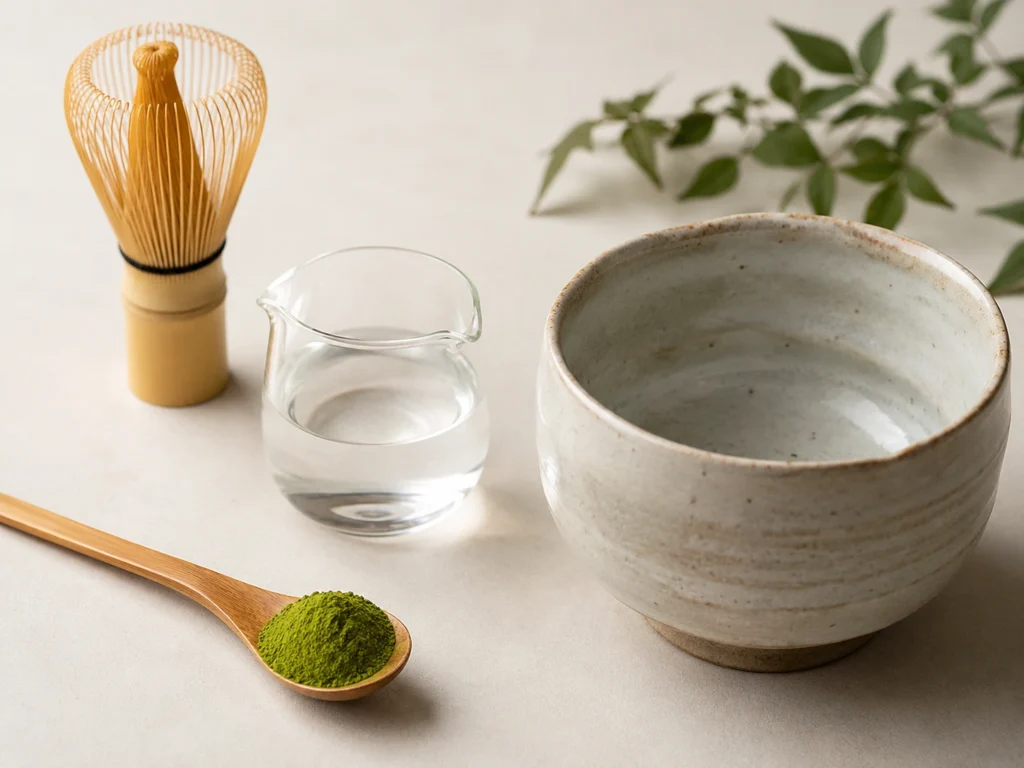
That difference changes the feeling of preparation. Sencha is quick, clean, and familiar for loose-leaf tea drinkers. Matcha asks for a bowl, water, a bamboo whisk, and a few minutes of attention.
You whisk the powder into water, and the tea becomes part of the drink itself, not something you strain away. The processing reflects the intention.
For a full preparation method, see our guide to how to prepare ceremonial matcha.
Want to taste the difference yourself? Browse the Matcha Byron Bay range.
Matcha vs sencha comparison table
The table below gives a simple side-by-side view of the main differences between matcha and sencha.
| Category | Matcha | Sencha |
|---|---|---|
| Form | Fine, stone-milled powder | Whole, rolled leaves |
| Growing method | Shade-grown before harvest | Usually grown in full sun |
| Preparation | Whisked into water | Steeped in hot water, then strained |
| What you consume | The whole leaf in powdered form | The infused tea liquor |
| Flavour | Rich, creamy, umami, softly sweet | Bright, grassy, refreshing, lightly astringent |
| Caffeine | Generally higher because the whole leaf is consumed | Generally lower because the leaves are steeped and removed |
| Texture | Smooth, foamy, fuller-bodied | Light, clear, tea-like |
| Best for | Ritual, lattes, slow mornings, cooking | Daily sipping, quick refreshment, loose-leaf tea routines |
Caffeine, L-theanine, and flavour
Matcha generally contains more caffeine per serving than sencha because you consume the whole leaf rather than drinking only the infusion. The exact amount depends on how much powder you use, the grade of matcha, and the serving size.
Sencha usually contains less caffeine per serving because the leaves are steeped and removed. Steeping time, water temperature, and leaf quantity can all change the final result.
Matcha also contains L-theanine, an amino acid associated with the soft, rounded character of shade-grown tea. Sencha contains L-theanine too, but because it is usually grown in full sun, its flavour profile tends to feel brighter and more astringent.
Many people find matcha's combination of caffeine and L-theanine gentler than coffee. Individual responses vary, so it is best to notice how your own body responds.
This is one reason people often choose Nami organic ceremonial matcha for a daily ritual: it gives depth, texture, and a more grounded preparation experience without needing to be complicated.
Matcha vs sencha: which should you choose?
Bringing flavour, preparation, ritual, and caffeine feel together, here is the simple version.
| If you want... | Choose matcha | Choose sencha |
|---|---|---|
| Flavour preference | Rich, creamy, umami-forward | Bright, grassy, lightly astringent |
| Preparation style | Sift and whisk, a few minutes of attention | Steep and strain, quick and familiar |
| Daily ritual | Bowl, whisk, a slower morning pause | Teapot, strainer, an everyday loose-leaf habit |
| Caffeine feel | Stronger, whole-leaf, paired with L-theanine | Gentler, lighter, easy to drink through the day |
| Best for | Lattes, baking, a grounding ritual | Quick refreshment, in-between moments |
There is no right answer. Only what fits your rhythm.
If you want a quick, refreshing cup to sip through the morning, sencha is a beautiful companion. It asks little of you. You heat water, steep the leaves, pour, and drink. The ritual is light, the taste clean. It is tea for the in-between moments.
If you want a creamier, more grounding ritual, or a tea that works in lattes, baking, and slow mornings, matcha is the better fit. It asks for a whisk, a bowl, and a few minutes of attention. In return, it gives you texture, depth, and versatility.
Matcha is also highly versatile. It stands up to milk, folds into desserts, and can become part of a slower morning routine. Sencha, by contrast, is beautiful because it stays close to the simplicity of steeped tea.
Both are authentic Japanese teas. The choice depends on your rhythm and what you want from the moment.
If you are curious about matcha, start with Nami organic ceremonial matcha. It is designed for daily use: gentle enough for beginners, rich enough to return to. If you want a deeper, more premium umami experience, explore Goku premium ceremonial matcha.
Matcha for lattes, sencha for steeping
One practical difference is how each tea behaves with milk.
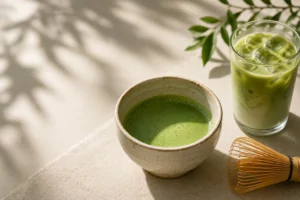
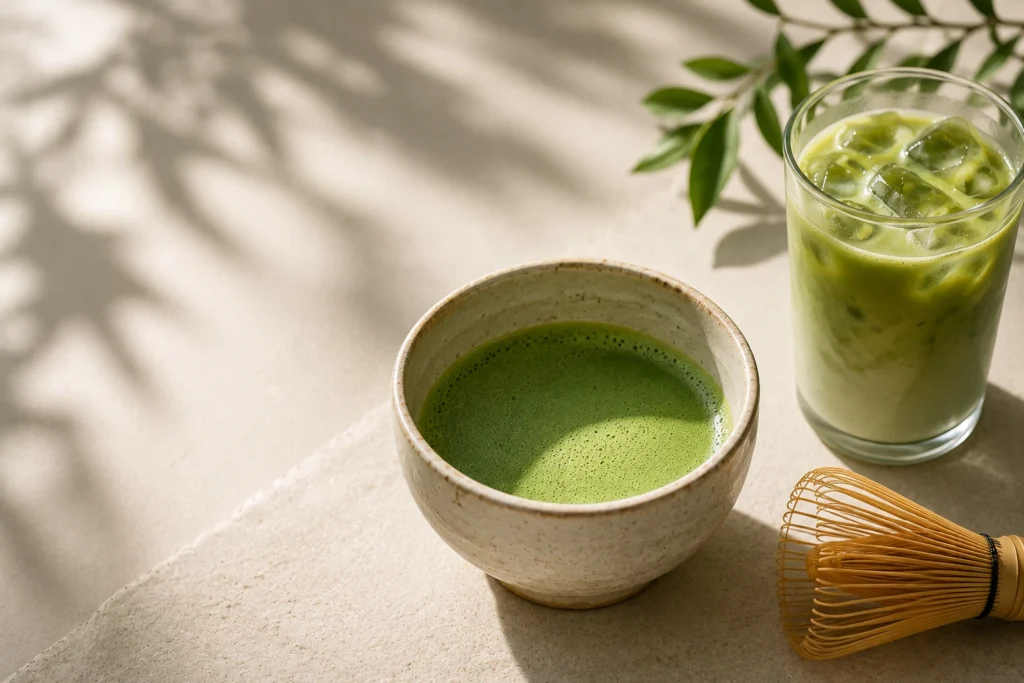
Matcha works beautifully in lattes because the powder is whisked directly into water and can then be combined with milk. Its richer body and umami help it hold its own against oat, soy, dairy, or almond milk.
Sencha is usually better enjoyed as a clear steeped tea. Its lighter body and brighter flavour can be overwhelmed by milk, especially if the tea is delicate.
If you are planning to make matcha lattes at home, read our guide to choosing matcha for lattes. For the tools that make preparation smoother, see our guide to matcha tools you need.
Frequently asked questions
Is matcha healthier than sencha?
Both teas contain naturally occurring plant compounds. Because matcha is consumed as a whole-leaf powder, it generally provides more of the leaf per serving than steeped sencha. Sencha still offers a beautiful, refreshing green tea experience. Rather than asking which is healthier, it may be more useful to ask which tea fits your routine, taste, and caffeine preference.
Can I use matcha like sencha and steep it?
No. Matcha is a fine powder designed to be whisked into suspension, not steeped and strained. If you try to steep it like loose-leaf tea, you will usually end up with a gritty, uneven liquid. Matcha is meant to be consumed entirely, while sencha leaves are removed after steeping.
What is the best green tea for loose-leaf drinkers?
Sencha is the classic choice for loose-leaf green tea drinkers. Its whole, needle-like leaves are easy to measure, steep, and watch unfurl. Matcha is a powder, so it does not behave like loose-leaf tea. If you love the ritual of a teapot and a strainer, sencha may feel more familiar.
Does sencha have the same umami as matcha?
Sencha can have umami, especially higher-quality Japanese sencha, but it is usually lighter and brighter than matcha. Matcha's shading and powdered form create a richer, creamier, more concentrated flavour. If you want deep savoury richness, matcha is usually the better choice.
Is matcha better than sencha for lattes?
Yes, matcha is usually better for lattes because it is a powder that can be whisked into a concentrated paste before adding milk. Sencha is a steeped tea, so it has a lighter body and can become diluted or overwhelmed when mixed with milk.
Where can I buy authentic Japanese matcha?
Matcha Byron Bay offers JONA-certified organic matcha sourced from Uji, Japan. Our range includes Nami organic ceremonial matcha for daily rituals, Goku premium ceremonial matcha for deeper umami, and culinary options for lattes and baking. You can browse our matcha range and have it delivered across Australia.
Begin with a smoother daily matcha
Now you understand matcha vs sencha, the choice comes down to your own rhythm. If matcha feels like the rhythm you want, start with Nami: our organic ceremonial matcha for daily preparation, iced lattes, warm bowls, and quiet morning rituals.
⚠️ Goku URL fixed again Same broken pattern as the previous page (premium-ceremonial-grade-organic-matcha-goku-50g), appearing twice here too. Both corrected to the confirmed-correct URL. Worth checking whether this old URL appears on any other pages I haven't yet touched in this cluster, since it seems to be a recurring leftover from an earlier product slug. What changed and why
Title: unchanged, already exact-match. Meta description: rewritten from a description cut off mid-sentence to a clean ~140-character version. Quick answer: already existed as its own "## Quick Answer" H2 — kept the format, added the literal keyword phrase to the opening sentence. Comparison table: already existed exactly as required — fully preserved, untouched. "Which should you choose" section: the existing "Which one should you choose?" prose section already covered this well; added a new table above it organised specifically by flavour/preparation/ritual/caffeine feel (the four dimensions the brief names), renamed the H2 to carry the exact keyword phrase, and kept all the existing prose underneath fully intact. Internal links added: Matcha vs Green Tea (new), Matcha Tea (new). What Is Ceremonial Matcha, Nami, and Goku were already linked multiple times and remain untouched. Soft mid-page CTA: added after the "how processing changes the tea" section, pointing to shop. Strong final CTA: existing closer kept, with the opening line rephrased to echo the keyword directly. FAQ: unchanged — already 6 well-built, carefully hedged questions, including the direct "rather than asking which is healthier, ask which fits your routine" framing. No medical-claim concerns — already handled with appropriate care throughout. All other sections — growing/processing explanation, caffeine/L-theanine discussion, latte comparison — are otherwise unchanged apart from the Goku URL fix.